
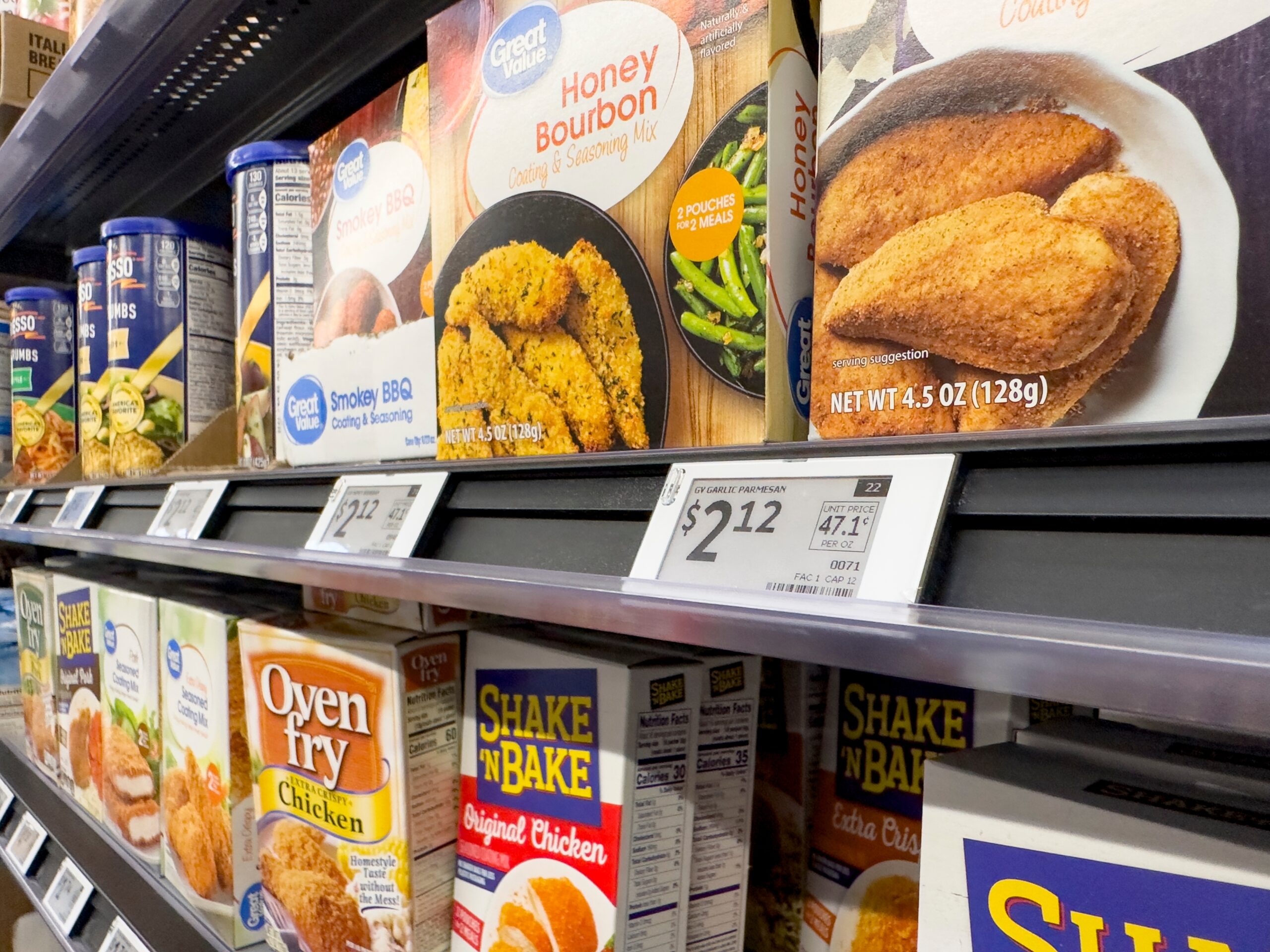
A shopper who checks the price of chicken on the way into a New York supermarket can usually trust it will hold at the register, for them and for the next customer in line. A set of bills moving through the City Council and Albany aims to keep it that way.
The bills have arrived at a moment when nearly half of working-age households in New York City are struggling to afford the basic costs of living here. Grocery prices alone have jumped more than 25 percent since 2019, faster than incomes have risen. The Mamdani administration’s most visible answer to that squeeze, city-owned grocery stores, has dominated the headlines. The pricing bills have drawn far less attention, perhaps because they take a less direct approach to food affordability. They focus instead on two practices spreading through retail that are reshaping how prices get set and changed: dynamic pricing and surveillance pricing.
Dynamic and surveillance pricing
For most of retail history, the price on the shelf was stable, and it was the same for everyone. Dynamic pricing is changing the first part of that. It lets prices rise and fall with demand, and anyone who has opened a ride-share app during a downpour has watched it work. Online, the practice is close to frictionless, since updating a listing costs nothing. Grocery stores were slow to adopt it because changing thousands of paper tags by hand was slow and expensive, keeping prices stable by default. The emergence of digital shelf labels removed that obstacle. A price that once changed weekly can now change several times an hour.
Surveillance pricing works on a different principle. Rather than moving a price for everyone at once, it sets a price for one person, based on what a company has learned about them. The intermediary firms that build these systems can draw on a shopper’s precise location, browsing history, demographics, and past purchases. Some track cursor movements, or whether an item lingers in an online cart, and use that data to offer different people different prices for the same thing. A recent study, for instance, caught the grocery platform Instacart charging shoppers noticeably different amounts for the same items. Some users paid up to 23 percent more than others for the same product in the same store at the same time, a pattern that could add about $1,200 a year to a family of four’s grocery bill.
What New York City is proposing
In May 2026, Council Speaker Julie Menin and Majority Leader Shaun Abreu introduced a two-bill package that would make New York the first American city to restrict both practices.
Menin’s bill, Introduction 891, would prohibit any business selling goods or services in the city, online or in person, from engaging in surveillance pricing. The ban targets the use of data such as a shopper’s location, movements, browsing history, biometric information, or purchase history to set individualized prices. It carves out loyalty and rewards programs, publicly advertised discounts, and price differences tied to the actual cost of providing a good or service. “New Yorkers deserve transparency and fairness when purchasing essential goods,” Menin said at the bills’ introduction, framing the package as an effort to set guardrails before the technology becomes widespread.
Abreu’s bill, Introduction 892, would bar grocery stores from raising the price of an item more than once in any 24-hour period. It responds to the spread of algorithm-driven electronic labels. Labor unions told the Council’s consumer protection committee that the labels can change a price up to 2,000 times a day, and that they let stores cut staff. Stores could still make daily adjustments for legitimate market reasons. But, as Abreu put it, no one should watch “the price of milk change between the shelf and the cash register.”
Both bills went before the committee on June 17, drawing support from Attorney General Letitia James, as well as unions representing grocery workers, and consumer advocates. Neither has come to a vote.
The unresolved question is enforcement. As drafted, the job would fall to the city’s Department of Consumer and Worker Protection, whose new commissioner, Samuel Levine, spent years in consumer protection at the Federal Trade Commission. Some supporters want to go further and give New Yorkers the right to sue companies that use their data to raise prices. The American Prospect has reported that Council members are considering such a provision, and that industry groups strongly oppose it. Matt Henning of Tech:NYC, whose members include Amazon and Instacart, warned the Prospect that companies facing lawsuits from individual shoppers might play it safe and drop the loyalty and discount programs that generate much of the relevant data in the first place.
What’s happening in Albany
New York State has already passed its own, limited rule on algorithmic pricing. Since November 2025, a disclosure law enacted by Governor Kathy Hochul in the FY2026 budget requires businesses to inform customers when a price is set by an algorithm using personal data. Critics say it’s a half-measure. Shoppers cannot always detect surveillance pricing when it happens, which makes the requirement hard to enforce. And even when a notice does appear, it does not lower the price or offer a way around it.
At the end of the 2026 session, the Legislature went further, passing the One Fair Price Act, which would prohibit businesses statewide from using personal data to set individual prices while preserving standard discounts, coupons, and senior pricing. The version that passed was narrower than the one introduced. Lawmakers dropped a provision letting shoppers sue violators, along with a companion bill banning electronic shelf labels in groceries and pharmacies. The Act now sits on Hochul’s desk, where it’s expected to remain until after the November election, and further amendments are possible if she signs it.
Industry pressure helped narrow the bill, and the lobbying has not stopped. Grocers, business groups, delivery services, and the tech coalition Chamber of Progress have campaigned extensively against the state measures. They argue that “surveillance pricing” is an alarmist label for standard retail practice, that the bills would entirely eliminate some discount programs, and that digital shelf labels improve price accuracy and cut waste. Consumer advocates counter that whatever benefits these practices deliver today are voluntary and could change at any time.
That uncertainty is why the Council is not waiting on Albany. Even if the state ban takes effect, the city’s bills would go further, capping how often grocery prices can change and potentially restoring the right to sue that Albany stripped out. And if the state bill stalls, the city’s protections would stand on their own.
Where the rest of the country stands
No federal law prohibits either practice, though Washington is paying closer attention. In January 2025, the FTC published a study showing widespread use of personal data to set prices; the agency later demanded records from a delivery company about an AI pricing tool, and in April took initial steps toward regulating the fees charged by online food and grocery delivery platforms.
Congress has held hearings but passed nothing. In 2024, Senators Elizabeth Warren and Bob Casey questioned Kroger about its digital shelf labels, raising concerns that the nation’s largest supermarket chain could use them to gouge shoppers during periods of peak demand. The House Oversight Committee launched an investigation this March into how AI is shaping grocery prices, and just this month, a Senate Judiciary subcommittee held a hearing on surveillance pricing at which lawmakers from both parties expressed concern about the practice.
With no federal law in sight, states have begun writing their own rules. Maryland and Connecticut enacted restrictions this spring. In July, New Jersey implemented a law limiting how grocers use consumer data to set individual prices. California’s Attorney General launched an investigation into whether retailers, grocers, and hotels are using surveillance pricing in violation of state privacy law. Earlier this month, Seattle officials proposed barring large grocery retailers from using sensitive personal information, such as employment status or chatbot conversations, to set individualized prices. None of these measures has been tested in a market as large as New York’s, but the precedents now exist.
What else the Council is considering
Most of what drives grocery prices is beyond the Council’s reach, from tariffs and inflation to war, supply-chain shocks, extreme weather, and industry consolidation. What the city can address are local costs. This logic explains the municipal stores and the price-tag bills, as well as a third measure aimed at one of the fastest-growing costs of running a store here: insurance. Bodega and deli owners pay four to five times the national average for liability coverage, premiums have been climbing roughly 10 percent a year, and small retailers operating on thin margins pass those costs on to shoppers through higher prices.
Introduction 685, also sponsored by Speaker Menin and pending before the same committee, would establish an Office of Insurance Affordability to study what drives insurance costs, recommend ways to lower them, publicly track deceptive practices, and help consumers choose plans and resolve disputes. Menin has pitched the office as relief for small food retailers, arguing the state’s existing regulator has failed to bring costs down. Levine has been more cautious, warning that a city office risks duplicating the state’s work. That bill, like the pricing package, remains in committee.
None of these measures will get a ribbon-cutting. But in a city where half of working-age households cannot cover basic living costs, the rules behind grocery pricing deserve close attention too.
Note: This piece was drafted before the City Council voted on August 13 to approved the bill creating an Office of Insurance Affordability, the first of its kind in the country. The surveillance pricing ban and the grocery price-change limit remain before the Committee on Consumer and Worker Protection.