
The allegations against celebrity chef René Redzepi drew international headlines, but this series turns to what those headlines left out: why food policy keeps failing the people who cook our food. It is the first of several articles on kitchen labor, accountability, and reform to come over the next few months.
You shouldn’t have to say you “survived” Noma, as if putting the best restaurant in the world on your résumé was akin to a T-shirt you bought cliff diving at a tourist trap. And survived Jason Ignacio White has, from being the former head of the research and design fermentation lab at the Danish institution to a catalyst shaking up much of what the fine-dining industry runs on: underappreciated and overworked kitchens.
I was lucky to catch the chef at an intimate discussion he hosted in Brooklyn, and, from what I understand, was the first in the States. White was a man with the same bravado and curiosity I had seen from many thirtysomething chefs growing up in kitchens. He looked and talked exactly like he did in the photos I had seen from his Instagram stories and videos from the protests at the Noma pop-up in Los Angeles. He invited us to “have a chat” about our own experiences in the food world.
Among the fare you might expect from the Noma veteran—fizzy kombucha, mold-happy cured meats—we were joined by people from across New York City’s restaurant industry. I won’t share who was there as part of the agreement to participate was “no media” and I intend to honor that. But I remember the room held an intense, ambivalent air of frustration and determination, heavy with traumatic anecdotes and the sense that this might finally, hopefully, be a turning point.
Before I get into more of my research following that experience, I want to be clear about what I’m writing here. This is not another exposé about what has gone down at Noma. (There has been plenty of substantive journalistic work from other writers on that topic, perhaps the most important coming from Julia Moskin in The New York Times. Following said article, head chef and co-founder René Redzepi stepped down from the pop-up and MAD (his food and workplace sustainability nonprofit), but will still assume the role of “creative director” later this year at Noma’s next iteration). Neither is this a profile on White, nor a word-for-word recant of what was said in that room. Some of what I talk about in this series originates from Brooklyn; the rest are ideas that I have not had the opportunity to voice.
The front lines of the call for change, including White and other industry leaders, are keen on targeting awards and the culture surrounding them. Many chefs enter the industry and aim to receive praise from the few foundations who legitimize “exceptionality” and “extraordinariness,” as New Yorker critic Helen Rosner put it, by any means necessary. A window sticker might be impressive or exciting for consumers, but for chefs, this is like winning an Oscar or a Grammy.
Over the past hundred or so years, we have taught many chefs to measure their self-worth with the industry’s prizes. The most well-known are from the Michelin Guide (known for handing out “stars” that chefs have taken their own lives for), The World’s 50 Best Restaurants (known for its ranking of the world’s supposed 50 best restaurants), and the James Beard Foundation Awards (known to cover every corner of the American restaurant industry from food, to media, and even lifetime achievements). These awards can bring in corporate sponsorships in addition to a mythological status.
As of June 2026, Michelin and World’s 50 Best do not list fair or equitable labor standards as a criterion for an award. The guides generally emphasize quality, presentation, entertainment, experience, and creativity. The closest the Michelin Guide criteria comes to labor standards is: “The personality of the chef represented in the dining experience,” but it is not transparent what exactly they mean by this.
In the context of Redzepi, it’s ironic Michelin appears to not follow their own rubric for the “personality of the chef.” It begs the question: What kind of a personality are Michelin and the other award bodies looking for? Where do they draw the line between entertainer and tyrant? Perhaps they grade chefs on performance as opposed to moral character. And if Redzepi has been considered, in the very least culturally, the best chef in the world for almost a decade, what does that tell us about how we are training young chefs to behave in a kitchen and what they can get away with to achieve prestige?
Unfortunately, Michelin is not the only award body to stray from their own standards. While the James Beard Foundation technically has a “Code of Ethics” to sniff out abusive chefs, it hasn’t done a consistent job upholding its promises. This instability has made chefs and awardees confused in addition to being frustrated by a disorganized and obscure process, such as inconsistent audits and a system that allowed judges to vote for disqualified chefs. The James Beard Foundation’s fumbles teach the restaurant industry something more alarming than Michelin’s vagueness: you can praise abusers as long as on paper you say that you don’t.
When I reached out for comment on their ethics policies, Michelin said, “Anonymous field work is at the heart of the MICHELIN Guide selection process. Therefore, each decision to award a restaurant is made collectively by the inspection team based on anonymous visits.” Effectively, Michelin is saying that a restaurant’s ethical practices are not their primary concern and is up to a judge to consider. This frames the mysterious “selection process” and accounting for labor practices as mutually exclusive and posits that an ethics audit might compromise an inspector’s anonymity if they announce the audit’s intentions. This response also implies Michelin doesn’t have control over their own awards, which is untrue because they choose and pay the inspectors.
Contrary to Michelin, White has shared he was in conversation with both World’s 50 Best Restaurants and The James Beard Foundation about their “ethics policies” on his now defunct Instagram account in April. Since then, no further updates have been announced about said ethics policies from these award bodies, although the Michelin Guide is quietly rolling out its “Mindful Voices” column in place of their “Green” stars.
Some organizations are looking to fill in the gaps where traditional culinary award bodies have missed. In her article for The Guardian, chef and writer Lauren Joseph mentioned the independent company VERiFAIR will begin authenticating restaurants for their labor practices in the UK and Ireland. Its goal is to set the “independent benchmark for responsible hospitality employers” partly by making “workplace standards visible.” Programs like VERiFAIR are only the first step in solving a larger systemic issue where fair labor standards are not understood as prestigious in the first place.
It is exactly this chain reaction that demonstrates how we could prevent kitchen violence if we stopped it at its source instead of falling into a cycle of acknowledging its symptoms and aftermaths, then moving on. While I have noticed many chefs and advocates point our attention to award bodies as the enabler, there is a bottom-up approach to shape the culture around awards and in professional kitchens: culinary school.
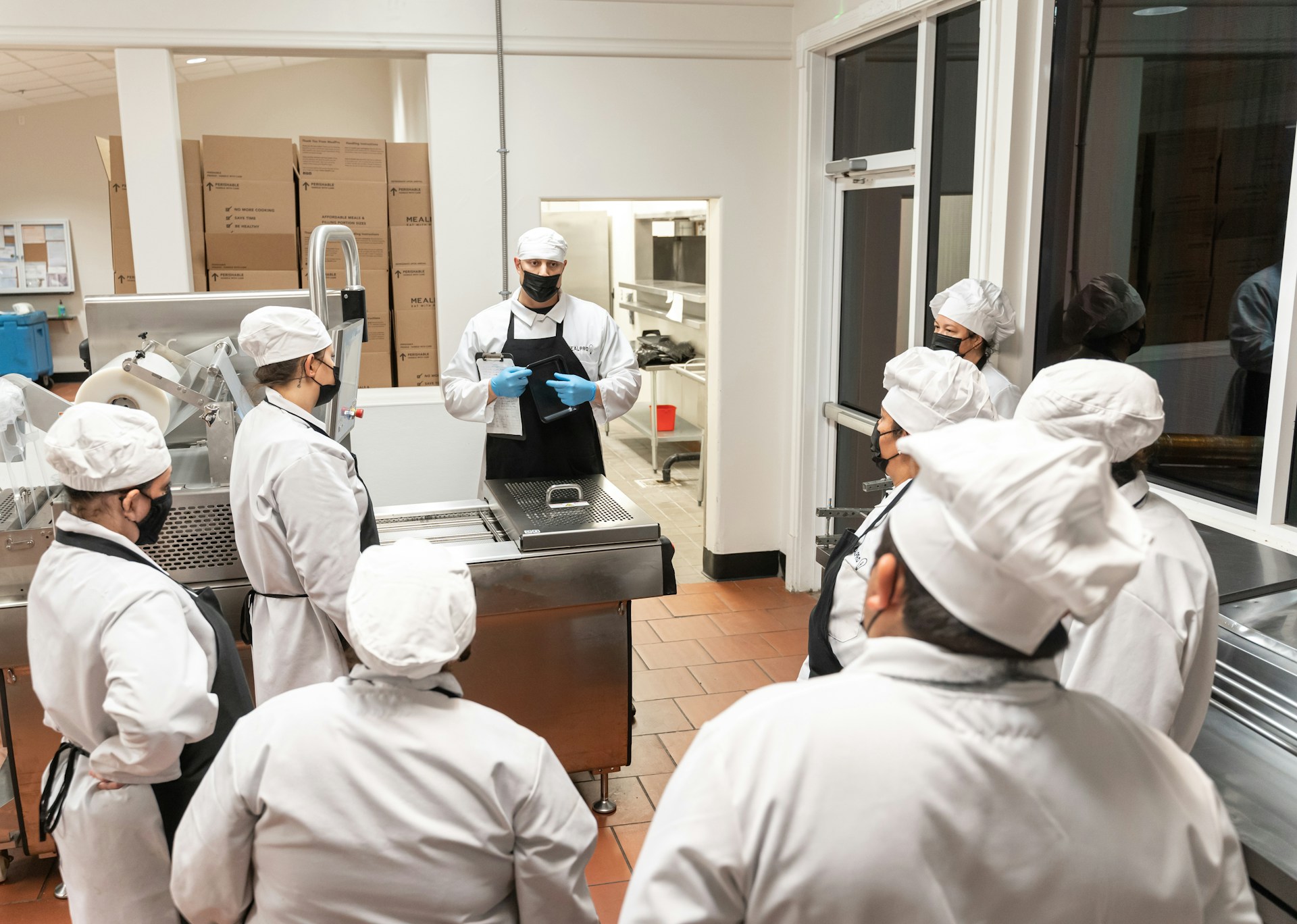
Culinary school is the runway to the restaurant industry for many chefs, which makes it a place where today’s culinary students could be prepared to confront kitchen abuse. These schools do two important things for chefs: first, they can give you the skills to be an efficient cook or business manager; second, they set the gold standard for those skills. If the Culinary Institute of America (CIA) says that it “boasts the most influential alumni network in the industry,” then surely change can start with giving the next generation of chefs a proper education on ethical practices and labor rights. Likewise, if the school also has a page outlining the stakes of the Michelin process and awards, where they note, “Many elite chefs begin with formal culinary training,” then I see this as CIA acknowledging that they and other culinary institutions have the power to shape the meaning of prestige.
To get a better understanding of current curricula and experiences in culinary schools, I surveyed 26 former students who attended institutions in North America and one in Asia. These students graduated within the past seven years (2019–2026) with degrees in culinary science, pastry, and/or business management. The results were more divisive than I expected, but they pointed to real gaps in how culinary schools view stress and abuse. They also point to a need for more extensive research on culinary schools overall. Much of the attention to kitchen violence is on professional chefs, but not how they become chefs. This watershed study of “suffering” in restaurant kitchens in 2022 only surveyed fine-dining establishments. We are missing crucial data on the formative years within culinary education which is a small step to filling the gap in understanding how kitchen abuse perpetuates.
When it came to mental health training, the gaps were stark. Most participants, 77%, said their school’s education on managing stress, anger, and intrusive thoughts in kitchens was poor, insufficient, or never discussed, even as about half said their school made an effective effort to provide mental health resources outside the kitchen. The disconnect was the same one that runs through the whole survey: emotional life was treated as separate from professional life.
Participants overwhelmingly described restaurant kitchens as stressful, but drew a distinction between inevitable and circumstantial stressors that I found useful. The inevitable kind, such as long shifts, hot temperatures, and time-sensitive tasks, are baked into the job at this moment in time. The circumstantial kind is dependent on leadership—poor communication, poor time management, critical perception, perfectionism, underpayment, verbal and/or sexual abuse—and are active choices, which means they are fixable.
Stress, some responses said, can be fun—kind of like an adrenaline rush. Or as Garrett, a participant, said, it’s “the kind of stress that makes you work harder.” However, participants who enjoyed the stress of a restaurant kitchen expressed some nuance: younger chefs are quick to call out the old excuse that knives, sweat, and pressure make violence inevitable, which is a slippery slope. Knives don’t stab line cooks; chefs stab line cooks.
The circumstantial stressor neither I nor the participants could solve was customer demand. Writing policy for a kitchen is one thing; reeducating a generation of diners about eating at restaurants requires an even larger cultural shift.
Any kind of healthy kitchen is something that has to be practiced. No certificate can guarantee a kitchen will maintain its standards because people pass down culture, not window stickers. Practices will spread whether they are healthy or toxic. That’s why so many of Noma’s former chefs who have opened their own restaurants are now being outed as abusers themselves: they carried forward what they taught.
Passivity is part of how abuse persists. Participants pointed to kitchen hierarchies, or the “brigade” system, as what distorts bullying as something minor or the cost of the job. New York Times critic Pete Wells voiced a similar view about the brigade system in response to the Redzepi allegations.
Former culinary students are largely unequipped to respond: 69% of participants said their culinary institution did an insufficient job teaching students to navigate labor rights and workplace protections or that it was not included in their core curricula at all. That means most students graduate knowing little about their rights in a profession they spent the last two to three years studying and a small fortune to learn. When abuse happens, no one speaks up because no one was taught what to do.
A gap in legal education is concerning because labor laws, at least in the United States, can be complex. Whether it’s an agency like the Occupational Safety and Health Administration (OSHA), or a law like the Fair Labor Standards Act (FLSA), or even signing non-disclosure agreements, they all require specialized, informed help and can vary state by state. Legal literacy doesn’t stop abuse, but it changes who has leverage when it happens.
“I took one class that only brushed on the surface level of navigating labor rights, which was Human Resource Management,” said Lauren, a CIA graduate. She mentioned OSHA, FLSA, and NDAs were discussed, but not extensively. This means Lauren was expected to navigate them alone. A curriculum that explains which agencies handle what, when you can void an NDA, your rights when unionizing—preferably taught by a current or former hospitality lawyer or consultant—could help prevent chefs from being taken advantage of.
Stress management and legal literacy are gaining traction as a part of what it means to run a “sustainable” kitchen. The term has no official or legal definition in the United States, which is also a chance to widen it. When asked what “sustainable” should mean for a professional kitchen, the vast majority of participants named staff well-being alongside expected environmental concerns. Notably, not a single participant said that certificates, awards, plaques, or stickers in a restaurant’s window declaring the establishment “sustainable” were essential to the definition. We might infer younger cooks define a restaurant’s achievements by what it does, not what it displays, maybe because this generation has watched the downfall of decorated chefs and establishments early in their lives and careers like Mario Batali or The Spotted Pig.
This progressive mindset is in line with how most participants said there should be mandated stress and violence deescalation training for restaurants and in the culinary education system. I imagine it could look something like obtaining a food handler’s certificate, which cooks and supervisors are required to have in New York City restaurants, or sexual harassment prevention policy that is mandatory for all New York State businesses and some students anyway. If we recognize kitchens as conducive to stress or violence, why wouldn’t we take steps to minimize it?
Additionally, there is no reliable publicly accessible database that specifically tracks restaurants’ labor standards—we don’t know who is and isn’t putting in the work to make a more responsible kitchen. When looking for a new job, almost all participants said they learn about a chef’s reputation through word of mouth and about half through social media.
What surprised me most was that more than half of former students said they witnessed or experienced abusive, violent, or offensive behavior in their school’s kitchen environments and before they even entered professional kitchens full-time. The offenders were identified as instructors, head chefs, and peers and that their actions were far more likely to be ignored than rewarded. When problematic behavior was brought to instructors’ attention, many chalked it up to “the heat of the moment,” as Evan, a former culinary arts and food studies student, explained.
The survey also points to a more intersectional issue when we reorganize the data by gender. Most women, women-adjacent, and gender-queer participants said they experienced or witnessed abusive behavior in culinary school. Less than a third of men and men-adjacent participants said the same. This means women and gender-queer participants experienced abusive behavior at a rate of almost twice as much as their male-identifying peers. This inequity is also expressed in a recent study on abuse in the fine-dining industry. But the majority across all genders advocated for mandated stress and violence deescalation training.
Out of 26 participants, 73% identified as women, woman-adjacent, or gender-queer. This bias could mean the results are more progressive than the reality of many young chefs given women tended to advocate for more labor and education reform. However, the fact that more women responded to the survey (which I sent out through Instagram stories) might also be indicative of how women and gender-queer folks are more likely to speak up about abusive behavior they’ve experienced or witnessed.
Culinary education isn’t the only way to prevent kitchen abuse, and many chefs never attend culinary school, but it’s a place to start. Former culinary students shape the restaurant landscape at the very least. Many of them will be running and working in the next most successful and influential establishments to come. And we’d like to stop the next René Redzepi before he thinks of harming someone and for him to have the stress management and deescalation skills to stop himself—and for everyone in his kitchen to know what to do and what their rights are if he can’t.
So what is culinary school for, anyway? To make the best food? To win a star? To earn a livable wage at the one thing a student might think they’re good at? Those ambitions are fine. What culinary schools owe their students is the chance to chase those ambitions knowing cruelty is not inherent to the job. Toxic kitchens existed long before any culinary degree or Michelin star, but the schools who educate chefs can either reinforce that culture or disrupt it. This is why the rules an institution sets for itself matter just as much as the laws a city or state passes. •
Participant names have been changed to protect their identities in this article.
Jaden Schapiro is a senior writer and researcher at the Hunter College New York City Food Policy Center.
Cover art by MealPro via Unsplash