The Hunter College New York City Food Policy Center is excited to announce its annual cohort of New York City’s 40 Under 40, up-and-coming leaders across the food system whose work is making a measurable difference. This year’s honorees include policymakers, educators, community advocates, farmers, chefs, and innovators whose work reflects the Center’s mission to build a more equitable, sustainable, and just food system in NYC and beyond.
This year’s roster reflects the breadth of the food system itself: growers reclaiming land and building cooperatives that feed their neighbors; chefs treating food as a tool for cultural reclamation and community healing; operations leaders, warehouse managers, and logistics experts moving millions of pounds of food into communities that need it; researchers translating data into policy; policy analysts shaping what gets served in schools, senior centers, and city institutions; advocates and case managers walking neighbors through SNAP applications and emergency support; and organizers refusing to accept that food insecurity is normal in the wealthiest city on Earth. Together, they show us just how deeply the food system is woven into our daily lives.
The 40 Under 40 celebration will take place on Tuesday, May 19, 2026 at 6:00 PM at the Silberman School of Social Work in East Harlem.
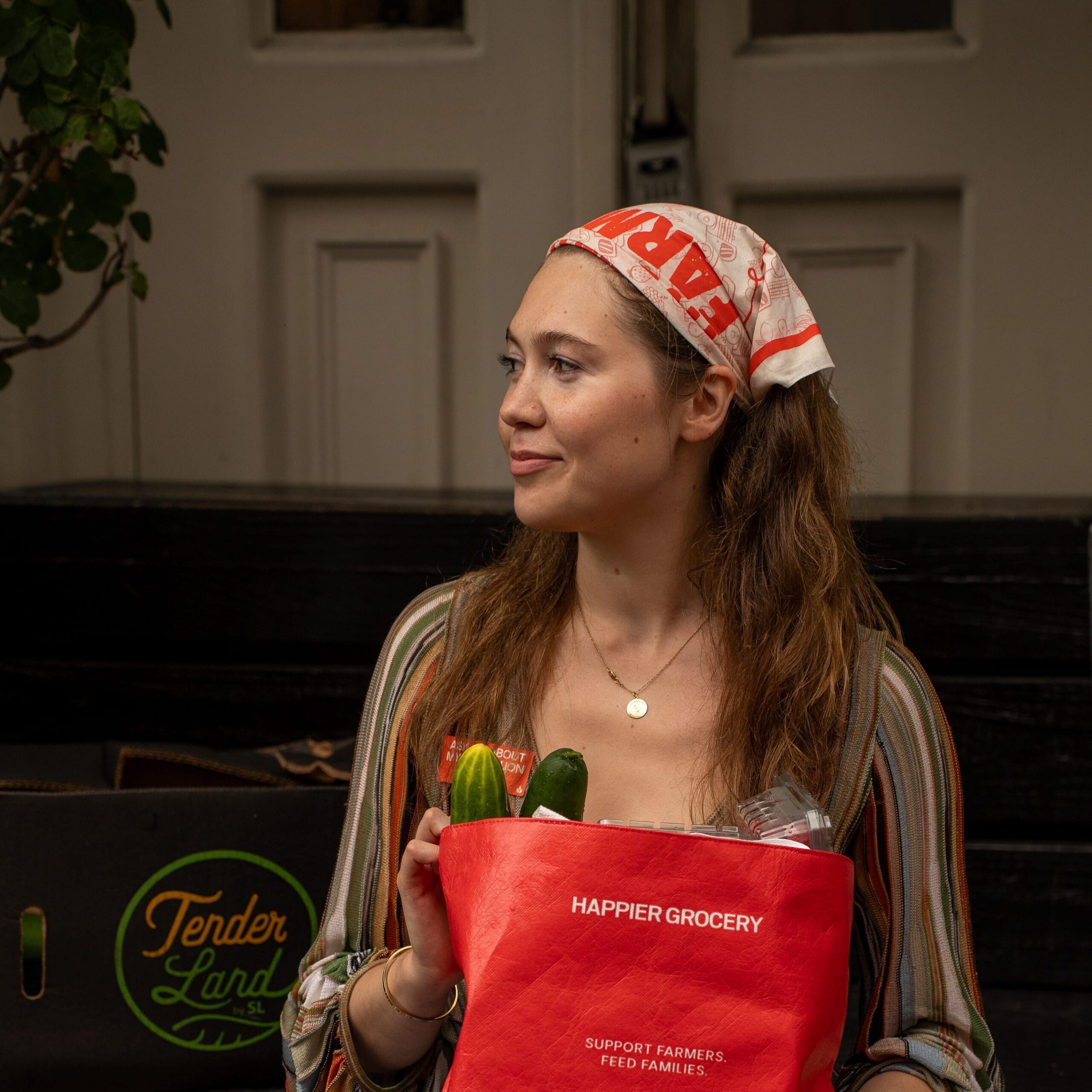
Sophia Adelle
Pronouns: She/Her
Job Title + Organization: Head of Policy & Advocacy at The Farmlink Project
Grew up in: Minnesota
How did you get into food systems work? Food has always been the way I inherently approach building knowledge, shaping opinions, and caring for others. It anchors how I show up at home, with my family, in my community, and the world I hope to improve. When I turned eight, I chose to hold my birthday party at a food bank. I told all my friends to bring their families and loved ones along to volunteer. Many years later, in 2016, I wasn’t old enough to vote in the presidential election, but I could cook and hold a discussion. I invited everyone I knew that could vote from my mother’s coworkers to our apartment building neighbors over for a dinner party to canvas and share a warm meal at a time when I felt uneasy about the future of our planet. Throughout college and to this day, I cook and lead a community kitchen in a church basement for my neighbors every single week. It is our guests’ and volunteers’ stories that have grounded my understanding of and devotion to dignity and nourishment. Now, I find myself in the dirt or on polished marble bridging the gap between farmers’ abundance and needed community nourishment.
One word you would use to describe our current food system? Abundant
What’s a food system problem you wish more people were talking about? The opportunity we have to support farmers in this country by redirecting surplus at scale and consistently nourish communities with dignity.
Who in the food world inspires you? Our farmers
Your breakfast this morning: Coffee…
Favorite NYC food spot and why? Kalustyan’s! You could easily spend hours browsing just the peppercorns. I could spend an entire day exploring there. Visit, and you’ll always leave with something new, whether it’s an idea for a new flavor combination or a unique ingredient to try.
Must-read or must-listen: Past editions of Whetstone Magazine. Pro-tip you can find them at Kitchen Arts & Letters on the UES.
Social media must-follow: Honestly, let go of one person you follow who isn’t adding value to your life and reinvest that time into understanding the community you actually live in. Here in NYC, that could be as simple as stepping outside your door, finding an organization within a 10-block radius, and volunteering or learning firsthand how your neighbors are nourishing and supporting those who need it most.
What, if anything, is giving you hope right now? The next generation of changemakers are constantly giving me hope!
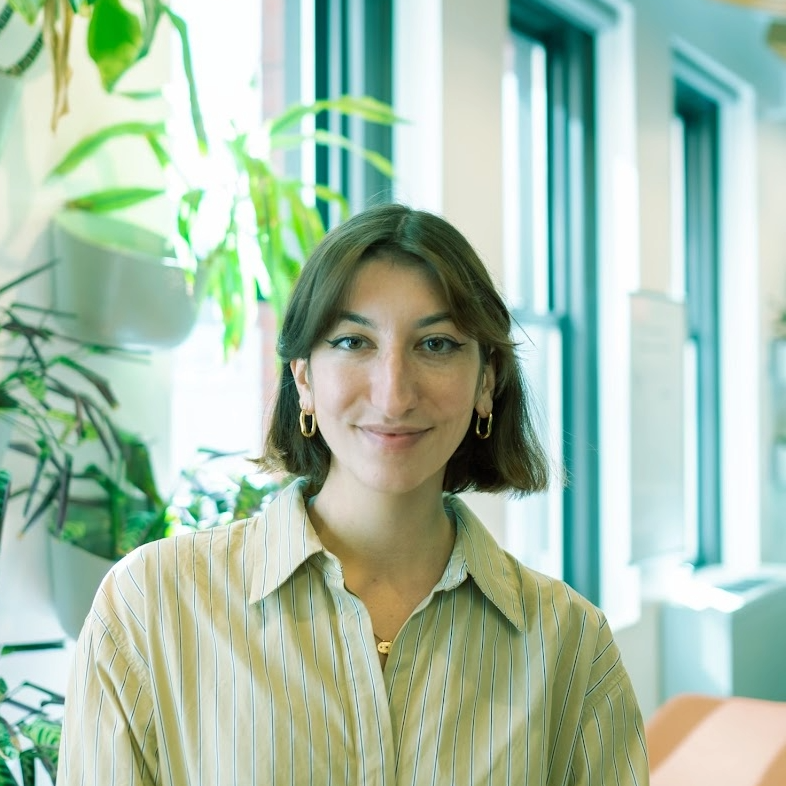
Margaux Alfare
Pronouns: She/Her
Job Title + Organization: Researcher at NYU’s Environmental Studies Department
Grew up in: St Barts, FWI
How did you get into food systems work? For reasons I can’t quite remember, I’ve wanted to work at the FAO since I was 16. In college, I majored in environmental studies and learned more about the environmental impacts of the food and agricultural industry. Although I didn’t focus exclusively on this issue, I was drawn back to it repeatedly: as a student, I worked at a local grocery store that aimed to reduce food waste, and after I graduated, I interned for a small nonprofit focused on French climate agriculture legislation. During my master’s program, my interests broadened: I worked on industrial decarbonization, coastal resilience, and NYC local policy, and sort of put my interest in food & ag on hold. When I landed my current job, I didn’t expect it to center so much on agriculture–conducting this research really reignited my interest in food and climate issues (my friend Alex and I launched a food/climate newsletter), and I hope to keep building on this work!
One word you would use to describe our current food system? Fragile
What’s a food system problem you wish more people were talking about? Nitrogen! It’s an essential nutrient to food production– it’s a key component to many synthetic fertilizers and manure, but these are often overapplied to crops and lost to the environment. Nitrogen losses have a tremendous impact on water and air quality, human health, and biodiversity (nitrous oxide is a much more powerful greenhouse gas than carbon dioxide), so improving nutrient management is an important, and often overlooked, climate solution.
Who in the food world inspires you? I was recently inspired by two brothers, Jammin and Ménélik Perriet. They founded a permaculture garden in Martinique called La Roche Perma with the goal of promoting food self-sufficiency on the island.
Your breakfast this morning: Slice of sourdough bread with cottage cheese, a drizzle of olive oil and tajin!
Favorite NYC food spot and why? There are so many! But one close to my heart (and my apartment) is Risbo, a French-inspired restaurant in Lefferts Gardens. It’s a great place to work or grab a drink in their outdoor area–their vegan pulled pork sandwich is simply delicious!
Must-read or must-listen: Braiding Sweetgrass by Robin Wall Kimmerer (I recommend listening to the audiobook while reading)
Social media must-follow: Who Wants Seconds? (www.who-wants-seconds.com) & iN-Net (https://www.linkedin.com/company/international-nitrogen-network/)
What, if anything, is giving you hope right now? My co-workers and friends working in the climate space! Seeing all these brilliant, amazing people pouring their heart and energy into helping advance climate/food science and policy gives me so much hope.
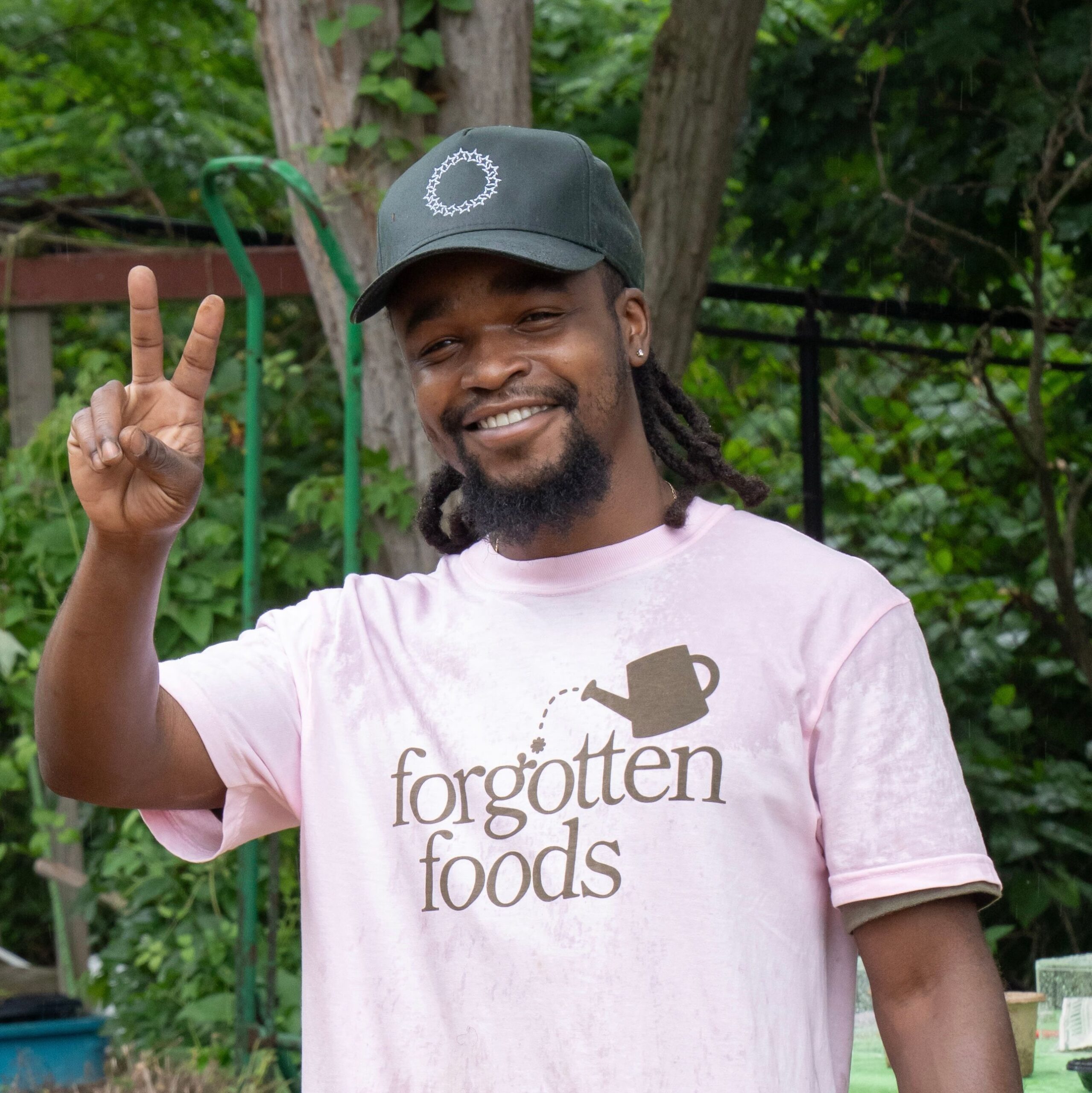
Justin Baker
Pronouns: He/Him
Job Title + Organization: PlacemakingCorps Coordinator- Concrete Safaris
Grew up in: Staten Island
How did you get into food systems work? My AmeriCorps term with Green City Force
One word you would use to describe our current food system? Unbalanced
What’s a food system problem you wish more people were talking about? Food quality and nutritional availability in certain communities
Who in the food world inspires you? Chef Sarah Kalbalkin- Mentor
Your breakfast this morning: Banana, Croissant, Coffee
Favorite NYC food spot and why? I don’t really have one
Must-read or must-listen: What’s Going On
Social media must-follow: forgottenfoodsnyc on Instagram
What, if anything, is giving you hope right now? I’m starting to see folks being able to identify foods and crops at earlier ages.
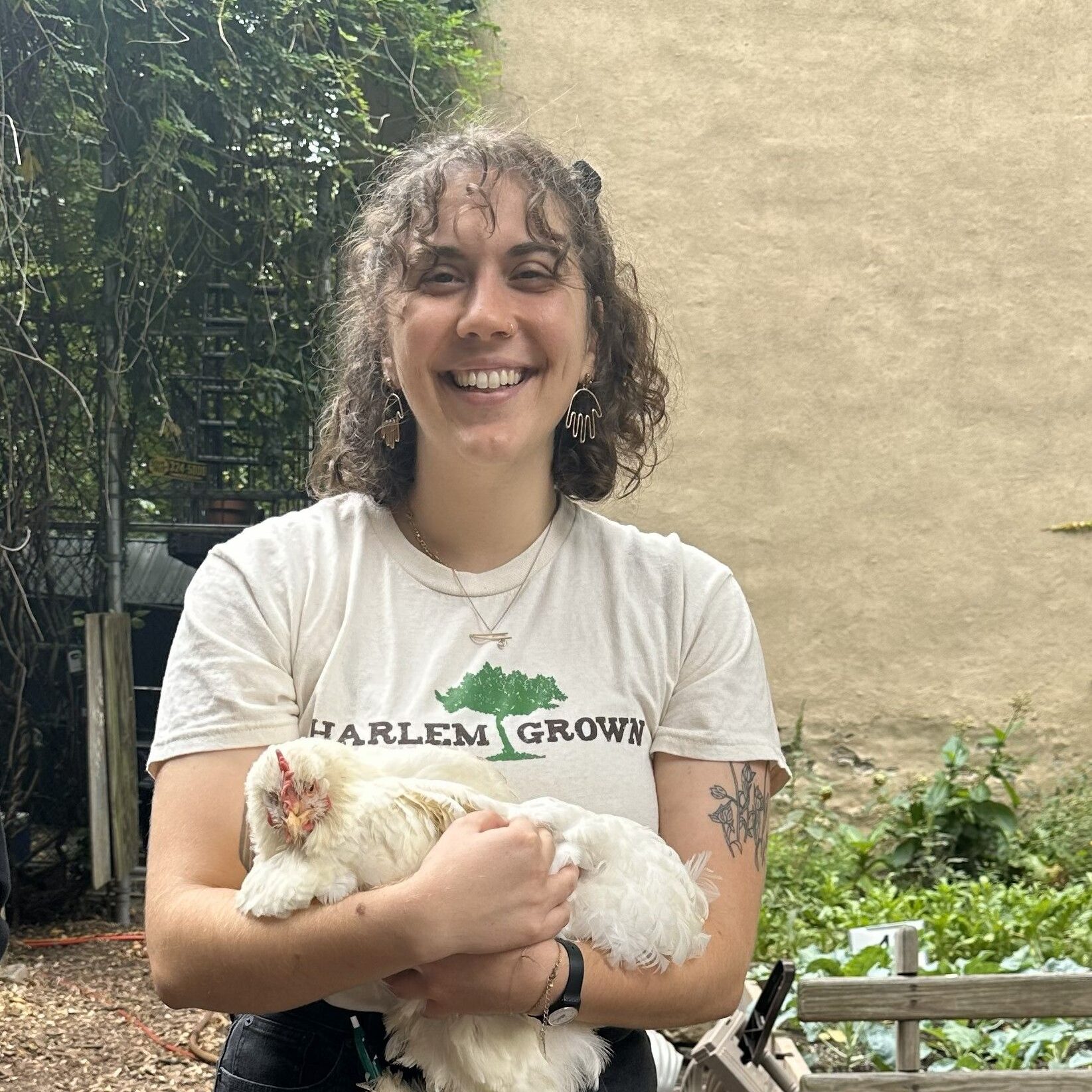
Idalia Bamert
Pronouns: she, her, hers
Job Title + Organization: Farm Education Manager / Harlem Grown
Grew up in: New York, New York
How did you get into food systems work? During my time at Oberlin College, I got really involved with the Oberlin Student Cooperative Association (OSCA). Not only did I get to cook and eat with the same sweet community every day, I participated in creating our coop’s very own food policy, and served as food coordinator for all eight of OSCA’s co-ops, working directly with farmers and vendors in the area to order food for our 680 person organization. I physically delivered all the food to the co-ops, worked with a seventh-generation dairy farmer at markets and on his food truck, and organized food justice initiatives on campus. I also spent a few summers working on the produce farm at Hermit Thrush Homestead in Vermont. Since 2012, I have been connected to the food world in some way, whether it be through food (re)distribution, farming and urban gardening, or education and food justice.
One word you would use to describe our current food system? Unjust
What’s a food system problem you wish more people were talking about? The intersection of industrial animal agriculture with workers’ rights, environmental justice, climate change, and animal welfare.
Who in the food world inspires you? Malik Yakini, Saru Jayaraman, and Erika Allen
Your breakfast this morning: An absolute (now 2788) bagel with tofu cream cheese
Favorite NYC food spot and why? Ariana Afghan Kebab is one of my favorite restaurants in the city. My family has been going there since before I was born. A more recent favorite is Ayat, a delicious Palestinian restaurant!
Must-read or must-listen: Mannahatta: A Natural History of New York City by Eric W. Sanderson
Social media must-follow: @losdeliveristasunidos_ny
What, if anything, is giving you hope right now? The trees and dogs in Prospect Park, the start of the Brooklyn Cyclones baseball season, and universal childcare on the horizon.
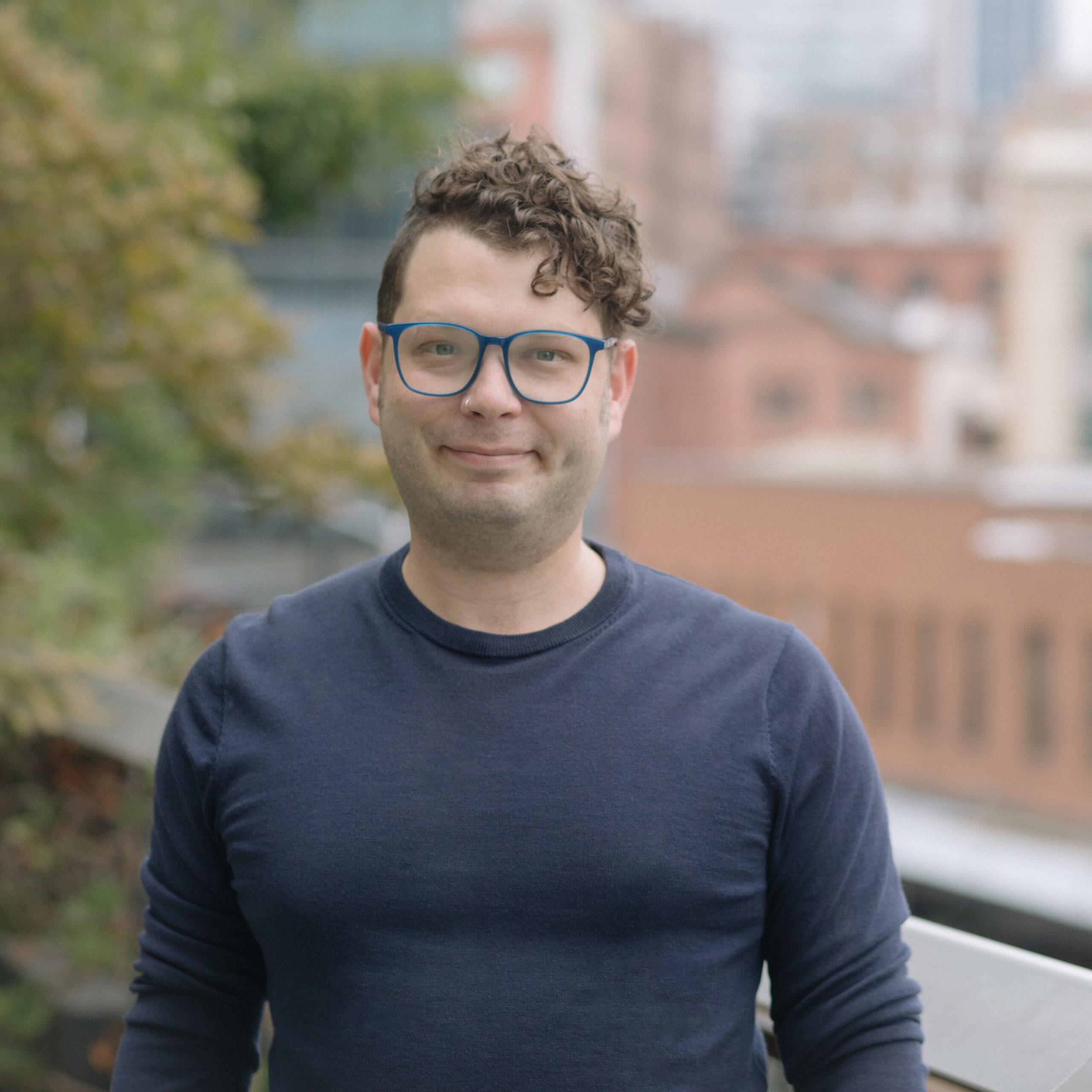
Maxwell S. Bernstein
Pronouns: He/Him
Job Title + Organization: Senior Analyst / KK&P
Grew up in: NYC
How did you get into food systems work? I started cooking on a food truck in 2011 when the economy was still struggling from the Great Recession. Loving the work, I spent 8 years working my way through kitchens, bakeries, and farmers’ markets. Eventually–and very burned out–I was fortunate to be able to leave the restaurant industry to get my master’s in urban planning, and got picked up by KK&P–a food systems consulting firm. At KK&P I work with state and local governments, regional agencies, non-profits, and social enterprises on supply chain development, business model testing, program evaluation, and strategic planning in NYC and nationally.
One word you would use to describe our current food system? Mendable
What’s a food system problem you wish more people were talking about? Traffic. And the right to curb space. So much of the food we bring into and around cities spends huge amounts of time stranded in traffic, pushing up costs for everybody. Meanwhile, the only thing that’s free in NYC are the 3 million street parking spaces taken up by personal vehicles. If we reimagined how we use our streets and curbs, a lot of neighborhood-scale transformations–from loading zones and microfreight networks, to improving affordable access to fresh produce in corner stores, to urban forestry initiatives–could be possible.
Who in the food world inspires you? The bakers, cooks, dishwashers, delivery workers, truck drivers, warehouse staff, farm hands, cashiers, and everyone in between who show up to work everyday to do the hard things well.
Your breakfast this morning: Overnight oats and my toddler’s leftover berries if I’m organized.
Favorite NYC food spot and why? I have a 3-year-old, and would be lying if I said anything other than the cafe at the IKEA in Red Hook right now. The combination of kid friendliness, quality, price, and views of the harbor can’t be beat.
Must-read or must-listen: Raj Patel and Mike Lee
Social media must-follow: I quit social media a few years ago (and have slept better since)
What, if anything, is giving you hope right now? Something that gives me hope is the growing reality that a lot of the things that can make the food system more humane aren’t actually that partisan, and public polling is starting to prove it. Disrupting the dominance of ultra-processed foods, removing harmful additives, shortening supply chains, and achieving real affordability are all goals that are showing themselves to have broad, politically diverse constituencies demanding them. As more people push back against the control that corporations exercise over how and what we eat, it feels like there are opportunities to organize across the geographic, cultural, and political barriers which make achieving accountability in our food system so intractable.
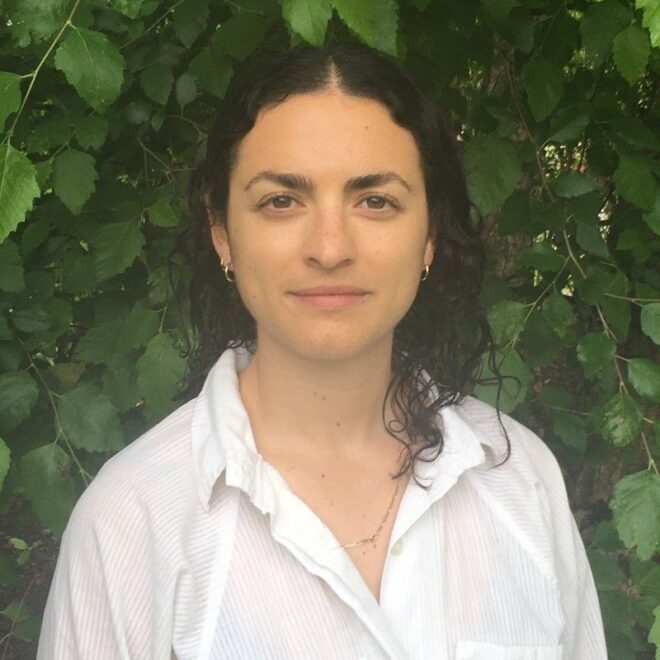
Dana Bourne
Pronouns: she/her
Job Title + Organization: Policy Advisor, NYC Mayor’s Office of Food Policy
Grew up in: Connecticut
How did you get into food systems work? I was lucky to work for two amazing farms while living in the Hudson Valley as an undergraduate—Hearty Roots and Montgomery Place Orchards.
One word you would use to describe our current food system? Captured
What’s a food system problem you wish more people were talking about? The environmental and labor impacts of the current protein obsession. While food and health have risen in media attention, the climate and biodiversity impacts of our food system seem to have disappeared from the conversation. And I wish there was more discussion regarding the connection between increased meat consumption and the dangerous working conditions for food workers in the livestock processing sector.
Who in the food world inspires you? Talea Fincke of Montgomery Place Orchards — my first farm boss who sings and dances as hard as she works. Her love for plants, soil, delicious food, and the community that she built around the farm are the reason I still work in food systems!
Your breakfast this morning: Oatmeal with ground flax seeds and fruit
Favorite NYC food spot and why? A bowl of borscht at Little Poland
Must-read or must-listen: Food Fix newsletter from Helena Bottemiller Evich
Social media must-follow: @greatdixterofficial I love to follow gardens around the world that I one day hope to visit. Top of my list is Great Dixter.
What, if anything, is giving you hope right now? I’m finishing up my Master Composter Certificate. In each class, I meet new people from across the city who are passionate about soil health, environmental justice, circular economies, and contributing to make our city a greener, healthier, more livable place for all New Yorkers. Fills me with hope!
Maggie Burke
Pronouns: She/Her
Job Title + Organization: Project Manager, Gotham Food Pantry
Grew up in: Ithaca, NY
How did you get into food systems work? I started engaging in food systems work my freshman year of college. I was sitting in an introductory biology class discussing the environmental impacts of our food system. The equation didn’t add up: we were farming so intensively that we degraded our lands, yet food wasn’t reaching those who needed it the most. From that lesson, a passion was ignited. I changed my major to study food systems, engaged in research around urban farming, and later pursued a master’s degree in agricultural science to better understand all facets of the food landscape.
One word you would use to describe our current food system? Inequitable
What’s a food system problem you wish more people were talking about? The decline of small and mid-sized farms in the U.S. is something I wish got more attention. These farms are essential to local food systems, but many are being squeezed out by economic pressures. Protecting their viability is critical if we want a food system that is resilient, diverse, and rooted in community.
Who in the food world inspires you? I’m inspired by José Andrés, whose work with World Central Kitchen shows us how food can be mobilized quickly and thoughtfully to support communities in times of immediate need.
Your breakfast this morning: Avocado toast and a fried egg
Favorite NYC food spot and why? Trad Room in Brooklyn. The restaurant atmosphere is amazing, the staff are so welcoming, and the food is always a 10/10!
Must-read or must-listen: Our Changing Menu: Climate Change and the Foods We Love and Need by Michael P. Hoffmann, Carrie Koplinka-Loehr, and Danielle L. Eiseman
Social media must-follow: @onelovecommunityfridge, @foodtank, @usyd.garden
What, if anything, is giving you hope right now? The power of community rallying gives me a lot of hope right now. During my time at Gotham Food Pantry, I’ve had the honor of meeting dozens of community organizers working to improve food access and security for their neighbors. Seeing people consistently show up for one another with so much care and dedication reminds me that real, lasting impact is already happening at the local level.
Brandy Cochrane
Pronouns: She/Her
Job Title + Organization: Plant Candy
Grew up in: Baltimore
How did you get into food systems work? Honestly, it started with making food. Everyone eats; that’s the one thing we all have in common. So sharing ways to do it simply and healthfully felt like the most natural place to begin. It wasn’t a grand plan, it was just a real need that I could actually do something about.
One word you would use to describe our current food system? Compromised
What’s a food system problem you wish more people were talking about? How hard it is to get clear, straightforward information about what foods are actually ideal for your wellness. Food has been so thoroughly commoditized that the truth gets buried. People genuinely don’t know what to eat… not because they don’t care, but because the noise is intentional. It doesn’t have to be this complicated.
Who in the food world inspires you? The people doing community work that we rarely hear about. There are so many micro movements happening quietly in neighborhoods, people making sure others get fed, no cameras, no recognition. Those are the ones that move me. That’s where the real work happens.
Your breakfast this morning: A coconut milk yogurt bowl with a mix of nuts, seeds, blueberries, powdered ginger and cinnamon.
Favorite NYC food spot and why? Outside. New York City is full of so much beautiful randomness if you dare to explore it. You never know who you’ll run into, what you’ll learn, or what experience will shape you from the moment you step out the door to the moment you come back home. Choosing one favorite place feels almost impossible in this city. But that’s exactly the point. The secret sauce of New York is in the endless possibility of just showing up, being present and seeing what the day brings.
Must-read or must-listen: Who Moved My Cheese? By Spencer Johson
Social media must-follow: The Diary of a CEO
What, if anything, is giving you hope right now? People’s curiosity. People are genuinely open to eating well and they actually want it, not because someone told them to, but because they feel the difference. They’re growing food, talking about it, trying new things, and passing it along. That organic nature of the process is real and it’s growing.
Kimberly Conchada
Pronouns: she/her
Job Title + Organization: Nutrition Education Coordinator at NYC Department of Health and Mental Hygiene
Grew up in: Los Angeles & Long Beach, CA
How did you get into food systems work? When I was 16, I got my start in professional cooking by completing a free culinary arts certificate program through my local school district; I then worked in restaurants, catering, and grocery stores for years afterward. I earned my BA in Human Geography & International Studies from CSU Long Beach and received my MA in Nutrition & Food Studies from New York University.
Since relocating to NYC in 2016, I’ve worked as a personal chef, cookie pusher, and with Careers through Culinary Arts Program (C-CAP), City Harvest, and now DOHMH’s Healthy Eating Unit.
In the summer of 2020, I founded the Foods of the Diaspora Fundraiser, a hot meal distribution project created to advocate for the preservation of ancestral cooking methods and heritage foods, while bringing attention to food insecurity, gentrification, and community building in Brooklyn.
I started as a contractor for the Health Department in 2021 and have worked with a number of different programs addressing access to food and nutrition resources. Since joining the agency, I am most proud of projects focused on updating nutrition education curricula and trainings to be more culturally affirming and trauma-informed, to promote weight neutrality, and to better represent the diverse foodways of New Yorkers.
One word you would use to describe our current food system? Commodified with a capital C.
What’s a food system problem you wish more people were talking about? Rising global wealth inequality is fueling the weaponization of hunger in Sudan, Palestine, Haiti, and so many other regions. These are some of the most unfathomable crises of our lifetime and deserve so much more attention.
Who in the food world inspires you? Maria Orosa—the Batangueña scientist who invented banana ketchup and other foods that saved thousands of lives from starvation during wartime. She advocated for the preservation of our native foods and natural resources of the Philippines. + The inaugural members of NYU’s Food and Racial Equity (FARE) Collective who are impacting food systems all over the world.
Your breakfast this morning: An iced almond milk latte and callaloo patty from Beets Social Cafe in Ocean Hill/Bedstuy.
Favorite NYC food spot and why? Making atsara or lumpia or pandesal with sister friends and other loved ones around our kitchen table; Weeksville Heritage Center’s Food As Collective Memory events in 2019 still stirs my soul; anywhere Kreung Cambodia is; Taste of Heaven in Williamsburg (iykyk); Dolly’s for banana pudding soft serve; Brighton Beach for Georgian cheesy bread; in our backyard in Bedstuy with fur babies and my honey behind the grill.
Must-read or must-listen: Anything written or recorded by the poet Maria Rubio or the reporter/author Caitlin Dickerson.
Social media must-follow: @twopplcooking Friday night dinner; @streetvendorproject; @lolas.apo because food, plants, and land are sacred, and we should follow those who embody and practice this.
What, if anything, is giving you hope right now? The prospect of sitting under the kalamansi tree in my parents’ backyard this summer, eating something I didn’t cook.
Vanessa Maria Cruz
Pronouns: She/Her
Job Title + Organization: Program Manager/ScratchWorks
Grew up in: McAllen, Texas
How did you get into food systems work? Growing up on the border of Mexico and Texas in a historically agricultural community, food systems were part of my everyday life, even before I had the language for it. My maternal grandparents lived with us, and they were on more than five medications a day for heart disease, diabetes, and high blood pressure. I watched them get sicker over time, and it felt normal because it was so common in my family and community. Then one day, I came across a food and nutrition documentary on Netflix that explained how many of these same diseases could be prevented through diet and lifestyle. It might sound surprising, but it was the first time I had ever heard there was a connection between what we ate and our health. That’s when it clicked. The food system was working against us. I felt angry that no one had shared this with my grandparents or me. It felt like we had been failed. That moment shifted everything. I became determined to make sure other families didn’t have to one day realize these conditions weren’t inevitable. I went on to study nutrition and public health, becoming a dietitian and working in communities like my own.
One word you would use to describe our current food system? Potential
What’s a food system problem you wish more people were talking about? I wish more people were talking about how a system originally designed to support American farmers and feed children is now, in many ways, working against both. The frustrating part is that it wouldn’t take as much as people think to fix: we could shift the status quo much faster with the right adjustments. A high-impact change would be to give schools more flexibility with the funding they already receive, so they can support their local economies and serve food that meets their communities’ needs. It’s not about more money; it’s about allowing that money to be spent in the right way. Right now, programs like the USDA commodity program can feel like a beast to navigate. Most people don’t realize the complexity of decisions and regulations behind a single hot lunch; yet, school food professionals manage it every day for 30 million students, adding up to over 4.8 billion lunches every year. I would hope that if more people understood that, there would be a lot more urgency to make the system work better for everyone.
Who in the food world inspires you? School Food Professionals
Your breakfast this morning: Oatmeal
Favorite NYC food spot and why? Whenever I feel nostalgic for home, I go to Burritos Juarez because everything from the smell of the food to the energy of the staff reminds me of my community.
Must-read or must-listen: Kid Food by Bettina Elias Siege
Social media must-follow: Marion Nestle – Food Politics
What, if anything, is giving you hope right now? Kids loving their school lunch!
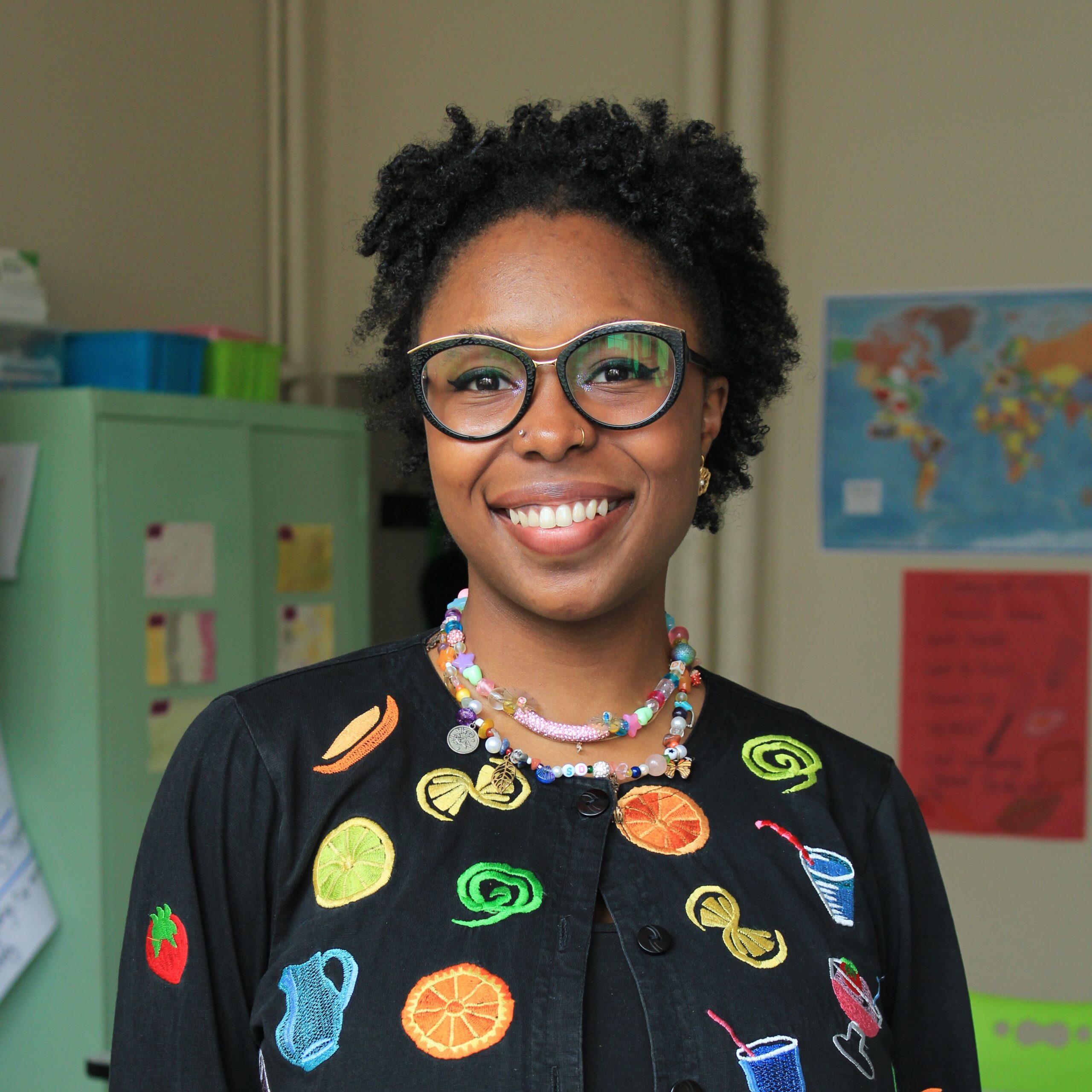
Sasha Dubose
Pronouns: they/she
Job Title + Organization: Chef Educator at Harlem Grown
Grew up in: Middletown, DE and Maplewood, NJ
How did you get into food systems work? My time in NYU’s undergraduate food studies program instilled in me how important it is to be an agent of change within our food systems. It was never enough for me to have my knowledge stay in the classroom. Everyone deserves to know how our food system currently functions, and more importantly, how to make it better for all of us. I wanted to work directly with the people on the ground — the chefs and farmers who keep us fed. I’m lucky to live my food systems dreams — immersing Harlem’s youth into our local food system and stewarding the next generation of change makers.
One word you would use to describe our current food system? Commodified
What’s a food system problem you wish more people were talking about? Labor. Always labor. When we reckon with the fact that chattel slavery serves as the foundation of our modern day food system, that is when we can start making necessary changes.
Who in the food world inspires you? Anyone who keeps anyone fed. That being said, shout out to Fannie Lou Hamer, Edna Lewis, Jessica B. Harris, Taylor Early, Shanon Morris, my ancestors, and all the Black women in the space doing the damn thing!!
Your breakfast this morning: Y’all caught me on a good day — A Bacon, Egg, and Cheese from Harlem Breakfast Company, berries, vanilla honey yogurt from Trader Joe’s, some coffee, and some water!
Favorite NYC food spot and why? #hardestquestionever. I absolutely adore Raku. Specifically, their location in Hells Kitchen. There’s absolutely nothing in my life a steaming bowl of udon followed by a hefty glass of hojicha and a pastry cannot fix.
Must-read or must-listen: Black Food by Bryant Terry. That book is so foundational to how I think about food, and it features such wonderful chefs and writers!!
Social media must-follow: @snackwithsash 😉
What, if anything, is giving you hope right now? Working with young people is the most hope-giving thing I do on a regular basis. Getting the next generation excited about everything from eating veggies to larger topics in food systems keeps me motivated to continue doing the good work.
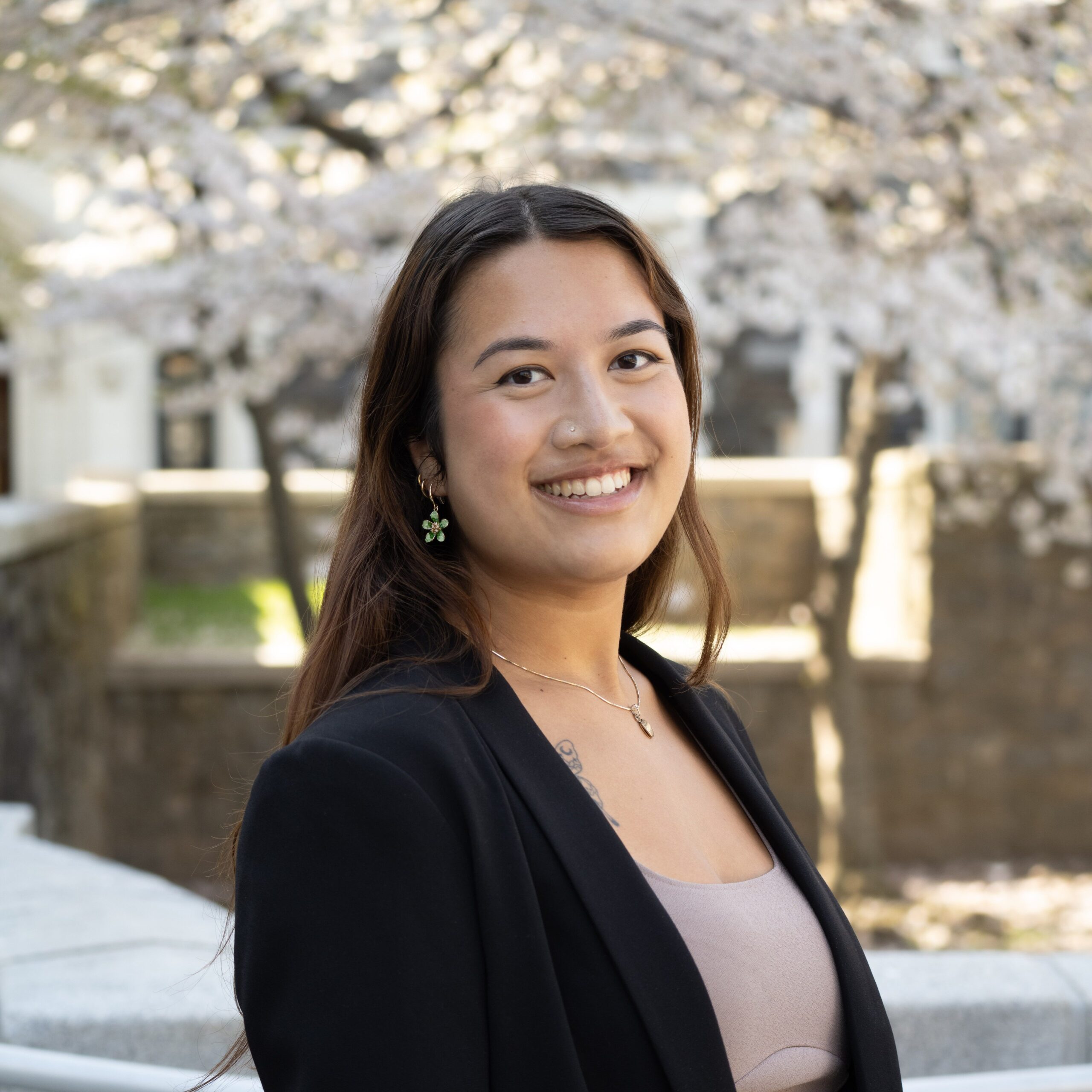
Kathryn Gioiosa
Pronouns: she/her
Job Title + Organization: Co-Executive Director, TREEage
Grew up in: Queens, NYC
How did you get into food systems work? “Growing up in Queens, I became aware of the vast inequities throughout New York City from a very young age. I saw how, depending on one’s zip code and resources, their access to food, education, healthcare, and more was drastically different. In high school, I wanted to get involved in local action, so I got involved in climate justice organizing. I co-founded TREEage with fellow students to give young people the resources and community to build the safe and livable future we want.
Now, TREEage has over 3,000 student members across all 5 boroughs of NYC, working on hyperlocal city and state climate policy, community organizing, and mutual aid. To address NYC’s broken food systems, we bought three community fridges that students operated in collaboration with community organizations. In 2025, we launched our mutual aid arm, TREEage Against Hunger. By partnering with community gardens, farms, and other organizations, we are mobilizing students across NYC to fight food insecurity. Not just by distributing food, but by helping build the local systems that keep communities fed.
One word you would use to describe our current food system? Unjust
What’s a food system problem you wish more people were talking about? Supporting food systems workers, especially informal and migrant workers. These workers need labor protections and fair wages, especially against extreme weather and heatwaves, which are becoming increasingly common.
Who in the food world inspires you? Annette Nielsen
Your breakfast this morning: Pineapple bun and Hong Kong milk tea
Favorite NYC food spot and why? The New World Mall food court in Flushing. It’s still the best food court in Flushing, where you can find nearly every type of Chinese food, plus more cuisines. My go-to orders are pan-fried buns, hand-pulled noodles with beef, Taiwanese popcorn chicken, lamb stew, and bubble tea.
Must-read or must-listen: Stirrings: How Activist New Yorkers Ignited a Movement for Food Justice by Lana Dee Povitz
Social media must-follow: @enyfarms, @bk_rot, @fairfoodprogram, @treeage_team
What, if anything, is giving you hope right now? Local action and intersectional solidarity.
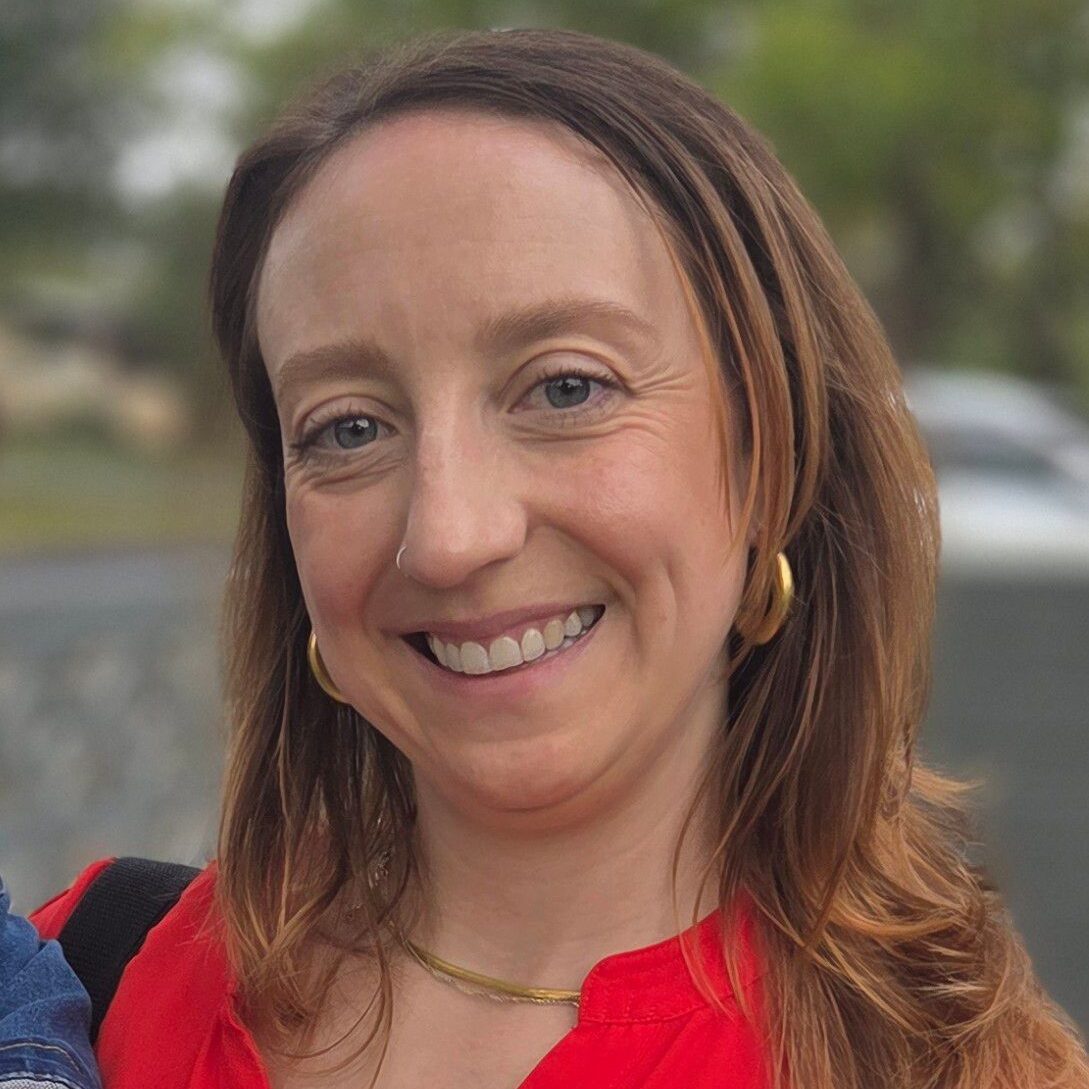
Megan Hall
Pronouns: She/Her
Job Title + Organization: Senior Director of Programs, Brighter Bites
Grew up in: Rural midwest Wisconsin
How did you get into food systems work? “My path into this work really begins on a small farm in rural Wisconsin, where I grew up with a deep appreciation for fresh, seasonal food and the community that forms around it. Beyond the farm, weekends meant loading everything up to sell at large regional farmers markets—loved the energy of those spaces, the way food had this remarkable ability to bring people together. I didn’t have the language for it at the time, but I was experiencing something foundational: food as community, food as care, food as connection.
The moment that directed my work towards health, nutrition, and food systems was during a Community Health Internship while attending the University of Wisconsin. Speaking with neighbors managing diabetes, one conversation stayed with me: a community member told me they knew what they *should* be eating, but when Cheetos were the only thing available, that’s what they had to eat. It was a clarifying moment. This was never a knowledge problem. It was an access problem, a systems problem.
After earning an MPH and completing the Dietetic Internship at the Tulane University School of Public Health and Tropical Medicine, I spent a year working as a clinical dietitian at Tulane Medical Center. My patients’ stories continued to reinforce the same truth: it is the structural barriers around cost, access, time, and geography that so often stand in the way of healthy eating. I then managed federal child nutrition programs, in the thick of the pandemic, where policy moved to the center of my work in a way it hadn’t before.
Now, at Brighter Bites, I have the privilege of working at the intersection of policy, nutrition, and food access every day, including in partnership with the NYC Department of Education and local food rescue organizations, all oriented around the same goal: making fresh produce and nutrition education accessible (and fun!) for the children and families who need it most.
One word you would use to describe our current food system? Connected
What’s a food system problem you wish more people were talking about? the loss of SNAP-Ed—education is not the only answer, but essential for shaping healthy behavior of the next generation!
Who in the food world inspires you? Dr. Shreela Sharma
Your breakfast this morning: Smoothie
Favorite NYC food spot and why? still figuring that out!
Must-read or must-listen: Hysteria podcast—very much not food-related, but the only podcast I have time for these days!
Social media must-follow: Yummy Toddler Food – as a new mom, my meal prep looks very different!
What, if anything, is giving you hope right now? walks in the park with my daughter and partner—maybe not hope, per se, but at least a little peace of mind
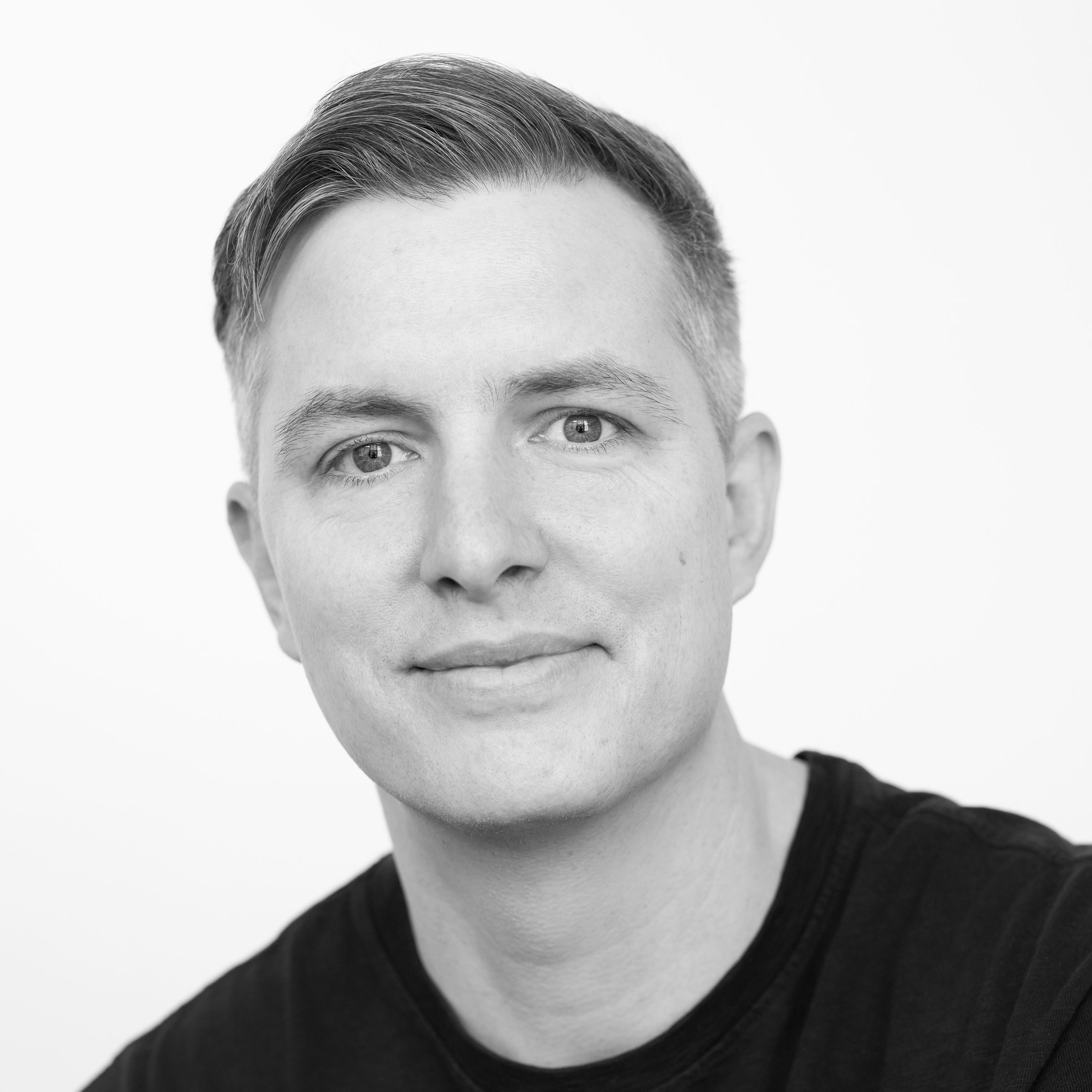
Evan Hanczor
Pronouns: he/him
Job Title + Organization: Chef & Owner, Little Egg; Chef & Founder, Tables of Contents
Grew up in: Florida, Connecticut
How did you get into food systems work? I was a writer before I began cooking professionally, and more importantly a reader. In one of my first restaurant jobs, at The Dressing Room in Westport, CT, I was fortunate to be learning how to cook at a place that prioritized sustainability and local sourcing, run by someone, chef Michel Nischan, who was at the forefront of that kind of focus in restaurants and beyond, including in nonprofit and food access work which he has done incredible and inspiring work in over the years. That restaurant environment, paired with my tendency to learn both by doing (cooking in the kitchen, interacting with farmers, learning from the team) and by reading (early food books for me were things like Diet for a Small Planet, Slow Food Nation, The Omnivore’s Dilemma, essays by Wendell Berry) helped me to understand that food was something I wanted to engage with on both tactile and intellectual levels, and fed my curiosity about the ways so many things I cared about intersected in one way or another with food.
I found a thought and action partner when I began cooking at Egg in Williamsburg, where George Weld had created a mission- and values-driven restaurant engaged with not only making impeccably-sourced, thoughtfully-prepared, delicious and accessible food (for the most important meal of the day) but was also involved in community support, agricultural work, advocacy, and thought leadership, including insisting on food and specifically restaurant work as a noble and serious profession.
Egg and our subsequent restaurant, Parish Hall, led me to work with the James Beard Foundation, particularly as an early participant in their Chef’s Boot Camp for Policy and Change. JBF’s focus on sustainability and impact work was growing as I worked with them, and led to work with other food advocacy organizations with perspectives ranging from the local & national (Glynwood, NRDC, Chef’s Collaborative, Just Food) to the global (Oxfam, Chef’s Manifesto.)
Over the years, FIG NYC, led most sustainingly by Ora Wise and Kimberly Chou Tsun An but stewarded and energized by so many others, has been a particularly deep root for me as an imaginative, flexible, deeply principled organization with an inspiringly expansive view of food organizing work. We’ve been lucky to serve as a home soil for FIG work and meetings at Egg and Little Egg for about a decade now, and there’s always inspiring new work and conversations to be drawn into.
The Glynwood Center for Regional Food and Farming has been another incredibly fertile home for me in my food & ag journey, again for over a dozen years now. They are irreplaceable on so many levels – conveners, coordinators, farmers and researchers, educators, funders, and community builders in the Hudson Valley where their work is centered but of course pollinating across NY city, state, and beyond. I’m lucky to have collaborated, seeded ideas, and worked so closely with them over the years.
Basically I’ve been lucky to repeatedly seek out and also to find communities of food systems visionaries that have welcomed, informed, and supported me, which says a lot about the community of people doing this work.
One word you would use to describe our current food system? Vital
What’s a food system problem you wish more people were talking about? The prevailing preference for silver bullet, super-scalable “solutions” to food system challenges, rather than a mindset that favors a patchwork of small scale, place-appropriate, diverse and nuanced approaches is one thing that frustrates me about lots of food systems work. I appreciate the desire to achieve the greatest impact in the shortest amount of time, and don’t want to discount the power of cross-pollination between practitioners or the ways knowledge and approaches can be shared and applied successfully in lots of different places, but I think that focus leads much-needed investment to flow towards bigger-sounding fixes which then become the boxes into which local food stewards are asked to fit themselves, rather than being tailored to the needs of the land or people in one place or another.
And on the restaurant front, I’d like to see a way of accounting for the value of good, independently-owned, community restaurants in their neighborhoods and, in New York, the city as a whole, that is not reflected in the balance sheet of those restaurants. There are so many services these places provide for their neighbors across the spectrum of community building, safety, social cohesion, cleanliness and beauty, pleasure, innovation, and beyond, not to mention tangential fiscal benefits like increases in nearby property value, and those should be viewed as worth investing in at a municipal/city government level, whether that’s through tax breaks or grant money or something!
Who in the food world inspires you? The good news is there are too many to name and I’m learning about new inspirations every year. I’ve already named several inspirations above, but two I’ve learned about in the past year are Reginaldo Haslett-Marroquin of Tree Range Farms and the Breadtree Farms crew. I’ve learned so much from the farmers and food artisans I’ve worked with and gotten to know over the years at the restaurants, and these are two to add to that list.
Your breakfast this morning: Oatmeal with flax seed, ginger, dates, peanut butter, maple, cinnamon and turmeric
Favorite NYC food spot and why? This is why we live in New York – you don’t have to choose! And it’s impossible to. A very short list of some favorites, with the knowledge that I’m probably forgetting my actual favorite, would include: Insa, The Long Island Bar, Court St Grocers, Lola’s, Sunn’s, Brooklyn Granary and Mill, Otway Bakery, Caputo’s Fine Foods, Yemen Cafe, Tashkent Market, a trip to Flushing, Caracas at Beach 95th…let’s leave it there.
And having spent so many mornings at them over the years, the GrowNYC Greenmarkets — particularly at Union Square, Carroll Gardens, and Grand Army Plaza — are, for me and I think for the fabric of the city, some of the most special places in New York, food or otherwise.
Must-read or must-listen: The Death and Life of Great American Cities by Jane Jacobs
Social media must-follow: @poetryisnotaluxury
What, if anything, is giving you hope right now? I just had a daughter, amidst all the verdant possibility of spring – blocks lined with blossoms, lambing season at the farm I love, ramps sprouting in the woods by my parents’ house, favorite vegetables returning to the market tables. There’s a lot that can make hope difficult to find, but this has really felt like the season for it.
Spencer Harbo
Pronouns: He/Him
Job Title + Organization: Environmental Design Specialist, GrowNYC
Grew up in: The Garden State
How did you get into food systems work? In my 20’s I spent some time working abroad in the Fergana Valley in Central Asia. Coming back to the US and seeing with fresh eyes the amount of stuff that we have here, particularly in our grocery stores, was a big shock. This led me to pursue graduate school in environmental psychology and community organization, and then a job at GrowNYC, with the goal of countering our consumer culture by helping to create more places where people can grow food, share resources, and spend time outdoors with their neighbors.
One word you would use to describe our current food system? Complex
What’s a food system problem you wish more people were talking about? The proliferation of app-based food delivery services and their impact on creating even more distance, both physically and psychologically, between where our food comes from and how it gets to our tables.
Who in the food world inspires you? Frances Moore Lappé
Your breakfast this morning: Eggs, cheese, and greens on tortilla with The Bronx hot sauce from Small Axe Peppers.
Favorite NYC food spot and why? Oasis in Williamsburg for serving great falafel and being a relative constant in a rapidly changing neighborhood.
Must-read or must-listen: Braiding Sweetgrass by Robin Wall Kimmerer.
Social media must-follow: None!
What, if anything, is giving you hope right now? The many community members I get to work with who volunteer their time and energy to steward New York City’s gardens and green spaces.
Camryn Paige Hellwarth
Pronouns: she/her/hers
Job Title + Organization: COO / Sprouts Chef Training
Grew up in: Northwestern Pennsylvania
How did you get into food systems work? My food journey began back in middle school when I read The Omnivore’s Dilemma, and I’ve been obsessed with sustainable food systems and people’s food choices ever since! I began my career working with the leadership team at places like Blue Hill at Stone Barns and the Northeast Organic Farming Association of Vermont, where my projects included researching food waste and running a traveling pizza oven at farm events; these hands-on experiences solidified my deep love for sustainable agriculture, community, education, and building systems.
One word you would use to describe our current food system? Disconnected
What’s a food system problem you wish more people were talking about? I wish we were all making a lot more noise about the lack of diversity and loss of nutrients in food choices at the grocery store. Loud branding and countless packaged products give the false illusion of unlimited options, while produce arrives underripe and has continuously decreasing nutrients (and flavor!) from decade to decade.
Who in the food world inspires you? The hardworking team at Foodshed Capital, who support regenerative farmers with essential loans and business advising to help build more regenerative regional foodsheds.
Your breakfast this morning: Matcha latte with oat milk and banana bread from Bakeri in Greenpoint.
Favorite NYC food spot and why? The Málà Project is my go-to neighborhood spot for the best vibes, great Sichuanese dry pots, and a guaranteed good time with friends or fam. I also love that this restaurant is led by such a rock star female food entrepreneur, Amelie Kang!
Must-read or must-listen: Animal, Vegetable, Junk by Mark Bittman.
Social media must-follow: @biteimpact for sustainability & nutrition workshops and insights from behavioral science reports.
What, if anything, is giving you hope right now? It’s hopeful to see trends that show consumers are most interested in flavor and nutrients! I believe that our pursuit of great tasting food will help create demand for more nutrient dense, sustainable ingredients that are grown in rich soil and nurtured by regenerative practices.
Leslie Hiciano
Pronouns: She/Her
Job Title + Organization: Special Projects Coordinator/NYC Parks Greenthumb
Grew up in: Manhattan
How did you get into food systems work? My world is gradually converging around this work after years of pursuing volunteering and learning opportunities that genuinely illuminated my curiosity. Though I studied architecture, I have been drawn in by the elegance of nature and its living, breathing, ecological systems. The work of those who exist and thrive within these systems without disrupting them, instead tending to them, even creating reciprocal relationships across species, has become the most impressive work to me. Trying to mirror that, trying to understand and contribute to the maintenance of the worlds around me while persistently trying to lessen my impact, trying to marry manmade systems with the natural, has felt more rewarding than attempting to design new architectures or create new objects.
One word you would use to describe our current food system? Subsidized
What’s a food system problem you wish more people were talking about? The gradual and strategic othering of certain identities in order to force those people into hidden, crucial labor without fair compensation. As it stands, most consumers in the food shed are not able to participate in their own food systems in a meaningful way beyond blind dependence and those who prop up the food system aren’t celebrated or paid living wages.
Who in the food world inspires you? Catskills Agrarian Alliance
Your breakfast this morning: Egg sandwich on rye sourdough, homemade kefir, iced soy cortado
Favorite NYC food spot and why? The open-air farmers’ markets because they awaken all my senses.
Must-read or must-listen: The One-Straw Revolution by Masanobu Fukuoka
Social media must-follow: @greenthumbnyc
What, if anything, is giving you hope right now? Befriending bacteria. They’re so small, arguably invisible, and hold so much power. I’ve been playing with fermentation and keeping kefir grains healthy at home and I’m finally recognizing some general patterns and principles around nurturing beneficial bacteria—in food, in our bodies and on our skin, in soil and compost. Forging a relationship of care with my pet bacteria and seeing palpable success has been empowering.
Alex Michael Hughes
Pronouns: He/Him/His
Job Title + Organization: Project Hospitality
Grew up in: Southeast, USA
How did you get into food systems work? Having lived throughout the Southeast in Tennessee, Arkansas, Missouri, Alabama, Mississippi and South Carolina preceding my move to New York, I have a diverse youth experience. I have seen, and lived, what can and does happen when there is not effective food policy in place to keep families fed when they don’t have the resources to do it themselves. People should not have to rely on the goodness of others or faith communities to be able to provide the most basic of needs. Among those needs is food. I studied in South Africa for a summer, which was a transformative experience. I knew I had to do something, albeit I did not know what my contribution would be. From there, I applied to the AmeriCorps program. That was almost ten years ago. The rest, as they say, is history.
One word you would use to describe our current food system? Immense
What’s a food system problem you wish more people were talking about? Manufactured scarcity
Who in the food world inspires you? Anthony Bourdain
Your breakfast this morning: 2-3 cups of coffee
Favorite NYC food spot and why? Tough. Locally, I have to give Smiley’s Bagels the nod. They have my favorite egg and sausage on a roll in Staten Island. I have had several of my best meals that I can remember at Gramercy Tavern at 20th St in the Flatiron District.
Must-read or must-listen: PBS. Please support independent journalism!
What, if anything, is giving you hope right now? There is a saying that in darkness, there is a light. I do believe we have that in the emergency food system (and hopefully beyond). I have encountered and met so many genuine, truly genuine people, that I have had the pleasure of working with in these times where the very policies that we advocate for are consistently at risk. We are a resilient bunch, and I am proud to represent not only myself, but the issue of food access through a dignified approach.
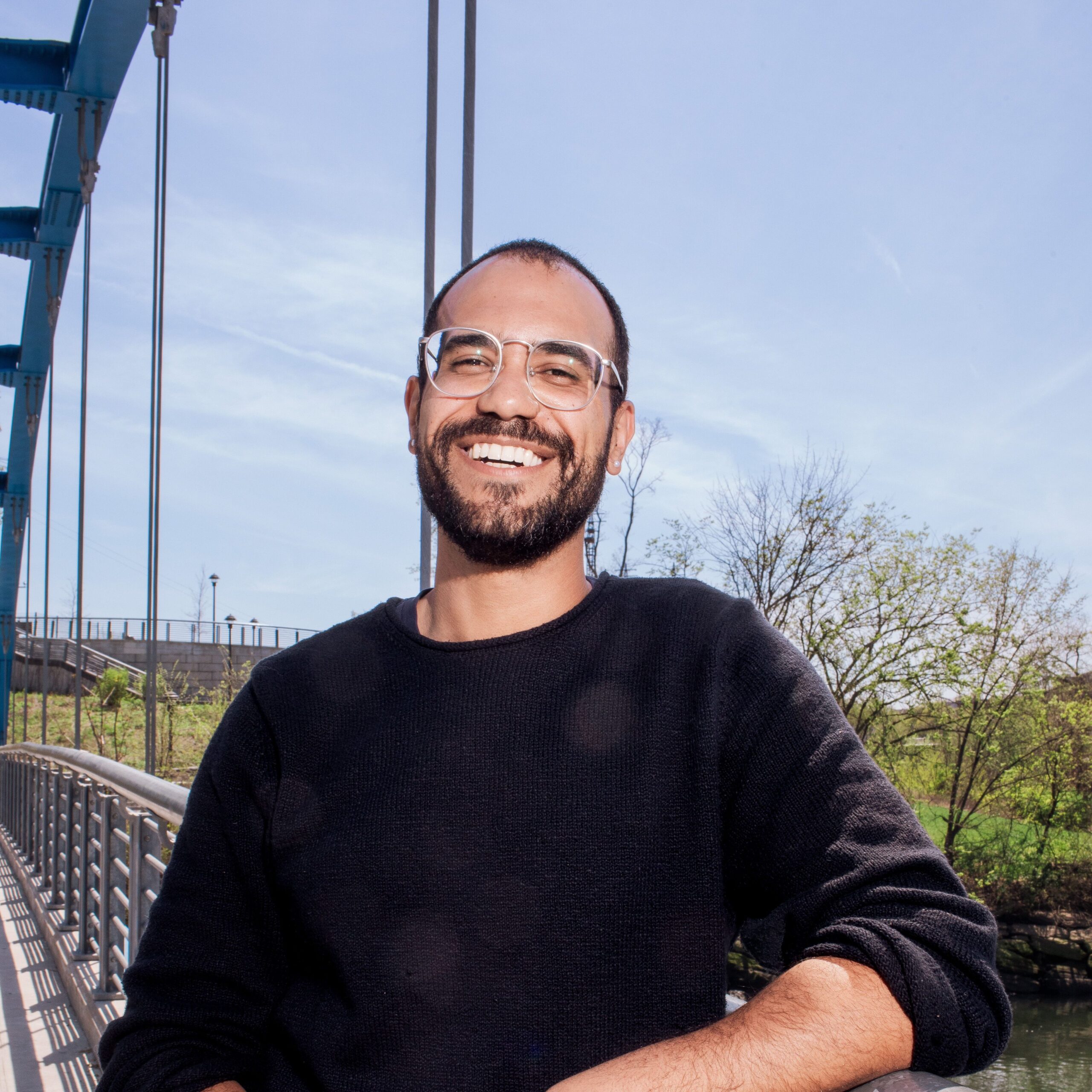
Nathan Hunter
Pronouns: He/They
Job Title + Organization: Foodway Coordinator with NYC Parks Department
Grew up in: Windsor, CT
How did you get into food systems work? I first got into “food systems work” when I was a young kid planting veggies with my mom in our family garden. It was the magic of growing carrots that sparked a love and wonder for our natural world within me. How magical is it that you can plant a seed and few weeks later a delicious vegetable is ready!
I was further inspired by global communities across the world taking action to combat climate change and understood I could also be a part of the green revolutions and solutions. I actively organized and led a handful sustainability initiatives at my almer mater Manhattan University which allowed me to establish a rooftop garden and understand the impacts of growing food in an urban setting in a grassroots setting.
Post grad I was able to travel and be a part of several sustainability projects in Tanzania where I worked at the intersection of green energy and food production doing research on the benefits of using local biomass for fueling gasification cookstoves.
After my time abroad I was hired to lead sustainability initiatives through a nonprofit in Westchester, NY where I collaboratively maintained a network of community urban farms and gardens with the Southwest Yonkers Community that fed into a youth based farmers market and CSA program.
After 5 years supporting grassroot food production, I was introduced to the opportunity to manage the Bronx River Foodway with NYC Parks, one of the first edible food forests on NYC Parks property. Since 2018, I have been collaborating with Bronx community members and citywide stakeholders to understand how edible food forests could be woven into NYC landscapes. I continue to learn from the many growers around the city and country to envision ways of establishing sustainable food and native landscapes for NYers.
One word you would use to describe our current food system? Complicated
What’s a food system problem you wish more people were talking about? I wish more people were talking about Water and the scarcity of this vital resource! We need more convos about waterwise gardening and the impacts of drought and lack of water for humans!
Who in the food world inspires you? Journei Bimwala and community foragers across country making food accessible and fun again
Your breakfast this morning: Oatmeal with fruit, cinnamon, and honey
Favorite NYC food spot and why? This is tough….one of my favorite food spots is Cafe Himalaya, an incredible family owned Tibetan / Nepali restaurant in the East Village with warm family vibes and delicious food to match!
Must-read or must-listen: Food Law Gone Wild: The Law of Foraging by Baylen Linnekin
Social media must-follow: @HilatheEarth
What, if anything, is giving you hope right now? Seeing native plants bud and leaf out this Spring has been giving me lots of hope right now, reminding me so much is possible in the season ahead!
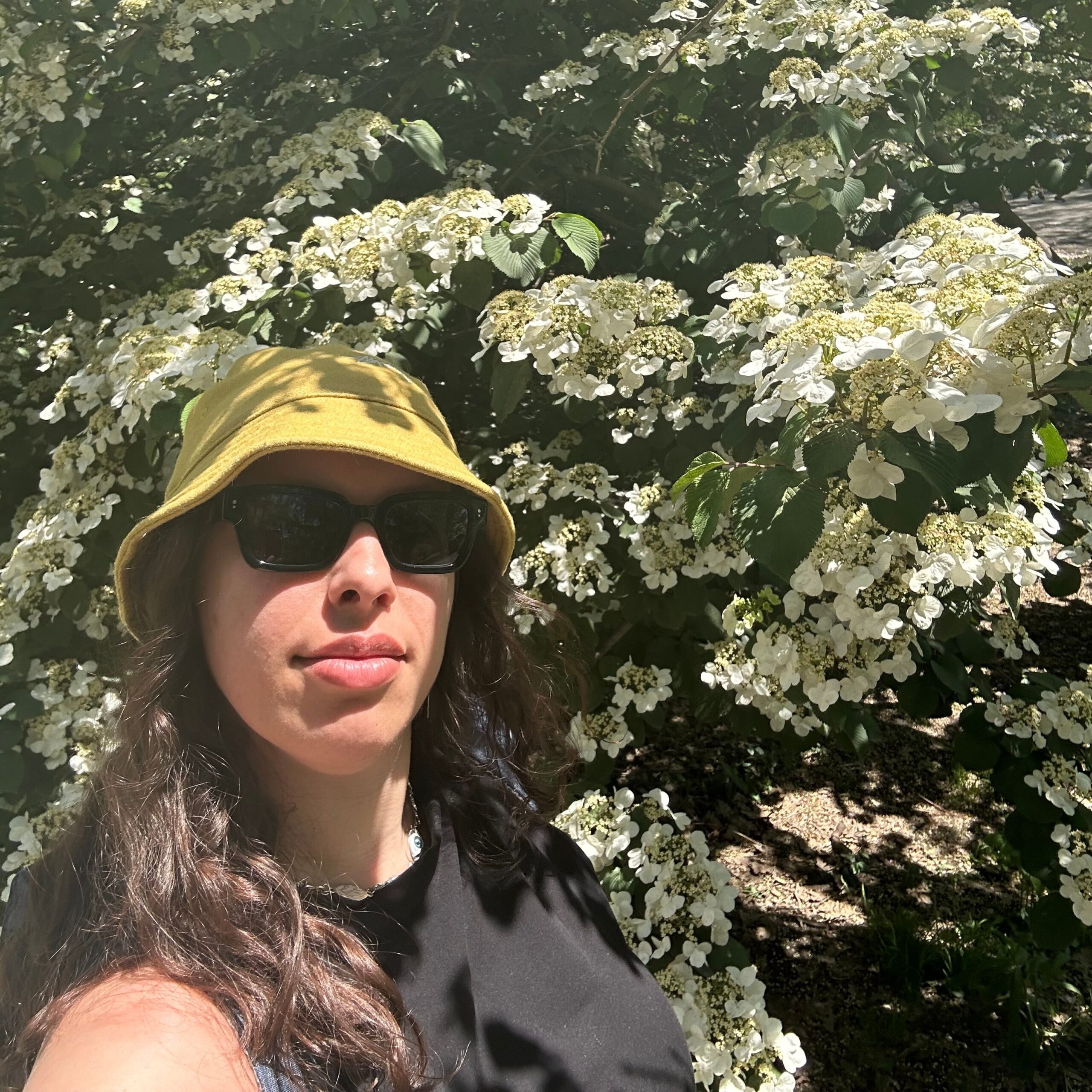
Sarah Jackson
Pronouns: she/they/chef
Job Title + Organization: Strategic Coordinator/Washington Heights and Inwood (WHIN) Food Council; Teaching Kitchen Chef/Lenox Hill Neighborhood House; Alumnus and Volunteer/Kinfolk Hunting Collective
Grew up in: Cleveland, OH
How did you get into food systems work? My food systems “work” began with organizing the colorful paper food stamps my mom and I shopped with at the Cleveland Food Co-Op in the 1990s.
Twenty years later, burnout from a decade of searing, emulsifying, and grinding at restaurants propelled me from the closing shift to the 9-to-5 when I secured a job in culinary workforce mentorship. I moved laterally into the food access space as the director, chef, and operations for a USDA NIFA funded program. Then, landed a gig as Community Food Educator for the Urban Farm at Randall’s Island, galvanizing food sovereignty education on the farm and at partnered sites.
All the while, I freelanced, hustled, and started unpacking my own food system at home uptown. In 2025 I joined The Teaching Kitchen at Lenox Hill Neighborhood House, a training model taking “farm-to-institution” from theory to praxis. I joined the Steering Committee on the Washington Heights and Inwood (WHIN) Food Council, a volunteer-led org creating food access and engagement in Northern Manhattan.
Late last year I earned my NYS DEC hunting tags and bowhunting license and became a mentee member of Kinfolk Hunting Collective. I am learning at the intersection of land and wildlife conservation through decolonial foodways and practices. The org matches mentors with mentees who may be marginalized from colonized wild game and fish foodways.
Food systems “work” is a fulfilling way to earn a living, but building toward real food sovereignty is the work of a lifetime. Onward!
One word you would use to describe our current food system? Oligopoly
What’s a food system problem you wish more people were talking about? Labor, labor, labor. Inequity for food and farm workers, nonprofit and academic workers etc, contributes to lost momentum, exploitation, and systemic burnout around the food system. Low wages and high turnover are a policy choice and business strategy crafting the illusion of scarcity in our food system across the board.
Who in the food world inspires you? My girlfriends and co-organizers in NYC who are queer, progressive, and creative in their roles as chefs, land stewards, and artists. Their uncompromising diligence inspires me to continue in this work year after year.
Your breakfast this morning: 1 Dunkin’ Donuts iced coffee, 1 handful of raspberries, 3 pre-natal vitamins, and 4 square inches of leftover lasagna
Favorite NYC food spot and why? Cocina Consuelo, the torta de pierna, no notes.
Must-read or must-listen: Turtle Island by Sean Sherman
Social media must-follow: @firstfoodsprogram
What, if anything, is giving you hope right now? The ancestors. If our ancestors survived colonization, fascism, and food scarcity so we could be here, what do we look like wearing hopelessness?
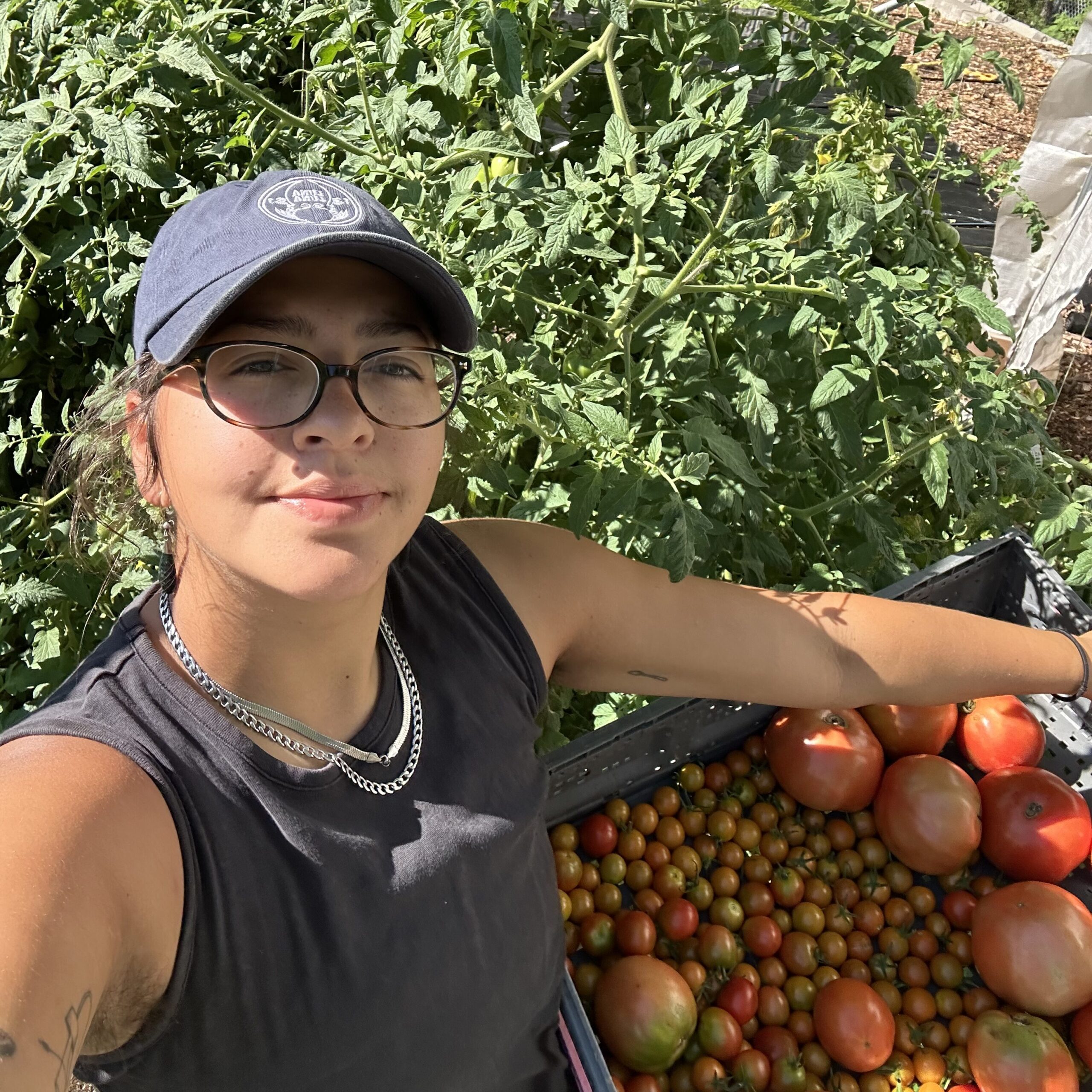
Amalia Jaimes-Lukes
Pronouns: She/They
Job Title + Organization: Education Manager of Red Hook Farms
Grew up in: Brooklyn
How did you get into food systems work? I got into food systems work when I was 18, working as a camp counselor. I was asked to manage a garden and lead programming for young campers, and I quickly fell in love with growing food alongside them. Through that experience and realizing that many young people didn’t know where their food came from or how it grows. My passion for agricultural education was ignited.
One word you would use to describe our current food system? Extractive
What’s a food system problem you wish more people were talking about? I wish more people were talking about the decline of native pollinator populations and what that decline says about our food system. The growth of monocropping across our food system has reduced biodiversity to the point that farms rely on managed pollination! The reduction of native pollinators highlights the need for policies that support more resilient, biodiverse, regenerative production systems rather than extractive ones.
Who in the food world inspires you? Isa Jamira
Your breakfast this morning: Smoothie with blueberries, mango, beets, apples, and so much more
Favorite NYC food spot and why? La Taq in Park Slope is one of my favorite spots! As a kid, it was my neighborhood Mexican restaurant named La Taqueria before closing for almost 20 years. They recently re-opened in the same location under their new shortened name and the food and tortillas are SPECTACULAR.
Must-read or must-listen: Somos Medicina by Chispa
Social media must-follow: herban.cura
What, if anything, is giving you hope right now? Working with young people who feel connected to the land we steward in community gives me hope. I’ve watched teens go from dirt-averse and bug-fearing to deeply engaged, nature-loving farm enthusiast. It’s a gift to witness, and even more so to help facilitate those connections. In an increasingly digital and disconnected world, it gives me hope that young people are still curious and passionate about their food systems and want to play a role in improving it.
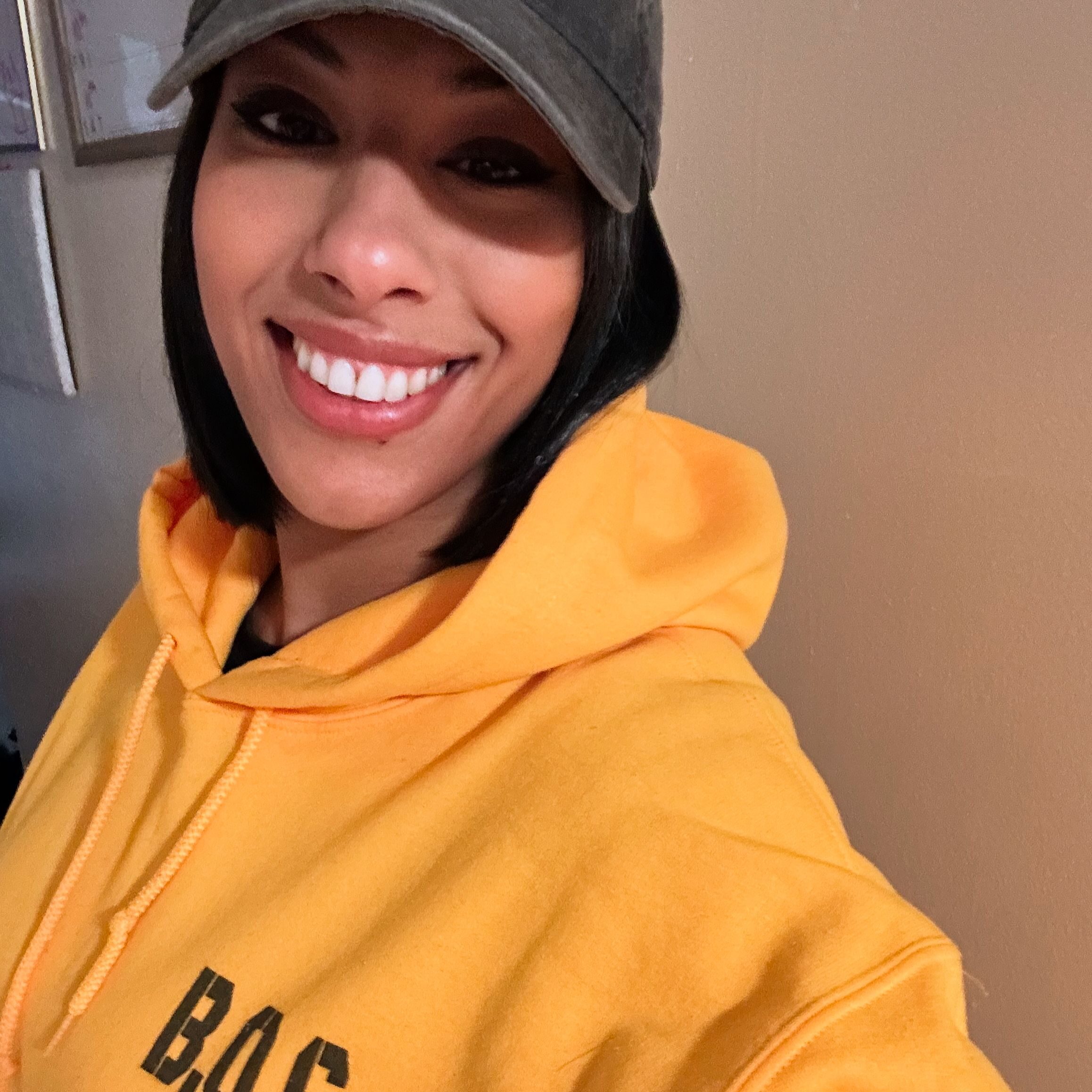
Madeline Marinez
Pronouns: She/Her
Job Title + Organization: Boots On Ground Inc
Grew up in: The Boogie Down Brown
How did you get into food systems work? I battled substance use for 14 years . Ive been in all over the new york city shelter system. I got into feeding the community because I know what it’s like not knowing where my next meal is coming from. Digging through trash and most soup kitchens and outreaches are closed on weekends. Im just a girl from the Boogie Down Bronx changing the narrative and fighting food insecurity , one hot meal and one smile at a time.
One word you would use to describe our current food system? Inequitable
What’s a food system problem you wish more people were talking about? One major food system problem in New York City is food insecurity. Despite being one of the wealthiest cities in the world, many people still struggle to access enough affordable and nutritious food. High living costs, low wages, and unequal access to grocery stores make it especially difficult for communities in areas like the Bronx to consistently find healthy options. This issue reflects a larger systemic problem, where resources are not distributed fairly, leaving many residents dependent on food pantries and community programs just to meet their basic needs.
Who in the food world inspires you? Chef Quie
Your breakfast this morning: Scrambled eggs with spinach avocado toast
Favorite NYC food spot and why? Charles Pan fried Chicken in Harlem because they embody the culture and soul that is Harlem and New york city
Must-read or must-listen: Jhene Aiko- Calm & Patient
Social media must-follow: Alwysmaddi3
What, if anything, is giving you hope right now? The work I do , every week feeding the south bronx. The smiles, the laughter and gratitude when I serve the people. watching how the community comes outs alongside of me and shows love and support to those in need.We are all human in search of connection and Love. I believe in always leading with your heart and leading by example. Even if it’s just you.
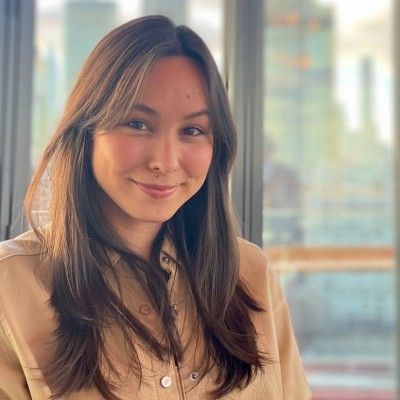
Sophie Martin
Pronouns: She/Her
Job Title + Organization: Director of Community Health Programs at Housing Solutions of New York
Grew up in: Philadelphia, PA & Dallas, TX
How did you get into food systems work? Throughout my career, whether on the East Coast or in Texas, my work has centered on serving underserved populations, and in recent years, has evolved to include a strong focus on food systems work and advocacy. I serve as the Director of Community Health Programs at Housing Solutions of New York, where I lead a comprehensive, client-centered program aimed at improving health outcomes among underserved communities. Our program uniquely integrates nutrition support, case management, and an on-site, supermarket-style pantry to address co-occurring medical conditions and the broader social determinants of health, including food insecurity. I am deeply committed to advancing equitable access to nutritious food and to driving programmatic and systemic change that strengthen community health. As a Registered Dietitian, I bring a clinical lens to this work- combining personalized nutrition education and counseling strategies with innovative, systems-level programming designed to promote long-term health, independence, and autonomy. By meeting clients where they are and providing coordinated support, we empower individuals to make informed choices that improve their overall well-being.
One word you would use to describe our current food system? Complex
What’s a food system problem you wish more people were talking about? A centralized food ordering system for community based organizations.
Who in the food world inspires you? The various Registered Dietitians that have mentored me throughout my career and that I work alongside.
Your breakfast this morning: Greek yogurt with frozen mango
Favorite NYC food spot and why? Tasty Hand-Pulled Noodles – the best fresh made noodles that bring me back to happy childhood memories!
Must-read or must-listen: Demon Copperhead by Barbara Kingsolver – an incredible story that highlights the challenges of addiction and institutional poverty
Social media must-follow: @encouragingdietitian
What, if anything, is giving you hope right now?
The ongoing resilience and support of our community.
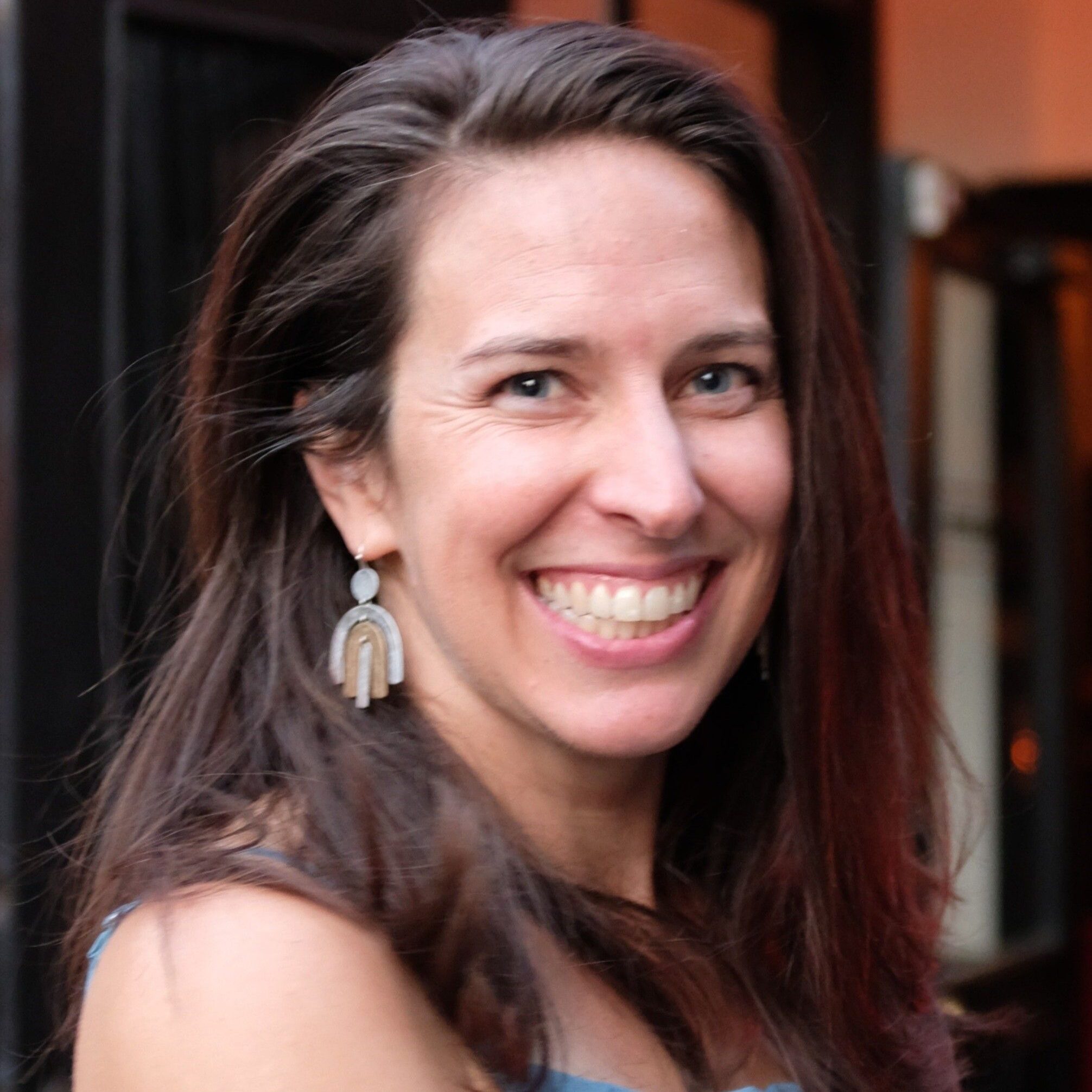
Delancey Nelson
Pronouns: she/her
Job Title + Organization: Urban Farms and Community Gardens Program Manager
Grew up in: Baltimore, Maryland
How did you get into food systems work? Growing up food always played a central role in all family and social gatherings. While getting my undergraduate degree in Historic Preservation and Community Planning from the College of Charleston, I was particularly drawn to the community planning portion of the degree and how urban planning relates to food, community growing spaces, and urban development. I followed that interest down many food system and community engagement rabbit holes, including running farmers markets, working in wineries, cideries, and diversified farms learning how things are grown, produced, and created, leading sales for an upcycled food company, and helping community leaders care for their local parks through stewardship and programming. All of these experiences have been cobbled together to where I find myself intertwined with food systems work personally and professionally on a daily basis. I currently manage the Urban Farms and Community Gardens program for the New York State Department of Agriculture and Markets, and could not be more proud of the incredible work that we are able to support around the state to increase food production, safety, storage, and distribution. Additionally, I am working towards completing my Masters in Nutrition at Tufts Friedman, focusing on Food, Climate, and Agriculture. Learning across the food system space is a lifelong journey!
One word you would use to describe our current food system? Powerful
What’s a food system problem you wish more people were talking about? There are so many different sectors affiliated with food systems, and there needs to be stronger communication, coordination, and resiliency within and among the various groups in order to provide clarity, understanding, and cohesion to create change.
Who in the food world inspires you? All the educators and grantees of the Urban Farms and Community Gardens grant program! They are all doing such incredible work in their communities.
Your breakfast this morning: Homemade yogurt and granola with sliced apple and black coffee
Favorite NYC food spot and why? I love exploring all the food spots in and around my neighborhood of Sunnyside, Queens, as there are endless cultural directions to enjoy depending on what mood strikes! Bonus points if I can sit outside or take it to a park.
Must-read or must-listen: These newsletters: The Offrange, FoodTank, Marion Nestle, The Farm-to-Institution New England
Social media must-follow: @tufts_nutrition; @nyagandmkts; @nytcooking
What, if anything, is giving you hope right now? The incredible work of individuals, community groups, schools, and organizations who are working to make a difference within their communities, creating change at a small scale that can grow into a much larger impact.
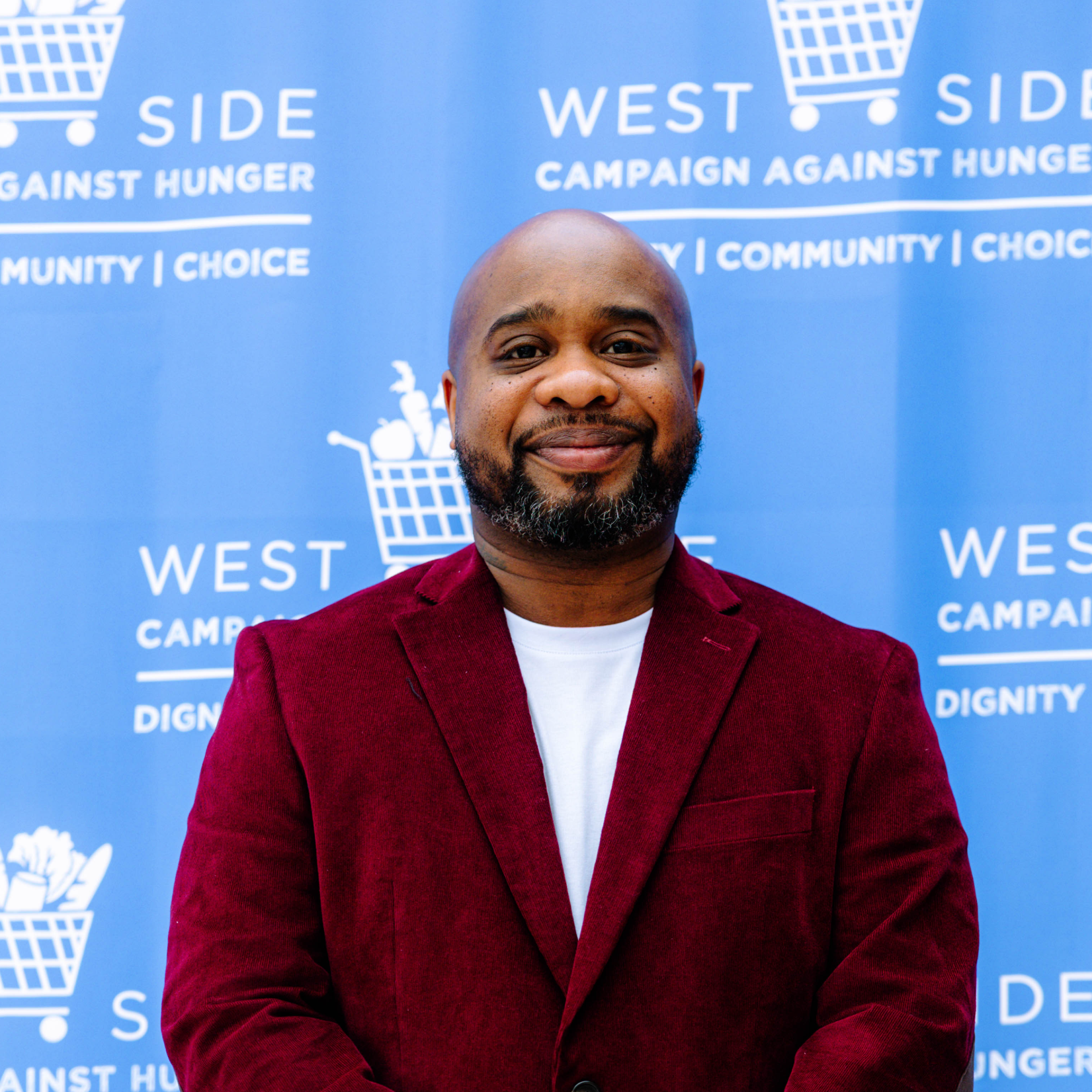
Jonathan Nina
Pronouns: He/Him
Job Title + Organization: Director Of Operations at West Side Campaign Against Hunger
Grew up in: New York City (Washington Heights)
How did you get into food systems work? Working in food service for 10+ years. Started in Fairway in 2012. Found joy working at West Side Campaign Against Hunger giving back to the community and helping those in need.
One word you would use to describe our current food system? Impactful
What’s a food system problem you wish more people were talking about? Nutritional education
Who in the food world inspires you? Volunteers
Your breakfast this morning: Avocado Toast
Favorite NYC food spot and why? Club A steakhouse. Restaurant always gets the sear and temperature correct on a filet mignon.
Must-read or must-listen: Marvin Gaye
Social media must-follow: Not really into social media. Do love to keep up with ESPN.
What, if anything, is giving you hope right now? Just waking up gives me hope. It provides another opportunity to make a difference.
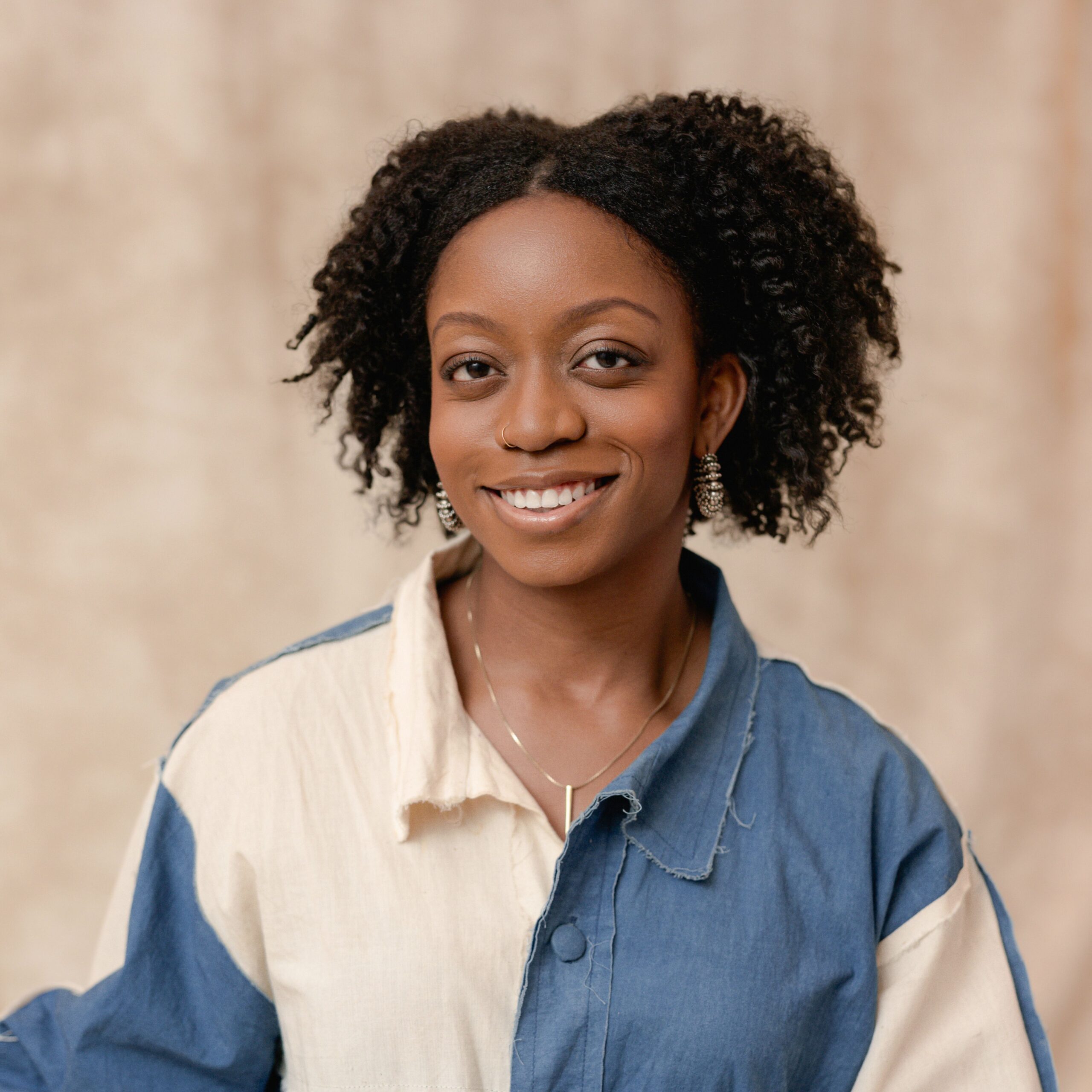
Adaeze Okoli
Pronouns: She/Her
Job Title + Organization: Chief of Staff, Rethink Food
Grew up in: Madison, WI
How did you get into food systems work? Like many, I’ve always loved food. I grew up in a tight-knit community of West African immigrants where many a weekend featured a buffet of cultural staples and treats. It was my first lesson in how food can be a tool for fostering and building community. Later in my twenties, after studying economic development, I had a stint working on an ag-tech startup. Through learning more about the needs and challenges of farmers in the Global South, I realized how energized I felt about chipping away at food system challenges. Year by year, job by job, project by project, I intentionally oriented my career around how to make our food system better for our communities and the planet.
One word you would use to describe our current food system? Expansive
What’s a food system problem you wish more people were talking about? I wish we talked more about the fact that we actually have more than enough food to feed everyone, but it’s about access and coordination.
Who in the food world inspires you? Karen Washington
Your breakfast this morning: Breakfast tacos 🙂
Favorite NYC food spot and why? Ali’s Roti Shop in Bed-Stuy. It’s no frills, cash only, and usually has a line, but the goat curry roti I swear has healing powers. It’s the ultimate comfort food.
Must-read or must-listen: The China Study by T. Colin Campbell and Thomas M. Campbell
Social media must-follow: BEM Brooklyn
What, if anything, is giving you hope right now? I’m always inspired that even during the bleakest times, there are always people using their skills, resources, talents, and creativity to support their neighbors.
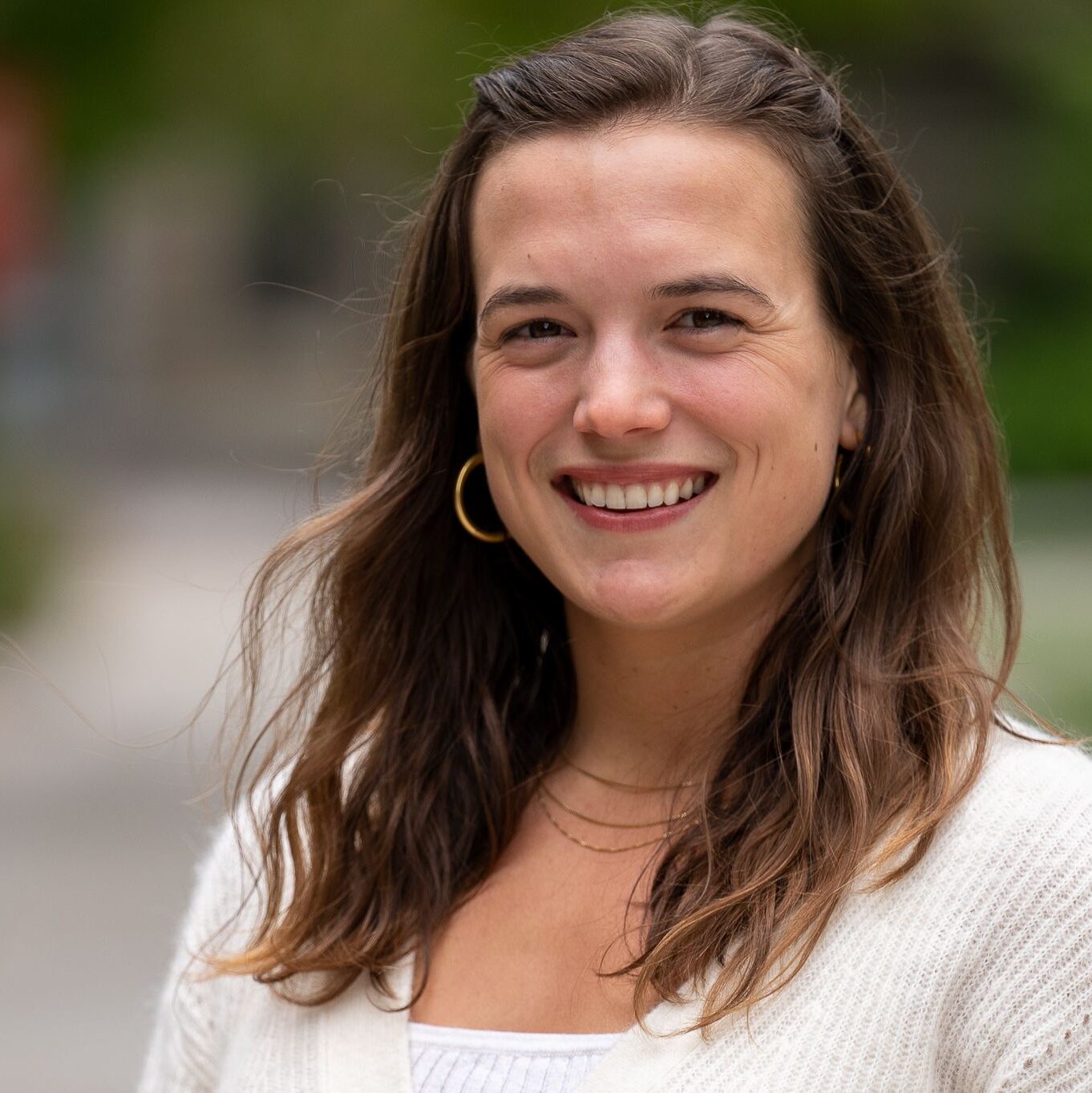
Sara Jean Peterson
Pronouns: She/Her
Job Title + Organization: NYC Farm to Institution Procurement Specialist
Grew up in: Long Island
How did you get into food systems work? In high school, I became passionate about environmental issues, and in college I discovered Slow Food, which opened my eyes to the broader food system and offered a tangible way to improve the health of both people and the planet. I quickly became an active leader in the Slow Food movement and spent much of college and my early professional career working on farms, eventually managing a small vegetable farm in Vermont.
I became increasingly interested in strengthening the relationship between food producers and consumers, which led me off the farm and into systems-based work. I moved to New York City to pursue a master’s degree at NYU focused on food policy and later joined Cornell as a local food procurement specialist. In this role, I work to increase the amount of local food served in NYC schools and institutions while also supporting other statewide and national local food systems projects.
One word you would use to describe our current food system? Complex
What’s a food system problem you wish more people were talking about? I wish more people were talking about whether farmers are actually receiving a greater share of the dollar through local food procurement initiatives. It’s exciting that there’s growing momentum around increasing the local food products flowing through institutions, but ensuring the economic benefits truly reach farmers is often overlooked.
Who in the food world inspires you? Many people, but in particular Phil Barbato of Biophilia Organic Farm, Dr. Carolyn Dimitri and Cheryl Bilinski have been extraordinary mentors to me.
Your breakfast this morning: A smoothie
Favorite NYC food spot and why? There are so many fabulous restaurants, but my favorite meals are the ones my husband and I cook at home.
Must-read or must-listen: If you’re looking for an academic read, check out the Fault Lines of Farm Policy by Jonathan Coppess. Otherwise, I just read The Sisters by Jonas Hassen Khemiri, which was excellent.
Social media must-follow: N/A
What, if anything, is giving you hope right now? Just like people, our food system is constantly evolving. While there are many broken and unjust pieces of it, I’m encouraged by the growing attention, investment, and programs aimed at repairing and strengthening it. I try to remind myself that progress takes time and meaningful change is often incremental, even when it feels urgent.
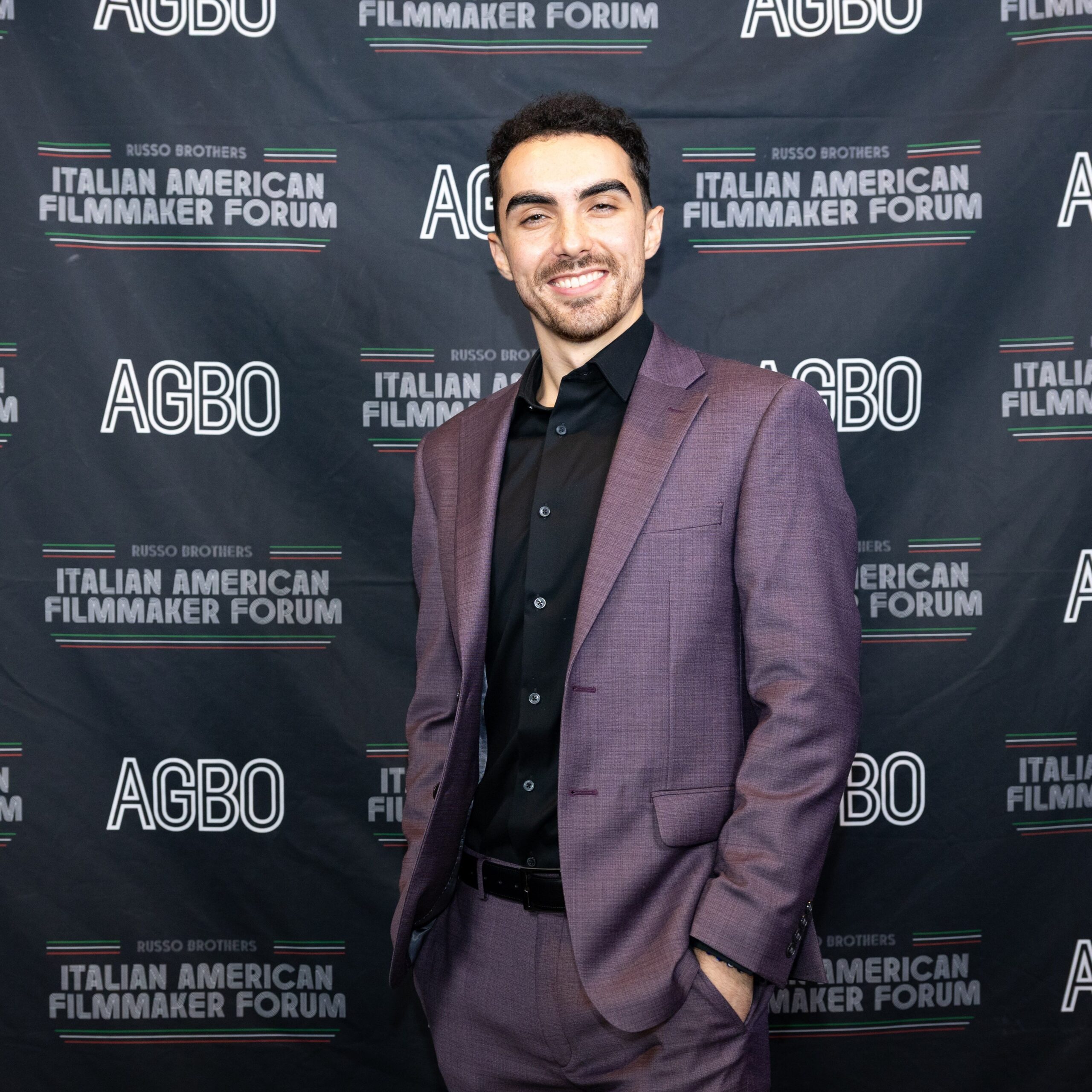
Luke Petronella
Pronouns: He/Him
Job Title + Organization: Content Manager & Brand Ambassador
Grew up in: Long Island
How did you get into food systems work? I was on the verge of dropping out of college, when I thought to myself, “Well, if this is going to be the end, I want to at least do one positive thing for the community so that I didn’t completely waste my time here.” After delivering food donations to a local shelter in Downtown Brooklyn, my life completely turned around. For the first time in my life I felt like I had done something that mattered.
One word you would use to describe our current food system? Unfulfilled
What’s a food system problem you wish more people were talking about? The outer boroughs (The Bronx in particular) aren’t receiving the same amount of support as Manhattan due to the current concentration of resources.
Who in the food world inspires you? Robert Lee
Your breakfast this morning: An Apple and some Peanut Butter
Favorite NYC food spot and why? Corner Bistro, because it simply has the best burger in all of NYC. My Dad and I have a tradition of going to all the best Burger joints and deciding which one is the best.
Must-read or must-listen: Mighty Be Our Powers by Leymah Gbowee
Social media must-follow: rescuingleftovercuisine
What, if anything, is giving you hope right now? The implementation of helpful systems that are long-lasting and sustainable, because if you are ever feeling like you haven’t done enough, at least you know there are systems are in place that are doing something for you.
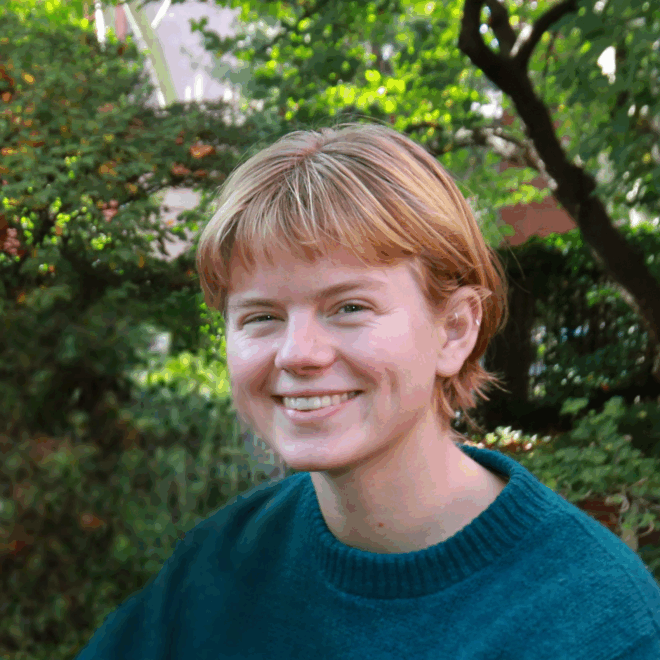
Sarah Pillard
Pronouns: she/hers
Job Title + Organization: Communications and Community Engagement Manager
Grew up in: Washington, DC
How did you get into food systems work? I initially got into food systems work through agriculture. I worked on a small organic farm in Massachusetts when I was in high school, and continued to do farm-adjacent work in college. From there, I soon became interested in food access and the sustainability of our food systems. In so many ways, food is at the center of our world: it is one of the most basic necessities and it is something that brings communities together, defines cultures, and drives economies. But our food systems fall prey to so many of the structural inequities that plague modern society, and far too many people don’t have access to the food that they want and need. My interest in food systems led me to CHiPS, a direct service organization that serves over 600 meals a day, six days a week, distributes between 700 and 900 pantry bags a week, and provides housing to women with children. I’ve been working at CHiPS since the fall of 2022!
One word you would use to describe our current food system? Complex
What’s a food system problem you wish more people were talking about? This is one that people in the food systems world are definitely talking about, but I think it’s still something that could have wider understanding and appreciation around and that’s agency and choice when it comes to receiving food help. At CHiPS, we recently transitioned our pantry service to full client choice and it has made a world of difference for the people who use our services. We’ve found that client choice increases guest and volunteer satisfaction, reduces food waste, and allows people to choose the foods that are right for them, whether that’s due to culture, diet, or any other sort of preference. Poverty so often means a lack of choice and we want to make sure that that’s not the case when people come to our pantries.
Who in the food world inspires you? Karen Washington
Your breakfast this morning: Scrambled eggs and hash browns
Favorite NYC food spot and why? I love Bedouin Tent on Atlantic Avenue! I’ve had many long, family-style meals there with friends. And they have a lovely outdoor space for when it is warm out.
Must-read or must-listen: I love and routinely listen to the Blindboy Podcast (plus, he often uses food to discuss or theorize about political and social history). And Heavy by Kiese Laymon is an all-time favorite memoir. Really beautifully written.
Social media must-follow: @chips4thave
What, if anything, is giving you hope right now? My coworkers at CHiPS! It is really special to work with such a dedicated group of people and to know that I am working alongside people who care so much about showing up to feed and house people every single day.
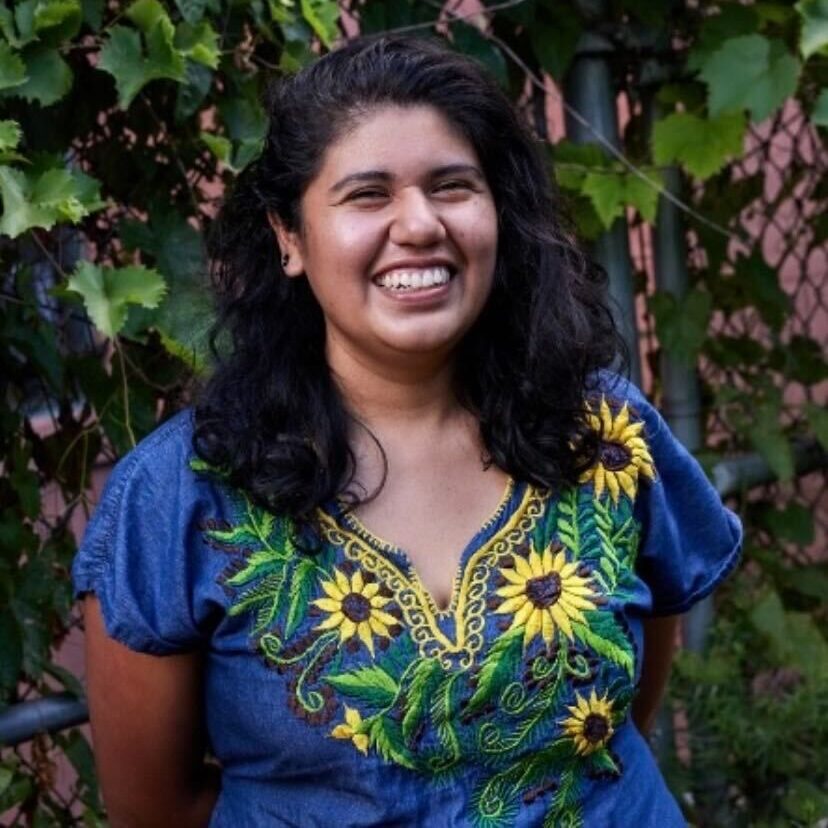
Carolina Saavedra
Pronouns: She/Her/They/Them
Job Title + Organization: Community Education Manager at Stone Barns Center, Sous Chef at La Morada, and Garden Steward Bruckner Mott Haven Community Garden
Grew up in: NYC
How did you get into food systems work? For me, as an Afro-Indigenous person, this work is deeply woven into who I am and how I live. I feel an innate connection to the land, seeing myself as part of the ecosystem and believing its preservation is far more important than its depletion.
One word you would use to describe our current food system? Apocalyptic
What’s a food system problem you wish more people were talking about? Indigenous communities safeguard a significant portion of crop genetic diversity, yet they possess the least access to land. Furthermore, many proposed solutions for food insecurity originate from individuals who haven’t personally experienced it. Lastly, the food industry often resorts to greenwashing.
Who in the food world inspires you? My mother, Natalia Mendez, who shows the importance of community engagement and supporting marginalized groups. I am also inspired by those who practice sustainable food cultivation, whether on large farms, in raised beds, or in makeshift containers. As Emiliano Zapata said, “The earth belongs to those who work it.”
Your breakfast this morning: Tamal de mole poblano and a cup of cafe de olla from a 138 street South Bronx vendor.
Favorite NYC food spot and why? La Morada is my favorite restaurant because of its outstanding food, inviting atmosphere, and dedication to activism. It’s rare to find another establishment that provides the same quality of service and treats all guests with such respect, no matter their financial situation or legal status.
Must-read or must-listen: MUST listen to your local community elders!
Social media must-follow: @chefcarolinanyc, @LaMoradaNyc, @Stonebarns, @Skyhighfarmhudsonvalley, @NYRP, @Brooklynsupportedagriculture, @newrootsbronx
What, if anything, is giving you hope right now? The Leading an Ecological and Accessible Food System (LEAF) program. More info found here: https://www.mdpi.com/2071-1050/18/2/750 and the expansion of La Morada coming soon, Winter 2026.
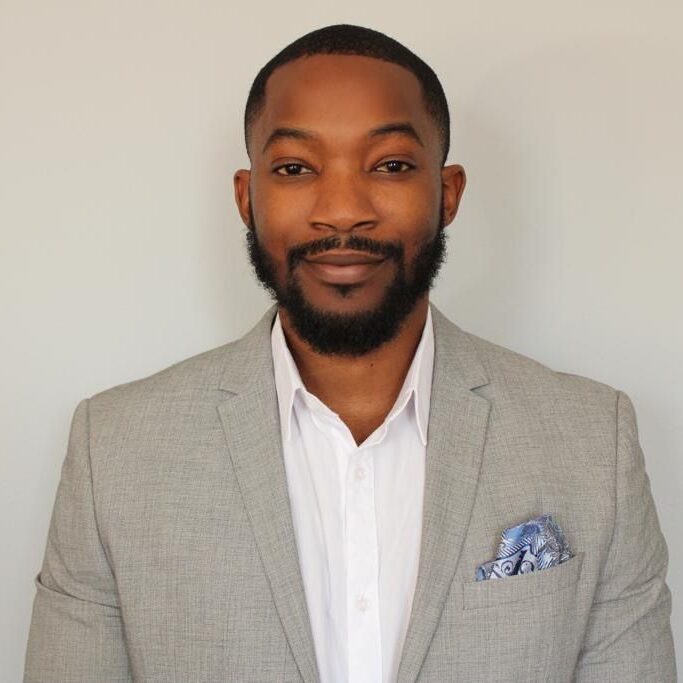
Alton Samuels
Pronouns: He/Him
Job Title + Organization: Senior Operational Project Manager
Grew up in: Nassau County
How did you get into food systems work? I was introduced to it through The Campaign Against Hunger.
One word you would use to describe our current food system? Necessary
What’s a food system problem you wish more people were talking about? Food insecurity.
Who in the food world inspires you? Dr. Samuels
Your breakfast this morning: Boiled eggs and watermelon.
Favorite NYC food spot and why? Cuts and Slices. I’m Caribbean, and from New York, so you can never go wrong with an oxtail pizza!
Must-read or must-listen: The Secret by Rhonda Byrne
Social media must-follow: The Campaign Against Hunger
What, if anything, is giving you hope right now? The testimonies of the many lives that we touch daily.
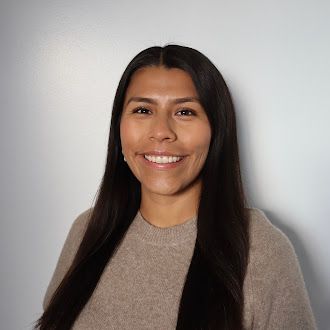
Andrina Sanchez
Pronouns: She/Her
Job Title + Organization: Communications Manager, GrowNYC
Grew up in: California
How did you get into food systems work? My journey into food systems work began with an intensive aquaponics training at Oko Farms, where I examined the links between agriculture, climate, and food sovereignty. Within a year of that pivotal experience, I transitioned from technology public relations to food and environmental communications, ultimately securing my current position at GrowNYC.
One word you would use to describe our current food system? Adapting
What’s a food system problem you wish more people were talking about? The root causes of hunger are the policy choices that prioritize profits over people. We must reform all of the connected systems that cause domestic hunger and food insecurity. The food system is created and intensified by policy choices around climate, environment, healthcare, housing, immigration, public benefits, and wages.
Who in the food world inspires you? The migrant farm workers who grow our food and feed our communities.
Your breakfast this morning: Oatmilk cappuccino and breakfast sandwich with eggs, herbs, and cheddar cheese.
Favorite NYC food spot and why? I love visiting any Greenmarket farmers market across the 5 boroughs, like every NYC neighborhood, each market is unique and plentiful.
Must-read or must-listen: WNYC’s weekly In Season segment.
Social media must-follow: @grownyc @grownycgreenmarket @youngfarmers @earthjustice @blackfarmerfund @nyrenews
What, if anything, is giving you hope right now? Berry and tomato season in the Northeast.
Ranya Perez Santana
Pronouns: She/Her
Job Title + Organization: Farming Concrete & Kelly Street Garden
Grew up in: The Bronx
How did you get into food systems work? By turning to the land and learning from my community.
One word you would use to describe our current food system? Interconnected
What’s a food system problem you wish more people were talking about? I wish more people would talk about the intersection of the food system with broader systemic inequities. Food is the entry point to address historical and systemic violence, allowing us to think about our environment, human and non-humans, healing, the spirit, and community.
Who in the food world inspires you? Sheryll Durrant
Your breakfast this morning: Plantain and eggs.
Favorite NYC food spot and why? Taco Mix: a restaurant with great shrimp tacos and a place my friends and family gather.
Must-read or must-listen: As We Have Always Done by Leanne Betasamosake Simpson
Social media must-follow: @kellystgreen
What, if anything, is giving you hope right now? Meeting at the garden, laughing with my community members, and centering joy amidst violence and chaos.
Wildally Santana
Pronouns: She/her
Job Title + Organization: Bilingual Case manager/ New York Common Pantry
Grew up in: New York / Connecticut
How did you get into food systems work? I was raised in Connecticut and moved to New York City at 15, where witnessing poverty and homelessness firsthand deeply shaped my perspective and commitment to service.I earned my Bachelor’s degree in Criminal Justice with the goal of becoming a police officer. However, after becoming a mother, I made the decision to shift my path and focus on raising my son while finding a more direct way to serve my community. That journey led me to community-based work, where I now support individuals and families facing food insecurity and hardship. My experiences continue to drive my commitment to helping others access not only resources, but dignity and opportunity.
One word you would use to describe our current food system? Unequal
What’s a food system problem you wish more people were talking about? The stigma around needing help. A lot of people are struggling quietly because they feel ashamed to ask for food assistance. I see how much that pride and fear keeps people from accessing what they need. Food is a basic human right — no one should feel embarrassed for needing it.
Who in the food world inspires you? Karen Washington
Your breakfast this morning: Coffee with a Bacon, egg, and cheese.
Favorite NYC food spot and why? The Cheese Cake Factory. The food is always delicious, and I love that there are so many options, so everyone can find something they like. And to top it off, ending the meal with a delicious cheesecake makes it feel even more special.
Must-read or must-listen: Must listen: The Sporkful It talks about food in a way that’s real and relatable — culture, identity, and everyday experiences, not just recipes.
Social media must-follow: BuzzFeed Tasty It’s fun, creative, and always gives me new ideas.
What, if anything, is giving you hope right now? The people. Every day I see neighbors helping neighbors, families showing up for each other, and small acts of kindness that don’t get recognized. Even in hard situations, people still find ways to give. That reminds me that change doesn’t only come from policy — it starts in the community.
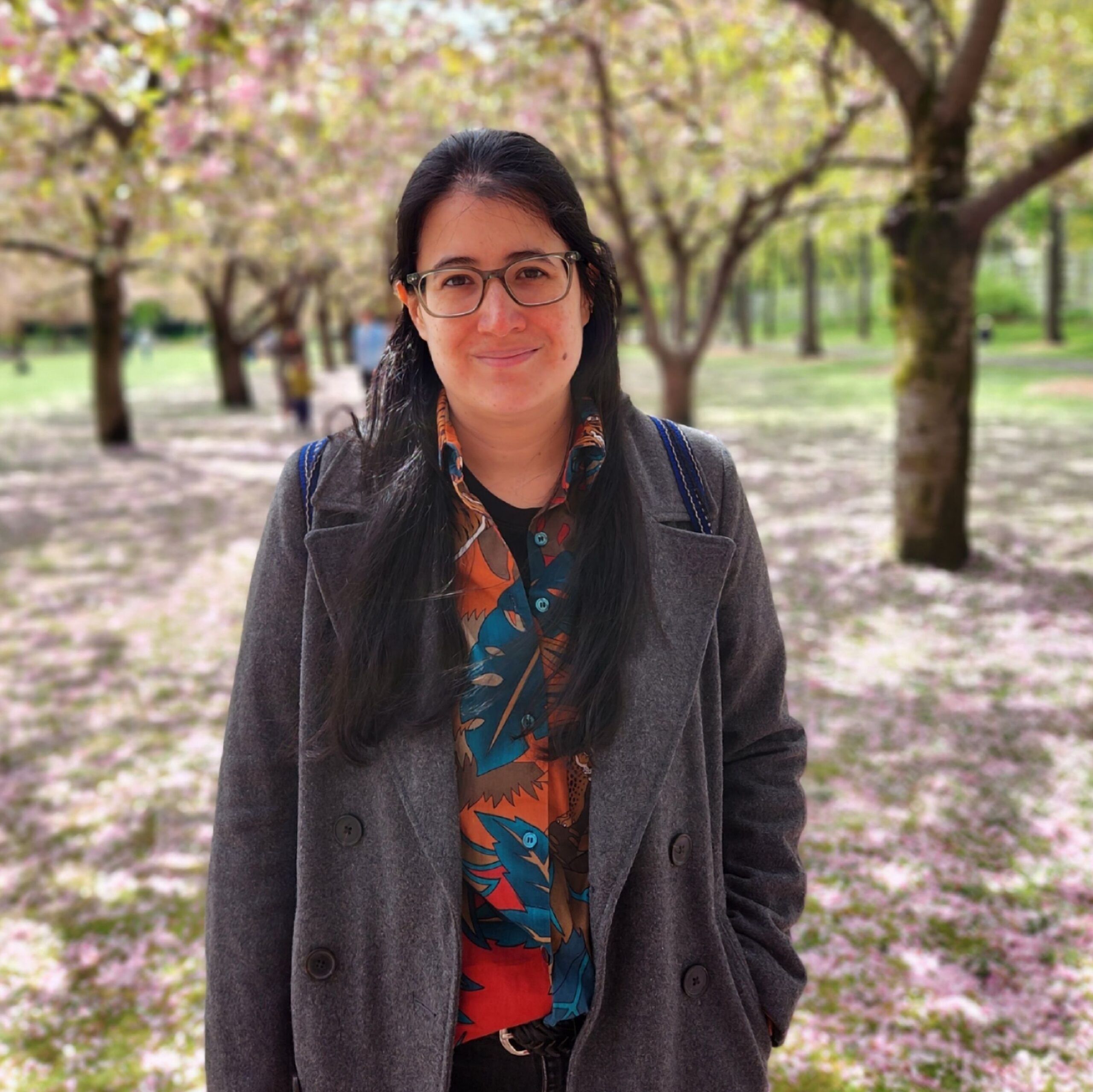
MJ Santiago
Pronouns: They/Them
Job Title + Organization: Student Recruitment and Partnerships Manager/Bottom Line
Grew up in: Central Florida
How did you get into food systems work? My first experience in food systems work was with FoodCorps, an organization that connects kids to healthy food in school. Through FoodCorps, I met many amazing service members who cared deeply about increasing access to nutritious food in an equitable way. My current role is at Bottom Line, a nonprofit that supports students from underserved communities to get into college, graduate, and launch an economically mobilizing career. I carried the food systems knowledge I gained into this role and was able to launch Bottom Line’s first Food & Resource Pantry (with the support of many other people!). The Bottom Line Food & Resource Pantry allows our students to stop by the office any time to grab snacks, full-size groceries, and personal hygiene products in a lowkey & supportive environment.
One word you would use to describe our current food system? Complex
What’s a food system problem you wish more people were talking about? Attempting to access services & benefits as a low-income person is a full-time job. It can be demoralizing and inaccessible, but it doesn’t have to be.
Who in the food world inspires you? I’m inspired by my students & coworkers!
Your breakfast this morning: Egg and spinach sandwich
Favorite NYC food spot and why? “I love MISC, a Thai place in Crown Heights
Must-read or must-listen: Drinking Coffee Elsewhere by ZZ Packer
Social media must-follow: @bottomlineny
What, if anything, is giving you hope right now? The vastness of history – things have been different and can be different again.
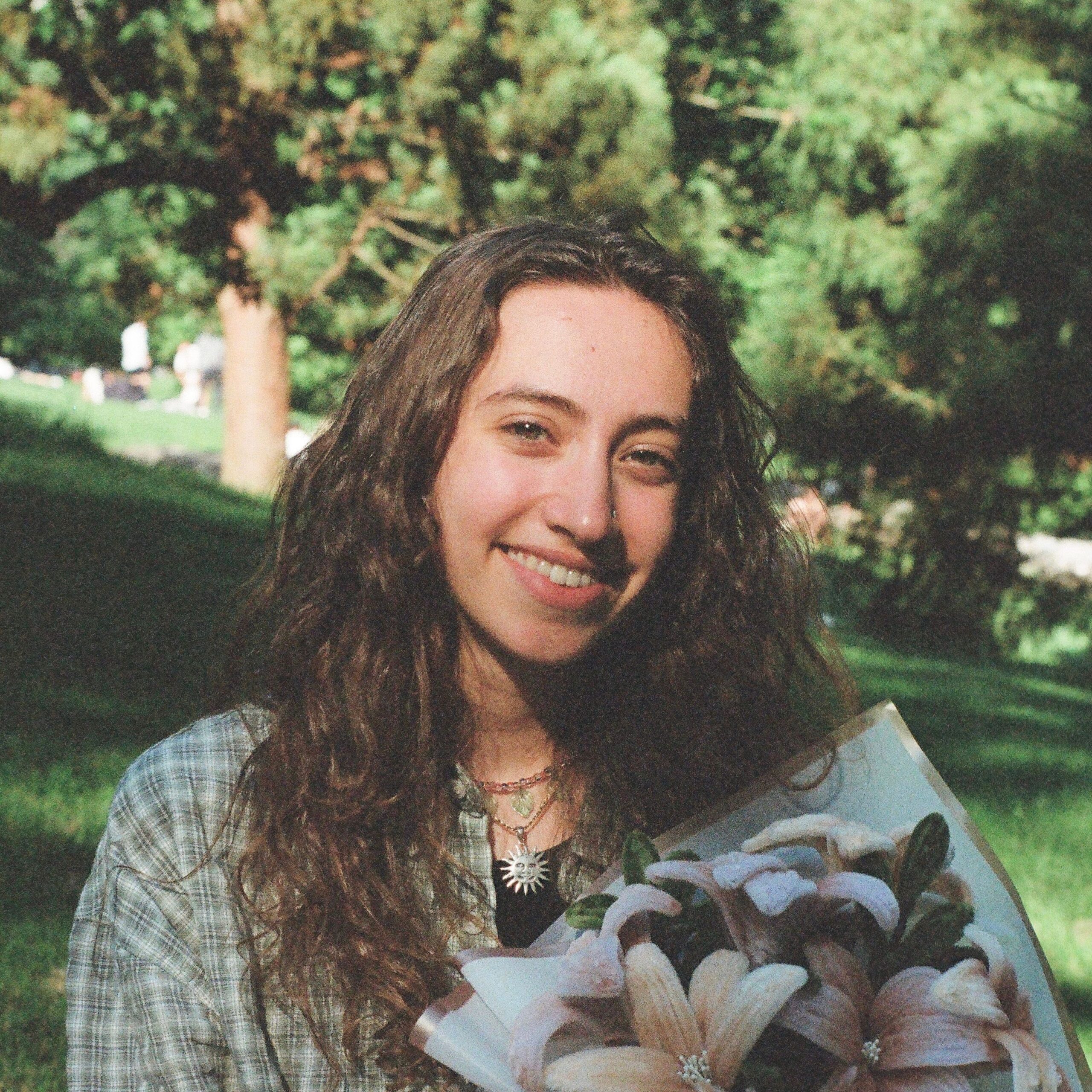
Elli Sol Strich-Zambrano
Pronouns: she/they
Job Title + Organization: Farmers Market Manager, East New York Farms!
Grew up in: Albany, NY
How did you get into food systems work? When I was 19, I worked at an urban farm called Radix in my home of Albany, New York. It was the beginning of the pandemic and the resurgence of the Black Lives Matter Movement, and I saw the connections between racial and immigrant justice and growing food to build community and food sovereignty.
One word you would use to describe our current food system? Inequitable
What’s a food system problem you wish more people were talking about? ICE enables inequities in the food system. Intimidation and threats force farmworkers to accept unsafe conditions and lower wages, without reporting any violations out of fear of deportation. Multinational companies seek out hiring farmworkers who don’t have legal protections and then avoid accountability to labor laws. With the history of slavery, sharecropping, and prison labor, the increase of ICE presence is continuing the violent legacy of labor exploitation that has always been the foundation of the US food system.
Who in the food world inspires you? Family members past and present who steward land in Colombia
Your breakfast this morning: Egg Tacos
Favorite NYC food spot and why? The East New York Farmers Market! There is fresh produce grown by gardeners in the neighborhood, amazing hot food and crafts vendors, and fun events.
Must-read or must-listen: Parable of the Sower by Octavia E. Butler
Social media must-follow: @paliheirloomseedlibrary
What, if anything, is giving you hope right now? All the incredible youth that I get to work with!
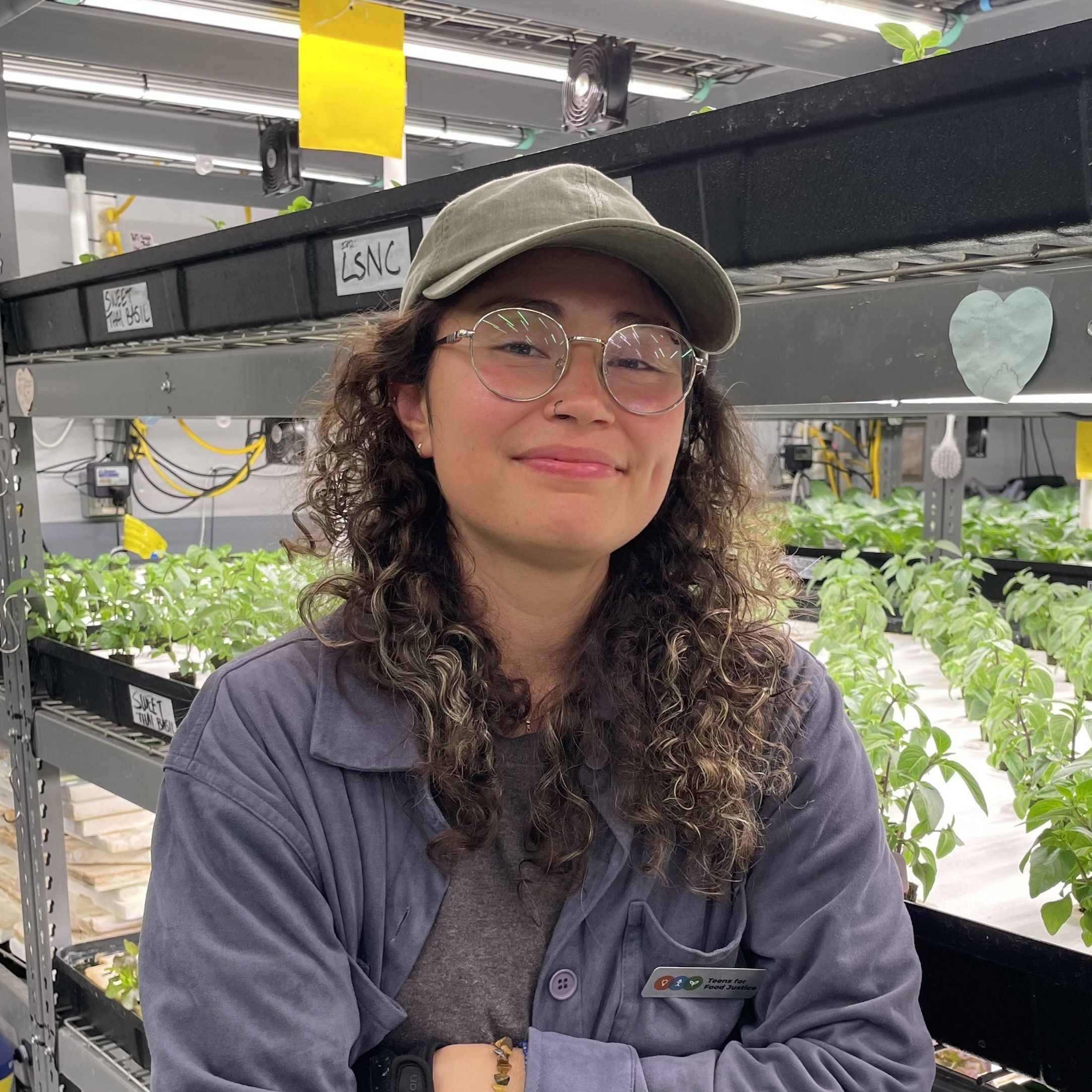
Mo Urzola Tellez
Pronouns: Any
Job Title + Organization: Teens for Food Justice
Grew up in: Long Island, NY
How did you get into food systems work? Accidentally! In the chaos of Covid, I realized working from home was not my jam. Staring at a laptop screen for 75% of my work day was something I could not keep on doing.
As the world was slowly opening back up, I looked for employment opportunities that were physically active. I applied to TFFJ for a temporary role. The role was to supervise SYEP participants with building a hydroponic farm in Far Rockaway, Queens. I had never heard of hydroponics before applying.
Unfortunately, the SYEP program was on pause. The Far Rockaway farm was built primarily by a couple of TFFJ staff members to maintain Covid safe practices. During the 6 weeks, I fell in love with using my body: to measure, to drill, to cut, and create. Once all the hydroponic systems were completed – I was curious how these commercial sized systems would function to grow veggies and be used as an educational space.
Now, over four years in, my role still consists of assisting in assembling new farms, but my main focus is troubleshooting issues that arise at our farm sites. I enjoy problem solving and the ability to co-create farms that can provide hyper local food as well as a learning space, community, and beautiful greenery in school buildings. It’s the behind the scenes work that I love – tinkering to keep our farms going and growing.
On the days where I am frustrated, I know that my work has an impact in which staff, students and community at large can engage with TFFJ farms. Students get to harvest bok choy, add fresh basil to their pesto, or make their own body scrubs with an herb from the farm.
One word you would use to describe our current food system? Evolving
What’s a food system problem you wish more people were talking about? Trash, recycling, composting, and food waste. I’d like to chat more about that side of the food system with other people!
I highly recommend the Sanitation Foundation’s Trash Academy for folks who want to learn the intricacies of the Department of Sanitation and NYC’s sanitation history.
Who in the food world inspires you? All the wonderful folks I work with. Every single person on our team brings so much love, determination, and energy to continue this work. They make me a better person – and inspire me to see different perspectives and are super supportive human beings. Also, everyone that supports the folks that engage with food access and food justice related work inspire me. Without y’all – we couldn’t do what we do.
Your breakfast this morning: Un cafe perico Colombiano (Juan Valdez instant coffee with milk), kefir with coconut granola and trail mix, plus a banana.
Favorite NYC food spot and why? Smile of They Beyond – Is a fantastic vegetarian diner in Jamaica, Queens. The ambience is calm even when the diner is full. It’s a little tight in there, but the blue walls with colorful paintings, cozy booths, and tasty food is worth the wait. My favorite drink is the cold ginger blast (fresh ginger, fresh lemon juice, honey and a touch of cayenne pepper). My breakfast recommendation is the eggs benny, home fries and whatever fruity pancake special they have.
Must-read or must-listen: The Happiness Lab with Dr. Laurie Santos and Science VS. Not necessarily food justice related even though they may have episodes that may connect with or to food. The Happiness Lab gives practical tips that can add to a little bit more happiness in your day. An episode name to give you a taste is “Reset your Relationship with Stress”. Science VS is a podcast that goes into a current event or a controversial topic for each episode and really gets into the nitty gritty with a ton of citations. An episode name is “Seed Oils: Should You Switch to Butter”.
Social media must-follow: I don’t follow anyone on social media. Shamelessly a reddit user only.
What, if anything, is giving you hope right now? The connections I’ve made! The people I have met and the people I will meet. Creating friendships with folks who care and are passionate to make the world a little bit better and brighter.
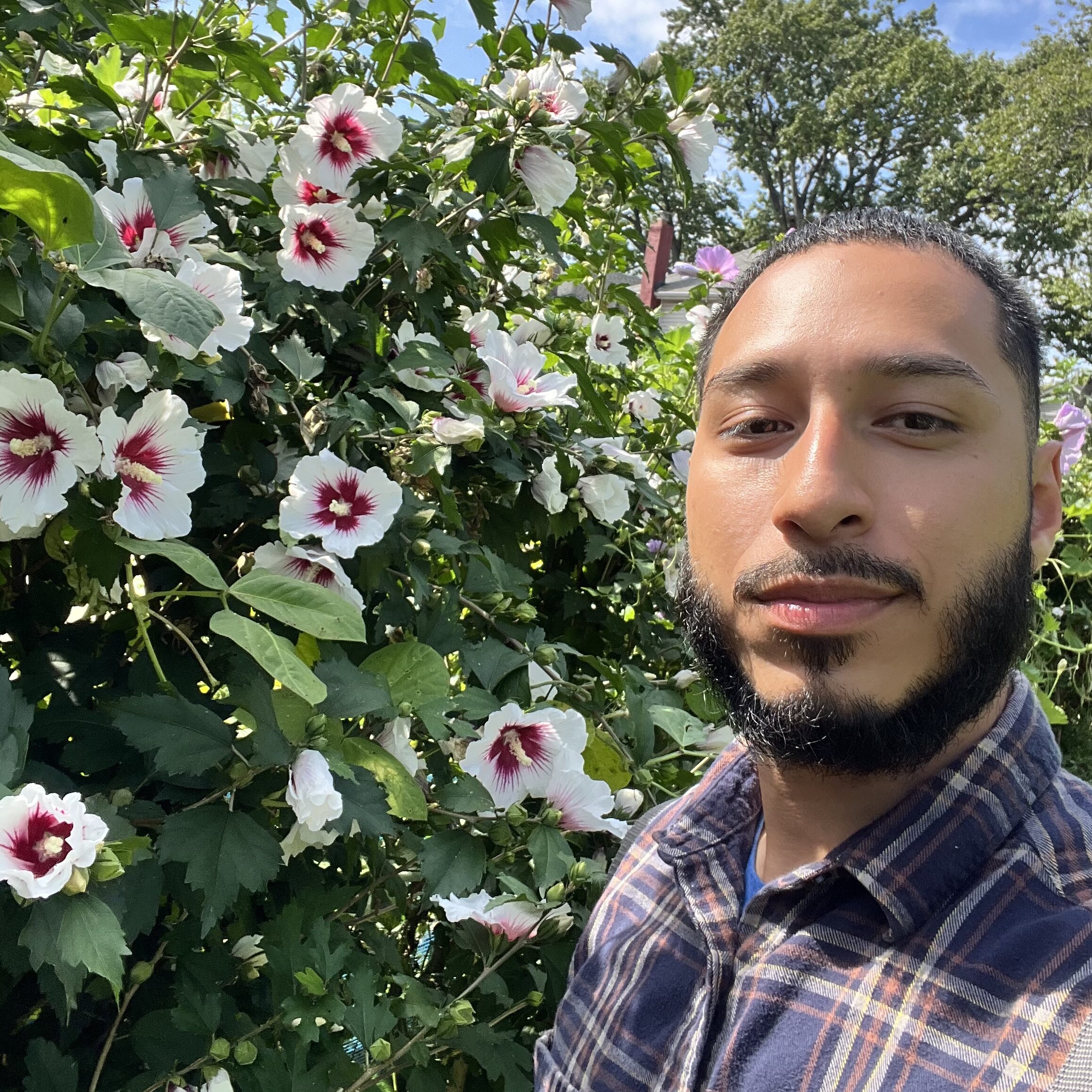
Angel Tobar
Pronouns: He/Him
Job Title + Organization: GreenThumb
Grew up in: The Bronx
How did you get into food systems work? I was introduced to food systems work through someone I love, who helped me understand that sustainability is deeply rooted in community. At the time, I was searching for a career that felt more meaningful and aligned with who I was becoming. I’ve always felt connected to the land and to spirit, but that connection didn’t fully come together until later in life. My parents came to the U.S. from Guatemala, and as a child, I spent a lot of time with my great-aunt. I remember taking kernels off the cob into a basket, spending the day at farmers markets, and being surrounded by all the colors, smells, and life around us. One of my strongest memories is lying flat on the soil, watching a turtle slowly move through the vegetation in her garden plot. Looking back, those moments taught me that food, land, culture, and community were never separate. Food systems work gave language to something I had already been carrying in my body and spirit for a long time.
One word you would use to describe our current food system? Dis-spirited
What’s a food system problem you wish more people were talking about? I wish more people were talking about where our food actually comes from. Many of us don’t fully understand who grows it, how it’s grown, who can afford it, and who has access to it. Food has a story before it reaches our plates, and that story is deeply connected to land, labor, culture, and justice.
Who in the food world inspires you? The growers, farmers, cooks, organizers, elders, and community members who stay connected to the land, spirit, and community.
Your breakfast this morning: An omelette with peppers, spinach, garlic, onion, mushrooms, and fresh mozzarella, served on slightly toasted pita bread with sliced avocado and a glass of water.
Favorite NYC food spot and why? Bangklyn in East Harlem—because it has an authentic, grounded energy. I love a spot run by people who have a real connection to the food and culture. It’s family-owned, and on any given day, you might see the chef cooking, serving, cleaning, and managing the register. The music always adds to the vibe, and the best part is that the food is genuinely good.
Must-read or must-listen: The One-Straw Revolution: An Introduction to Natural Farming by Masanobu Fukuoka
Social media must-follow: Ceibavalleyfarm
What, if anything, is giving you hope right now? If I’m being completely honest, the people I connect with each week are giving me hope. It’s the gardeners, my coworkers, friends, family, animals, and plants. In both gentle and powerful moments, they remind me that anything is possible when love is at the center of collective effort. Sweat equity ties people together, too. There’s something powerful about seeing what we can build when we show up with care, intention, and a shared purpose.
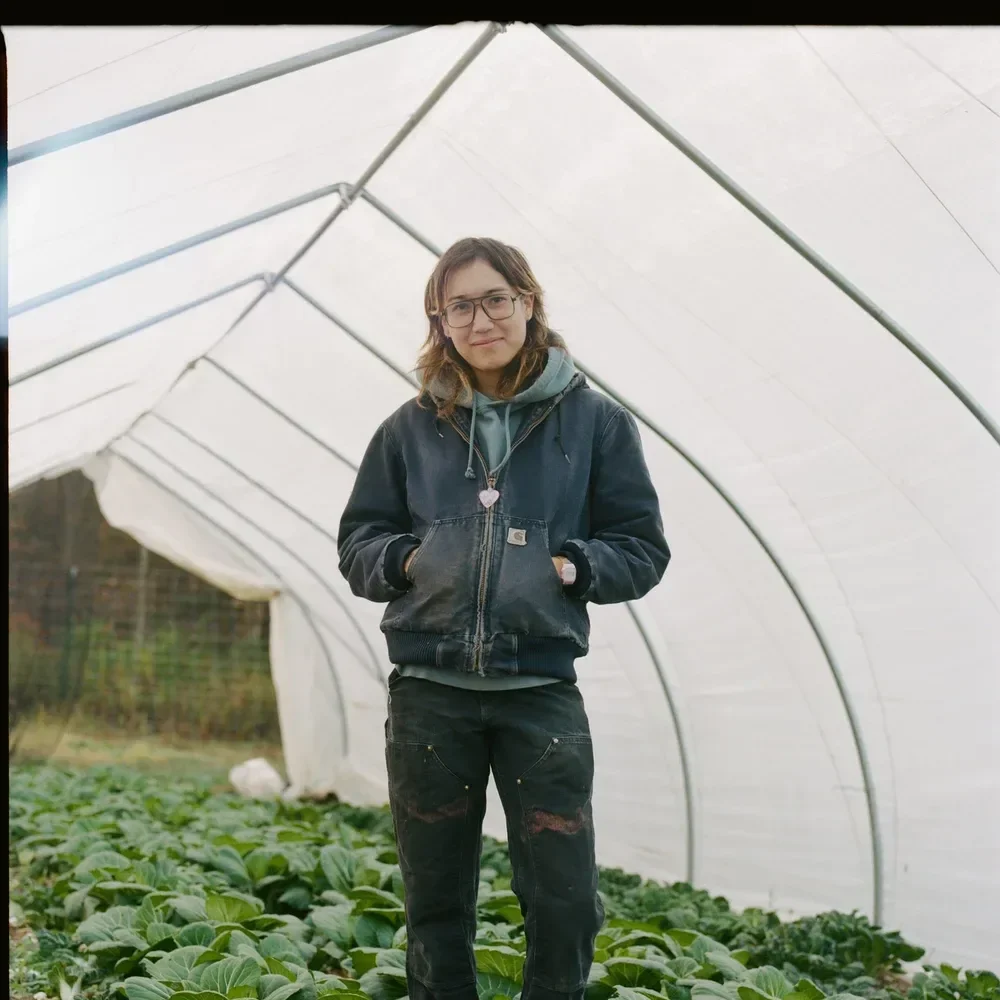
Kaija Xiao
Pronouns: she/her
Job Title + Organization: Gentle Time Farm
Grew up in: Bay Area, California
How did you get into food systems work? I studied International Political Economy in undergrad and did my thesis on imperialism through seed control. From that researched I intimately learned how food is the building block of culture and civilization, and became fascinated with its potential and history for change and control. I went to the New School for graduate school and continued research on Indigenous Ecologies and QTBIPOC land projects as basis for systemic change, and through that time, ended up farming and fell in love with it.
One word you would use to describe our current food system? Messy
What’s a food system problem you wish more people were talking about? We all know we need more regenerative young farmers, but the reality is that not only do we need the new farmers, but we need A WHOLE GIANT SUPPORT SYSTEM to keep us farming – from land access, to supply chains, to healthcare, to training programs. We’re stacked against a hundreds of billions dollar industrial food system; which we know is killing us and killing the planet. If we want to survive increasing climate chaos, we have to take seriously what it means to actually rival that system with a system grounded in care, cooperation, and culturally rooted Indigenous land management.
Who in the food world inspires you? Any year 1 farmers trying to figure it out.
Your breakfast this morning: Skipped it!
Favorite NYC food spot and why? I love a full banquet hall dim sum place!
Must-read or must-listen: A People’s Ecology by Gregory Cajete and Mutual Aid by Dean Spade
Social media must-follow: Get off that thing if you can.
What, if anything, is giving you hope right now? What’s giving me hope is that there is a vibrant community of folks really trying to tackle the problems of our time. We’re connecting more and more people into this work. And it’s going to take us all to change our reality.
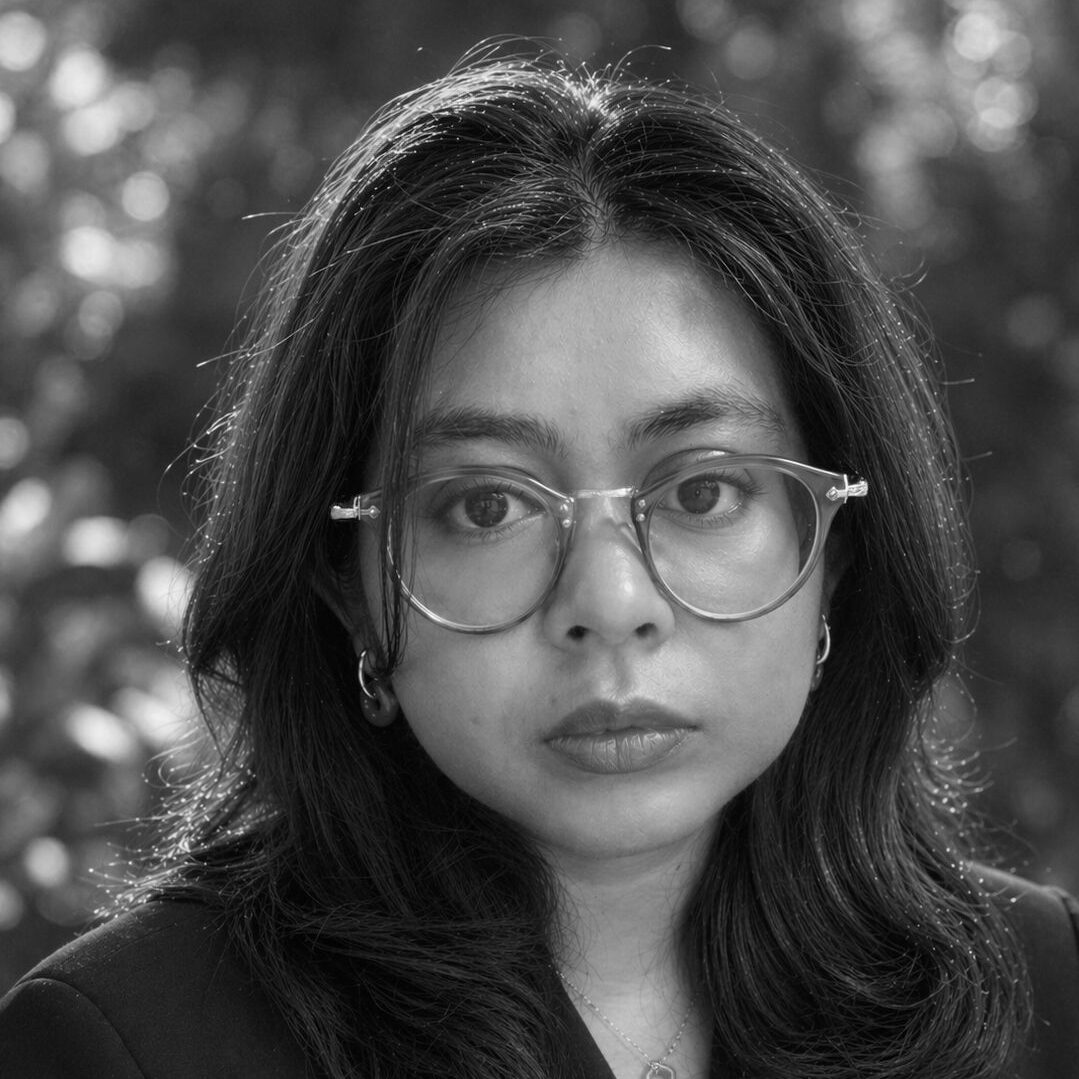
Sarwat Yunus
Pronouns: She/Her
Job Title + Organization: Project Manager & Designer/ AC Höcek Architecture
Grew up in: Dhaka, Bangladesh
How did you get into food systems work? I was first introduced to food systems during my undergraduate studies as an architecture student at CCNY, through a community-engaged design studio in the South Bronx. Working with local organizations and residents, I began to understand food as part of a broader spatial and social system—shaping access to health, education, and mutual aid. Our team’s proposal at the end of the semester centered on food production—growing, preparation, and education—to activate the site we were given. That early exposure carried into my professional work after graduating. One of my first pro-bono clients at AC Höcek Architecture was Isabahlia Ladies of Elegance, a Brownsville-based nonprofit that manages multiple community gardens through the GreenThumb program. We have since built a long-term relationship with the organization, supporting grant applications and coordinating with partner organizations to help expand programming around food access and food sovereignty.
One word you would use to describe our current food system? Inequitable
What’s a food system problem you wish more people were talking about? Agency. Our cities and the food systems embedded within them are designed in ways that centralize control to such a degree that we are made to believe we have little to no ability to shape how we access food, let alone grow our own. There is power in rejecting that notion. Small acts like growing some of your own food can shift that perception, even if it is something as simple as a basil plant on a windowsill. It is not about full self-sufficiency or growing all the food we need, but about recognizing that we can step outside the systems we are placed in. The realization that we are not just consumers, but also have the capacity to participate in creation, is powerful on its own.
Who in the food world inspires you? Brenda Duchene, founder of Isabahlia Ladies of Elegance in Brownsville, Brooklyn. She played a key role in showing me how my architectural work can directly engage with food systems and food sovereignty work.
Your breakfast this morning: Iced Latte
Favorite NYC food spot and why? The fuchka carts in Jackson Heights (all lined up next to each other, each claiming to be the first in the city). It’s a street snack I grew up with, and when I first moved to NYC, it was the one thing that I deeply missed. I love that I can now share that piece of my Bengali heritage with my friends.
Must-read or must-listen: The Fruitful City: The Enduring Power of the Urban Food Forest by Helena Moncrieff
Social media must-follow: @jaekicho, @nadir.nahdi., @nygov
What, if anything, is giving you hope right now? The NY Gov’s Instagram page. Absolutely unhinged, but I think it’s a sign that we are starting to break away, at least at some level, from the serious, “stern” institutions of previous generations. It’s meeting people where they are in an effort to communicate; this shift toward more human, light-hearted connection gives me hope.