
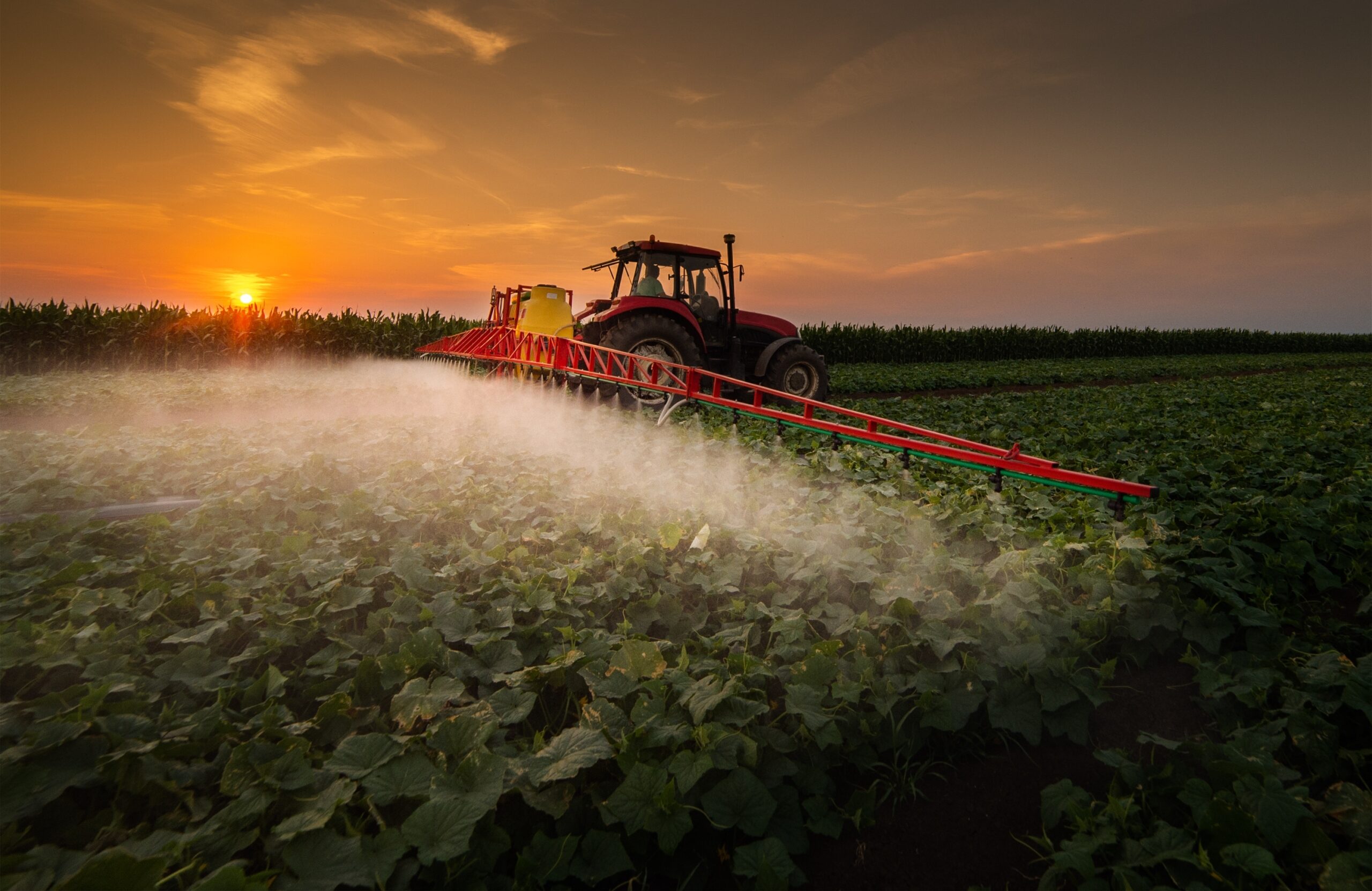
Over the past several months, the Environmental Protection Agency (EPA) has approved a series of pesticide products containing Per- and Polyfluoroalkyl Substances (PFAS), often referred to as “forever chemicals,” for use on lawns and crops, including food crops such as soybeans, lettuce, and other vegetables. These approvals reverse what had been a movement toward restricting these chemicals in agriculture and signal a major shift in federal chemical policy at a moment when scientific consensus increasingly links PFAS exposure to a range of health problems.
PFAS comprise a vast family of synthetic chemicals valued for their water-, oil-, and heat-resistant properties. They appear in a wide array of consumer goods, including nonstick cookware, stain- and water-repellent textiles, waterproof outdoor gear, cosmetics, dental floss, and food packaging, as well as in industrial applications such as firefighting foams, metal plating, chemical manufacturing, and electronics production. In pesticides, PFAS help formulations to spread evenly on leaves, resist washing off in the rain, and extend product shelf life. Because they contain powerful carbon–fluorine bonds, they also resist environmental breakdown, persisting in soil, water, wildlife, and the human body for decades or more. Once PFAS enter the environment, they rarely leave.
The Regulatory Landscape
Before this recent deregulatory shift, government approaches to PFAS in the food system had been variable but generally trending toward more precaution. The U.S. Food and Drug Administration (FDA), for instance, authorized only limited use of PFAS in food-contact materials and, after safety reviews, secured voluntary phase-outs of these chemicals in the grease-proofing agents used in paper food packaging.
By early 2025, the FDA had declared 35 food-contact notifications for PFAS’ safety “no longer effective,” meaning that the agency no longer considered the supporting safety data valid. And, as a result, they were no longer legally authorized for use for those specific uses in food packaging. While not an outright ban, the FDA’s decision effectively removed these chemicals from legal circulation in food-contact materials. Yet at the same time, the EPA has been moving in the opposite direction, approving new pesticides containing PFAS and delaying compliance deadlines for drinking water limits.
These competing actions highlight a broader problem: the United States’ lack of a coherent strategy for regulatory oversight of PFAS makes it difficult for consumers, municipalities, and food producers to track or mitigate risk. The precautionary principle, which seeks to prevent harm before it occurs, has largely given way to a permissive stance, allowing PFAS into circulation despite insufficient long-term safety data.
Regulating PFAS is uniquely challenging because they are not a single chemical but a complex class of thousands. Each variant behaves differently, and long-term toxicological data on many are incomplete or nonexistent. Historically, regulators evaluated PFAS on a case-by-case basis. Some high-molecular-weight polymerized PFAS used in cookware coatings or gaskets were deemed low-risk because their large, stable molecular structures were not expected to break down or migrate into food, whereas PFAS used as grease-proofing agents in paper products were found to shed side-chains that could leach into food, particularly when exposed to heat or oils. The EPA argues that the newly approved pesticide chemicals fall outside the agency’s working definition of PFAS and therefore do not pose risks to human health.
However, many scientists and independent researchers do recognize these newly approved compounds as PFAS, and early evidence suggests they may behave like the broader class. Recent studies have identified PFAS in a significant share of pesticide formulations, and testing has detected PFAS-containing pesticides in rivers, streams, and other waterways, a sign that they are environmentally mobile and persistent. Although toxicological research on the specific PFAS now being introduced into pesticides is limited, their chemical structures share key features with better-studied PFAS that are known to accumulate in soil and water, resist environmental breakdown, and move through ecosystems in unpredictable ways.
What remains most concerning is the lack of toxicological data on these newly approved pesticide-related PFAS. While numerous studies link long-studied PFAS to immune disruption, liver and kidney harm, reproductive and developmental effects, and increased cancer risk, comparable long-term data for newer PFAS do not yet exist. This scientific gap means regulators cannot reliably assess how these chemicals behave in the environment, how easily they migrate into food or water, or what levels of exposure may be harmful. As a result, approving PFAS-based pesticides may be allowing a new generation of persistent chemicals into the food system without a clear understanding of their potential consequences, a regulatory gamble with implications that could unfold over decades.
What This Means for Health, Food, and the Environment
The health implications are substantial. Certain PFAS have been linked to liver toxicity, immune system suppression, hormone disruption, reproductive and developmental harm, and increased cancer risk. Approving these PFAS-based pesticides means that these chemicals can enter fields, waterways, and soil not only indirectly through manufacturing waste or in packaging but also directly through agricultural application. PFAS applied to crops can leach into groundwater, run off into rivers, or persist in soil long after the time of their intended use. There is growing evidence that plants can absorb PFAS, raising the possibility that food crops may become points of entry for human exposure. For farmworkers and rural communities already living near contaminated sites, these approvals may increase already long-standing environmental health burdens.
International scientific and regulatory bodies have increasingly recognized these hazards. The European Union designates some PFAS as substances of very high concern and is pursuing broad restrictions; the European Food Safety Authority has set extremely low exposure thresholds based on the immune and developmental effects of PFAS; Canada has proposed regulating PFAS as a class; and some countries, including Denmark, have banned them in food-contact packaging. Although toxicological data for many PFAS remain limited, global regulatory trends reflect the consensus that the risks documented for older-generation PFAS may extend to newer replacements with similar chemical structures.
Implications for the food system are also far-reaching. Introducing PFAS into agriculture creates new opportunities for contamination across supply chains, including those relied on by urban consumers who may assume that local or organic produce is free from synthetic chemical exposures. However, because PFAS can travel through water and soil, even farms that do not use PFAS-based pesticides may still be impacted. And these exposures also raise concerns for environmental justice, because rural communities and agricultural laborers typically face the highest cumulative exposure, meaning the total burden of pesticide contact that builds up over time from multiple chemicals and exposure pathways, leaving them at far greater risk than the general population and with limited political leverage to influence national chemical policy.
Ultimately, these policies threaten not only human health but also the health of the planet. PFAS used on crops do not stay in one place; they disperse into waterways, accumulate in soils, and travel long distances, affecting wildlife and degrading ecosystems. And the chemicals’ longevity means that regulatory mistakes made today may create environmental consequences that last for generations.
The recent shift toward leniency in the regulation of PFAS, particularly their approval for use in pesticides, marks a significant increase in the number of ways these chemicals can enter the food system. This moment demands that policymakers, researchers, and others working on food system issues scrutinize how current PFAS policies fail to protect human and environmental health. Developing a clear, consistent national strategy for managing these chemicals, one that is informed by emerging scientific evidence and long-term public and environmental health considerations, is essential for protecting our food, water, and community well-being.