
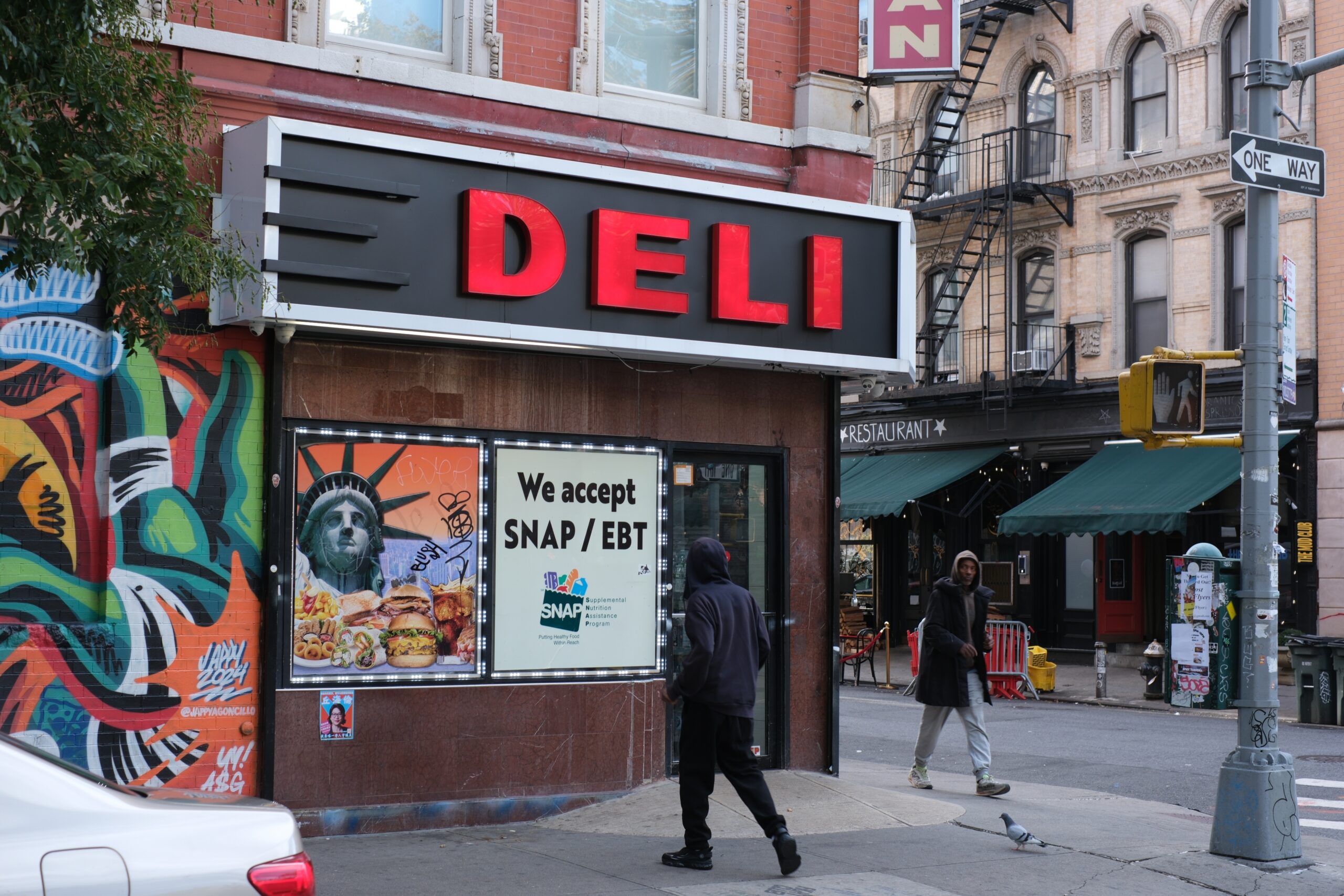
When federal food assistance stopped flowing for two full weeks in November 2025 as Supplemental Nutrition Assistance Program (SNAP) payments were delayed, New Yorkers felt the shock immediately. Roughly 1.8 million New York City residents rely on SNAP each month. For many households, the interruption was not just a minor disruption; it amounted to a sudden loss of their ability to afford an adequate supply of groceries, putting people at risk of skipping meals, incurring debt, or turning to emergency food services for the first time.
Although October SNAP benefits had already been paid out before the shutdown began on October 1st, the situation became far more complicated for November benefits when the Trump administration refused to use the contingency fund reserved for emergencies and administrative disruptions. What followed was a chaotic series of court battles: a federal judge ordered full payment of benefits, the Trump administration offered only partial funding (about 65 percent), another judge ordered full payment by November 7, and the administration appealed to the Supreme Court.
Amid the uncertainty, the USDA ultimately agreed to release federal funds, and on November 7, Governor Hochul directed state agencies to begin distributing the federal benefits. The first payments arrived on November 9. Separately, Hochul allocated $106 million in emergency funding for food pantries, though she emphasized that no state could fully replace the federal program. The shutdown, the longest in U.S. history, ended on November 12th when President Trump signed a funding bill.
Food pantries and soup kitchens across all five boroughs were overwhelmed, with some providers reporting a 300 percent increase in demand and roughly 20 percent of food pantries having to turn people away because they had run out of food. Shelters, mental-health organizations, and older-adult service providers scrambled to fill the gaps as households with older adults or people with disabilities struggled to access or transport food.
These acute effects build upon longstanding challenges. According to the New York City Mayor’s Office of Food Policy’s 2022 Food Metrics Report, about 14.6 percent of city residents, more than 1.2 million people, are food insecure. In 2022–23, households across the New York metropolitan area spent on average 12.5 percent of their budget on food, and among households earning less than $15,000 per year, that share was nearly 70 percent.
According to the Office of the New York State Comptroller, the cost of food in New York has climbed steeply over the past decade, with food prices in the metro area rising about 56.2 percent between 2012–13 and 2022–23, outpacing national increases and nearly matching, or even exceeding, income growth for many low-income families. “Food at home” costs, including groceries, produce, and staples, drove most of that increase, growing 65.8 percent locally compared to 48.8 percent nationally.
Because of this inflationary pressure, even a relatively short pause created a cascade of consequences: depleted grocery budgets, skipped meals, rising credit-card debt, conflict or tension at pantries with long lines, and a fractured sense of trust in the reliability of the safety net. As one long-time SNAP recipient told Gothamist: “The damage is done already.”
Beyond hardship for individuals and families, the disruption also exposed systemic fragility. SNAP accounts for about 12 percent of food purchases nationwide; however, grocery stores reported a 20–25 percent drop in sales, a sharp decline attributed to delays in public assistance and a broader decrease in local economic activity. Emergency food providers are still reeling, and some have not fully refilled their stock or recovered their capacity.
That fragility looms especially large when considered alongside the longer-term trends affecting the city and state: increasing food costs, greater food insecurity, and a significant share of households spending too great a percentage of their income on food, for a city that has a poverty rate twice the national average, where 20 percent of residents are enrolled in SNAP, and where many rely on it as more than “supplemental.” Even a brief lapse can produce deep ripple effects.
As policymakers and advocates turn their attention to reforms, including new work requirements that could reduce eligibility for some SNAP recipients by March, this should serve as a warning. The new work requirements, which broaden the categories of adults who must document steady employment or training hours, are expected to disproportionately impact workers with unpredictable schedules, older adults, and people who cycle in and out of the labor force, as well as refugees and asylum seekers. For thousands of households already managing tight budgets, even minor administrative or employment disruptions could translate into lost benefits. The two-week disruption was more than a temporary lapse; it underscored the precariousness of food security for millions of New Yorkers, especially at a time when costs are rising and benefits are being limited.
If the city’s goal is equitable food access across NYC, the lesson is clear: safety-net reliability matters as much as benefit amounts. The public scramble to secure meals during those two weeks, the debt they incurred, and the added burden on pantries all represent real damage done in a very short time. Ensuring that assistance is both adequate and consistent must remain a central priority.