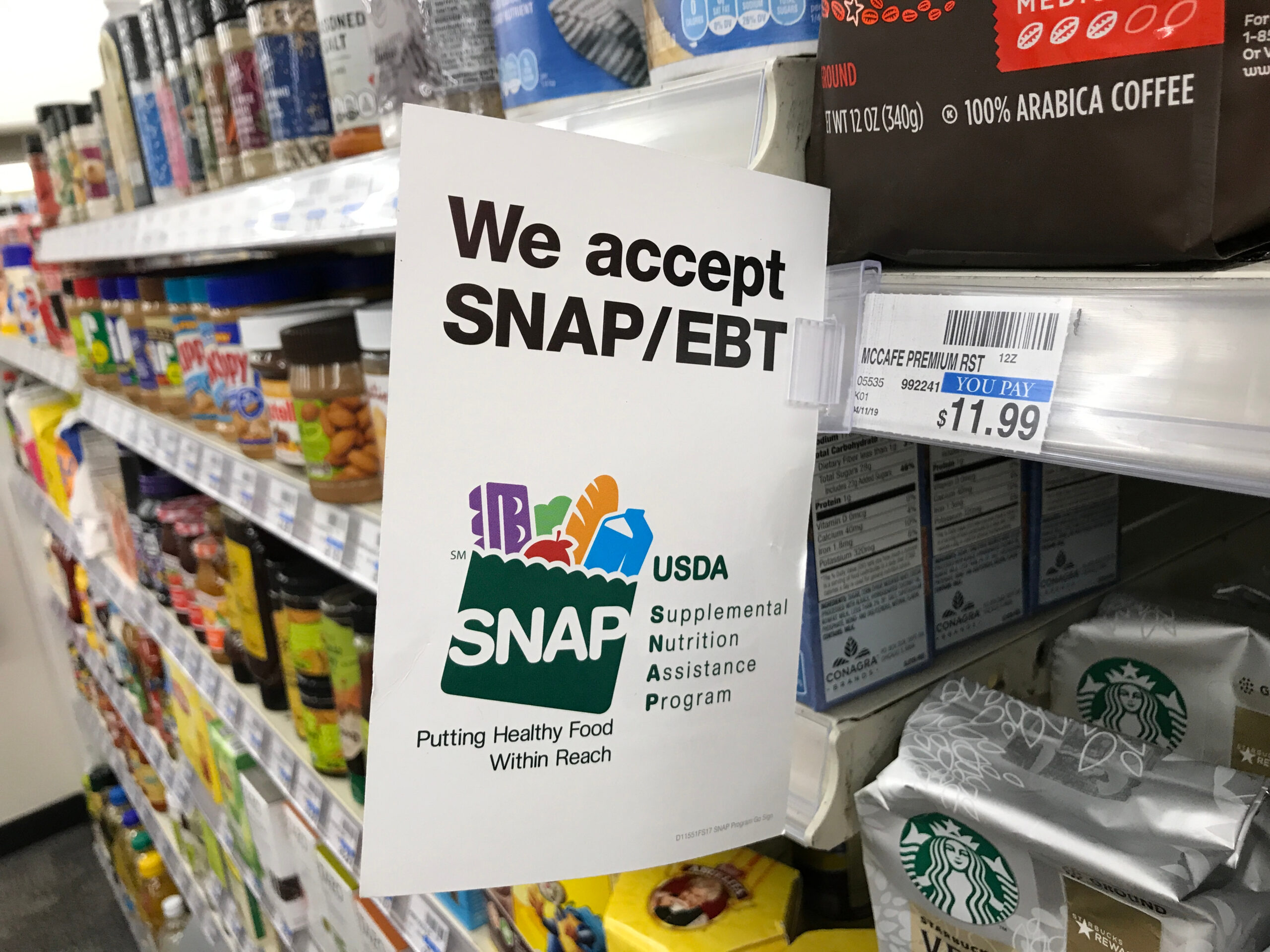
The Supplemental Nutrition Assistance Program (SNAP) provides monthly benefits to more than 40 million low-income individuals and households, helping them afford food. As the largest nutrition assistance program in the United States, SNAP occupies a central role in the nation’s food safety net. Its design reflects a complex interplay of federal law, administrative policy, and state-level implementation.
Originally known as the Food Stamp Program, SNAP was permanently established by the Food Stamp Act of 1964 as a mechanism to both support agricultural markets and reduce hunger. SNAP has persisted as a flexible entitlement program, adjusting benefits in response to economic conditions, cost-of-living changes, and evolving public needs. In 2026, however, SNAP faces a convergence of federal policy reforms and expanded state discretion that will reshape eligibility, benefits, administrative responsibilities, and what participants can purchase with their benefits.
Taken together, these changes signal a shift away from national uniformity and toward a more fragmented, state-driven SNAP experience. Policymakers and researchers will closely examine how these changes will impact participation, food security, purchasing behavior, and participant experience.
How SNAP Works: The Federal-State Partnership
SNAP is often described as a federal program, but, in practice, it is a partnership between the federal government and the states. Congress and the U.S. Department of Agriculture (USDA) establish the rules and provide the financing, while state agencies are responsible for carrying out the program on the ground. This structure makes SNAP a national entitlement with fifty distinct administrative systems.
At the federal level, SNAP is authorized through statute and funded through annual appropriations. Congress sets the basic parameters of the program, including eligibility standards, benefit calculation formulas, and work requirements. The USDA, primarily through its Food and Nutrition Service (FNS), issues regulations and guidance for interpreting federal law, oversees state compliance, approves retailer participation, and reimburses states for benefit issuance and allowable administrative expenses. Importantly, SNAP benefits themselves are fully funded by the federal government, regardless of where participants live or how many households enroll.
States play the central operational role. Each state designates a SNAP-administering agency, typically within a human services or social services department, responsible for determining eligibility, processing applications, calculating benefits, issuing Electronic Benefits Transfer (EBT) cards, and managing ongoing case maintenance. In addition, the states conduct outreach, handle recertifications, investigate potential fraud, respond to appeals, and coordinate employment and training activities. While federal law establishes minimum requirements, the states retain discretion over many administrative choices, such as reporting rules, waivers, and verification procedures.
As a result, federal legislation sets the boundaries of what states may do, but state implementation choices largely determine how accessible and navigable SNAP is for participants. Two states operating under the same federal statute can offer very different participant experiences. The partnership also creates an uneven distribution of fiscal risk. Because benefit costs are fully federally funded, states do not bear the direct financial burden when caseloads rise during economic downturns. Administrative costs, by contrast, are shared. States typically cover about half of most administrative expenses, and as federal policy changes increase program complexity, through expanded work requirements, additional reporting obligations, or new compliance measures, states must absorb higher administrative costs, even when federal funding does not fully keep pace.
Finally, SNAP’s structure allows for policy variations through waivers. The USDA has the authority to permit states to depart from certain federal requirements, historically to address economic conditions, disaster response, or work requirement flexibility. Beginning in 2025, however, USDA expanded its use of waivers to allow states to restrict certain SNAP-eligible food purchases, shifting additional policy discretion to the states and further differentiating how SNAP operates across the country.
Federal Policy Changes Enacted in 2025
In 2025, Congress enacted substantive changes to SNAP that will be phased in throughout 2026 and early 2027. Certain categories of lawfully present immigrants, including refugees and asylees, will no longer be eligible unless they meet other qualifying criteria. Work requirements will be expanded for “able-bodied adults,” defined as those between the ages of 18 and 54 who are able to work and do not have any dependents.
Other changes impact structure and administration. Cost-of-living adjustments will be recalibrated, and the elimination of the SNAP-Ed will significantly reduce funding for nutrition and food education initiatives. At the same time, states will be responsible for a greater share of administrative costs, such as processing applications and recertifications, case management, staffing, and training.
Federal policymakers have also placed increased emphasis on program integrity and fraud prevention. In recent years, SNAP benefits have become increasingly vulnerable to theft through skimming and related fraud schemes that exploit magnetic-stripe EBT cards. In response, the federal government is accelerating a transition to more secure, chip-enabled EBT cards and enhanced security features designed to protect participant benefits from unauthorized access.
Federal Funding and Program Stability
SNAP Electronic Benefits Transfer (EBT) cards, which are loaded monthly and redeemed at authorized retailers. Because benefits are federally funded, uninterrupted federal appropriations are essential to the program’s operation.
This dependence on federal funding was underscored during the prolonged government shutdown in late 2025, which disrupted the normal flow of SNAP funds to state agencies. Multiple states, including those with large SNAP caseloads, were temporarily unable to issue new monthly benefits once federal funds were exhausted. Participants who already had balances on their EBT cards were generally able to continue purchasing food, but households that had depleted their prior month’s allotment experienced gaps in their food purchasing power until funding was restored.
After Congress passed a continuing resolution and federal agencies reopened, USDA worked with states to rapidly issue delayed benefits. The episode nonetheless highlighted a structural vulnerability in SNAP, demonstrating how federal budgetary processes can have immediate, real-world consequences for household food security. While states are responsible for administering the program, they cannot sustain benefit delivery without federal appropriations. As a result, the federal government plays a decisive role not only in shaping SNAP policy but also in maintaining its financial stability.
State SNAP Food Restriction Waivers in 2026
Alongside these federal changes, USDA is increasingly encouraging states to use SNAP policy to advance public health objectives. For the first time in SNAP history, the USDA has approved waivers permitting states to prohibit purchases of certain food and beverage items deemed non-nutritious.
Historically, administrations of both parties rejected similar state proposals, citing concerns that these restrictions (with narrow exceptions for hot prepared foods, alcohol, and nonfood items) could undermine participant dignity, create administrative burdens at the point of sale, stigmatize SNAP use, and produce limited evidence of improved dietary outcomes. The current USDA leadership, through the Make America Healthy Again initiative, has reversed that approach, actively encouraging states to pursue waivers restricting items such as sugar-sweetened beverages, candy, energy drinks, and other products.
As of the end of 2025, 18 states (Arkansas, Colorado, Florida, Hawaii, Idaho, Indiana, Iowa, Louisiana, Missouri, Nebraska, North Dakota, Oklahoma, South Carolina, Tennessee, Texas, Utah, Virginia, and West Virginia) have received USDA approval to implement such waivers, with varying implementation dates throughout 2026.
The list below includes state-by-state implementation dates and the items to be restricted:
- Arkansas (July 1, 2026): Restrictions apply to soda, fruit and vegetable drinks with less than 50 percent natural juice, other “unhealthy drinks,” and candy.
- Colorado (March 1, 2026): Restrictions apply to soft drinks.
- Florida (January 1, 2026): Restrictions apply to soda, energy drinks, candy, and prepared desserts.
- Hawaii (August 1, 2026): Restrictions apply to soft drinks.
- Idaho (February 15, 2026): Restrictions apply to soda and candy.
- Indiana (January 1, 2026): Restrictions apply to soft drinks and candy.
- Iowa (January 1, 2026): Restrictions apply to all state-taxable food items, effectively banning the use of SNAP for candy, soda, and other taxable foods (excluding food-producing plants and seeds).
- Louisiana (February 18, 2026): Restrictions apply to soft drinks, energy drinks, and candy.
- Missouri (October 1, 2026): Restrictions apply to candy, prepared desserts, and certain unhealthy beverages.
- Nebraska (January 1, 2026): Restrictions apply to soda and energy drinks.
- North Dakota (September 1, 2026): Restrictions apply to soft drinks, energy drinks, and candy.
- Oklahoma (February 15, 2026): Restrictions apply to soft drinks and candy.
- South Carolina (August 31, 2026): Restrictions apply to soft drinks, candy, energy drinks, and other sweetened beverages.
- Tennessee (July 31, 2026): Restrictions apply to processed foods and beverages such as soda, energy drinks, and candy.
- Texas (April 1, 2026): Restrictions apply to sweetened drinks and candy.
Utah (January 1, 2026): Restrictions apply to soft drinks. - Virginia (Implementation date not listed in USDA summary): Restrictions apply to sugar-sweetened beverages and related items.
- West Virginia (January 1, 2026): Restrictions apply to soda.
Implementation, Participant Experience, and Expectations for 2026
Implementing USDA-approved food restriction waivers requires significant operational changes for both states and retailers. Retailers must update point-of-sale systems, inventory databases, and product eligibility files while also training staff to identify restricted items and manage declined transactions. States, in turn, must oversee compliance, conduct participant outreach, respond to appeals or complaints, and coordinate with retailers to resolve system errors. And these demands come at a time when states are also absorbing expanded work requirements, benefit calculation changes, and increased administrative cost-sharing.
A central challenge is the lack of uniform definitions for restricted foods. There is no single nationwide definition for “soda,” “soft drinks,” or “sweetened beverages” under SNAP. Instead, each state waiver determines which products are banned, typically based on broad product categories, state-specific interpretations, or detailed UPC-based lists. As a result, a product prohibited in one state may remain eligible in another, even when those items appear identical to consumers. This variability complicates retailer compliance and increases the likelihood of confusion at the point of sale, particularly for national and regional chains operating across multiple states.
USDA has issued general guidance on retailer compliance, but implementation details are largely left to the states. In some cases, guidance as to product classification has lacked specificity, leaving retailers uncertain. In addition, national and regional retail chains operating across multiple states must manage overlapping and sometimes inconsistent eligibility rules, further increasing administrative complexity.
For SNAP participants, the most immediate effects will occur during routine grocery shopping. EBT transactions may be declined for items that were previously eligible, requiring adjustments in purchasing behavior and, in some cases, creating confusion or embarrassment at checkout. Participant experiences will vary widely depending on state policy choices, retailer preparedness, and the effectiveness of consumer education efforts, including signage, notices, and outreach materials.
As these waivers take effect, SNAP will function less as a uniform national program and more as a patchwork of state-specific rules governing benefit use. Households that move between states, shop across state lines, or rely on national retailers may encounter differing definitions of eligible foods, further fragmenting the participant experience.
Taken together, these implementation challenges highlight how state policy choices, retailer capacity, and federal guidance interact to shape SNAP’s on-the-ground impact. The year 2026 will serve as a test of whether food-purchase restrictions can be implemented without undermining access, dignity, or program participation, while also revealing how administrative complexity affects both participants and the systems designed to serve them.