
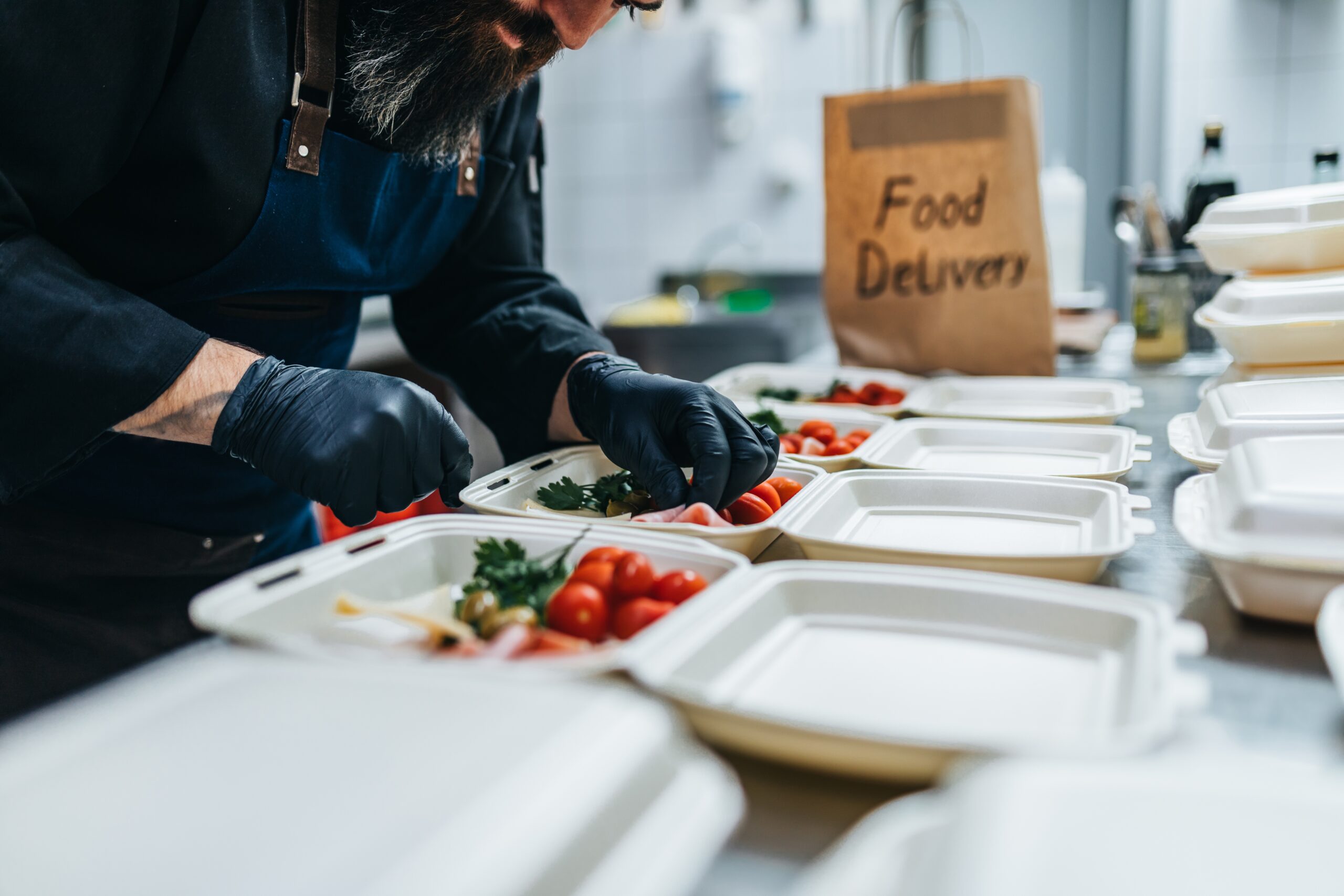
Every year, enormous quantities of perfectly edible food from New York’s restaurants and businesses end up in landfills. At the same time, more than two million New Yorkers struggle to put food on the table, a hunger rate that now exceeds early pandemic levels. For years, advocates have called this paradox inexcusable. Albany may finally be ready to do something about it.
A proposal moving through the state legislature would offer restaurants a financial incentive to donate prepared meals to food pantries. Both the State Senate and the State Assembly have now included versions of the measure in their budget proposals, a meaningful signal of political support. But whether it actually becomes law will come down to the three-way budget negotiations currently underway between the Senate, the Assembly, and Governor Hochul. With the April 1 budget deadline approaching, the next two weeks are critical.
What the Proposal Would Do
Assembly Bill A9055A, sponsored by Assemblymember Charles D. Fall, and its Senate companion S8719, sponsored by Senator Michelle Hinchey, would create a state tax credit for food service establishments that donate prepared meals to community-based organizations like food pantries. The credit would cover 50 percent of each donated meal’s market value, up to $6 per meal, with an annual cap of $10,000 per business. If enacted, it would take effect beginning in the 2027 tax year.
The standalone bills establish the policy and signal intent, but in Albany, tax credits like this one only become real when they’re included in the final enacted budget. That’s why the budget process matters so much here. Both chambers included the measure in their one-house budget proposals, released March 10. The Senate’s version supports the restaurant credit and gives New York City the option to create its own matching local version. The Assembly went further, extending the incentive beyond restaurants to food manufacturers, distributors, wholesalers, and retailers, meaning the policy could redirect food waste across the entire supply chain, not just restaurant kitchens.
To qualify for the restaurant credit, a business must derive at least half of its gross income from prepared food sales, covering everything from neighborhood diners to catering operations. Donated meals must meet federal Dietary Guidelines for Americans and must be given freely, with no exchange of money or services.
New York’s Food Insecurity Crisis
The legislation arrives at a moment when food insecurity in New York has reached alarming levels, and is getting worse.
According to Feeding America, roughly one in seven New Yorkers, nearly 2.8 million people, are food insecure, including one in five children. A 2024 analysis from the New York Health Foundation found that food insufficiency rates have already surpassed early pandemic levels, with more than one in ten New Yorkers struggling to access enough food. Black and Hispanic New Yorkers are more than twice as likely to experience food insufficiency compared to white residents. A March 2026 report by Robin Hood and Columbia University adds further dimension to the picture: New York City’s poverty rate has climbed to 26 percent, twice the national average, the highest level on record since the organizations began tracking the data. Food banks and pantries across the state have seen a surge in demand.
The situation is expected to worsen. The Supplemental Nutrition Assistance Program (SNAP), which currently serves nearly 1.8 million New Yorkers each month, is now subject to new federal eligibility rules that took effect this month, potentially affecting an estimated 180,000 New York City residents through tightened work requirements and narrowed criteria that exclude groups who previously qualified. The Robin Hood report projects these changes could push an estimated 70,000 additional New Yorkers into poverty each year. As Washington pulls back, the pressure on state and local food programs, and on proposals like this one, will only grow.
Building on What Already Exists
The proposed credit would layer on top of existing federal incentives. Under Section 170 of the Internal Revenue Code, businesses can already claim enhanced tax deductions for donating food inventory. The Bill Emerson Good Samaritan Food Donation Act, updated in 2023, provides federal liability protection for restaurants and food businesses that donate in good faith to nonprofits.
New York has also already laid some of the groundwork. Since 2018, the state has offered farmers a tax credit for donating produce and agricultural products to food pantries, equal to 25 percent of the fair market value of donations, up to $5,000 per year. And during the COVID-19 pandemic, the state’s $25 million Restaurant Resiliency Program demonstrated that restaurants themselves are powerful vehicles for food relief, partnering with 279 restaurants to deliver over one million meals to families in need.
What the state has never done is take that financial incentive model and extend it to the restaurants and food businesses that have already proven they can do this work. That’s exactly what this proposal would do.
Rethink Food, a New York-based nonprofit, has been among the most visible advocates pushing for this policy. The organization, which works with a coalition of mission-driven restaurants, businesses, and elected officials, has spent years demonstrating that restaurants are uniquely positioned to address food insecurity, delivering nutritious, chef-prepared meals with dignity to communities in need. Their model has sought to revolutionize how food insecurity is addressed in New York City, not just by getting meals to people who need them, but by creating jobs, investing in small businesses, and strengthening local economies in the process.
The urgency behind that push has only grown. With federal cuts to SNAP projected to strip hundreds of thousands of New Yorkers of benefits, Matt Jozwiak, Rethink Food’s CEO, argues the stakes couldn’t be higher, or the opportunity clearer. “Cuts to SNAP are projected to strip hundreds of thousands of New Yorkers of benefits and pull hundreds of millions of dollars out of the small businesses that anchor our neighborhoods,” Jozwiak said. “At this critical moment, restaurants want to be part of the solution. The Chef to Community Tax Credit gives them the tools to use their existing kitchens and staff to prepare high-quality meals, support local jobs, and reinvest in their communities when public safety nets fall short.”
A 2023 McKinsey and Company study found that this approach delivers twice the economic benefit to local communities compared to large institutional kitchens that bulk-produce meals for distribution, precisely because restaurants are already embedded in the neighborhoods they serve, buying from local suppliers and employing local workers.
If passed, the credit would give that model a permanent financial footing in New York, and potentially a template for other states and the federal government to follow.
Can a Tax Credit Actually Move the Needle?
That depends on whether the incentive is big enough to overcome the real-world friction of donation, because even with the right financial incentives in place, donation doesn’t happen automatically. Industry surveys consistently point to two persistent barriers: lingering liability concerns despite existing federal protections, and the logistical challenges of coordinating pickups and maintaining food safety compliance. For many establishments, throwing food away simply remains the path of least resistance.
The $10,000 annual cap offers a meaningful benefit for smaller restaurants making regular donations, but may feel less compelling for larger operations where the administrative overhead of running a donation program is significant. Restaurant owners will want to know whether the credit adequately covers the practical costs: staff time to package and label meals, coordination with pickup services, food safety compliance, and documentation for tax purposes.
Changing that calculus will require not just the tax credit, but clear guidance on compliance, robust food recovery infrastructure, and active state outreach to make sure businesses actually know the program exists. The dietary guidelines requirement could also shape how many restaurants participate, potentially excluding establishments whose menus don’t easily lend themselves to compliant donations.
Now It’s Up to Governor Hochul
Both chambers included the food donation tax credit in their budget proposals, and now it goes to the Governor. Her office has not commented specifically on the provision. If the credit survives negotiations and makes it into the final enacted budget, it becomes law. If it doesn’t, the standalone bills can still pass, but without budget inclusion, a tax credit has no mechanism to actually take effect, and with the April 1 budget deadline fast approaching, time is running short.
The credit fits within Albany’s broader push to reduce food waste and address food insecurity, part of a growing recognition that the state needs to do more to connect surplus food with people who need it. Organizations like Rethink Food have helped make the case that restaurants, specifically, can be a powerful vehicle for getting meals to people who need them. With both chambers aligned, this may be the most concrete opportunity Albany has had to turn that recognition into a sustained, long-term commitment.